Ever wondered why some depictions of Ganesha show him riding a majestic peacock instead of his usual mouse? Meet Mayureshvara – one of the most powerful and visually stunning forms of Lord Ganesha, whose very name means "Lord of the Peacock." This isn't just another avatar; it's a divine manifestation that emerged when the cosmos needed a protector capable of conquering the most formidable demons.
Mayureshvara represents the triumphant, warrior aspect of Ganesha – the remover of obstacles who doesn't just clear the path but does so with regal authority and protective might. His story is one of divine intervention, cosmic balance, and the eternal victory of good over evil, wrapped in the vibrant imagery of peacock feathers and celestial warfare.
The Divine Warrior's Form
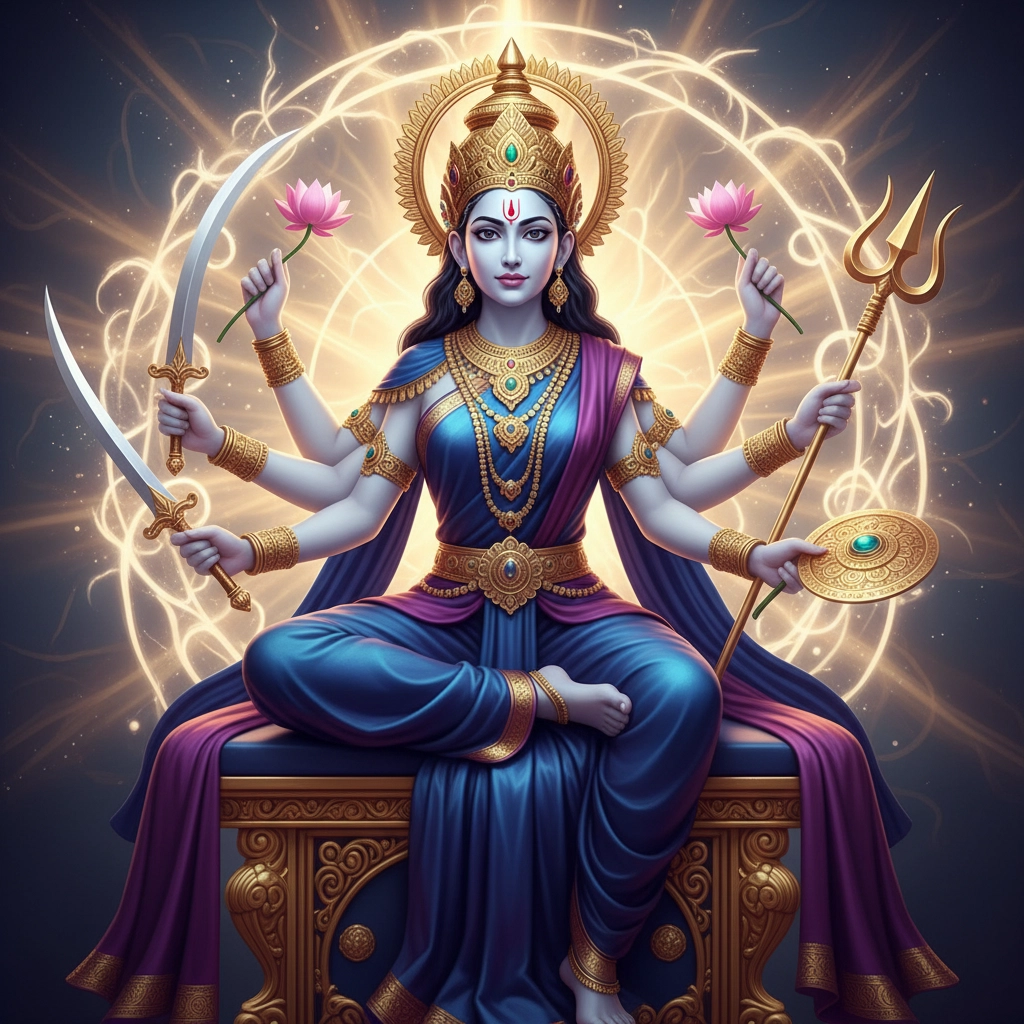
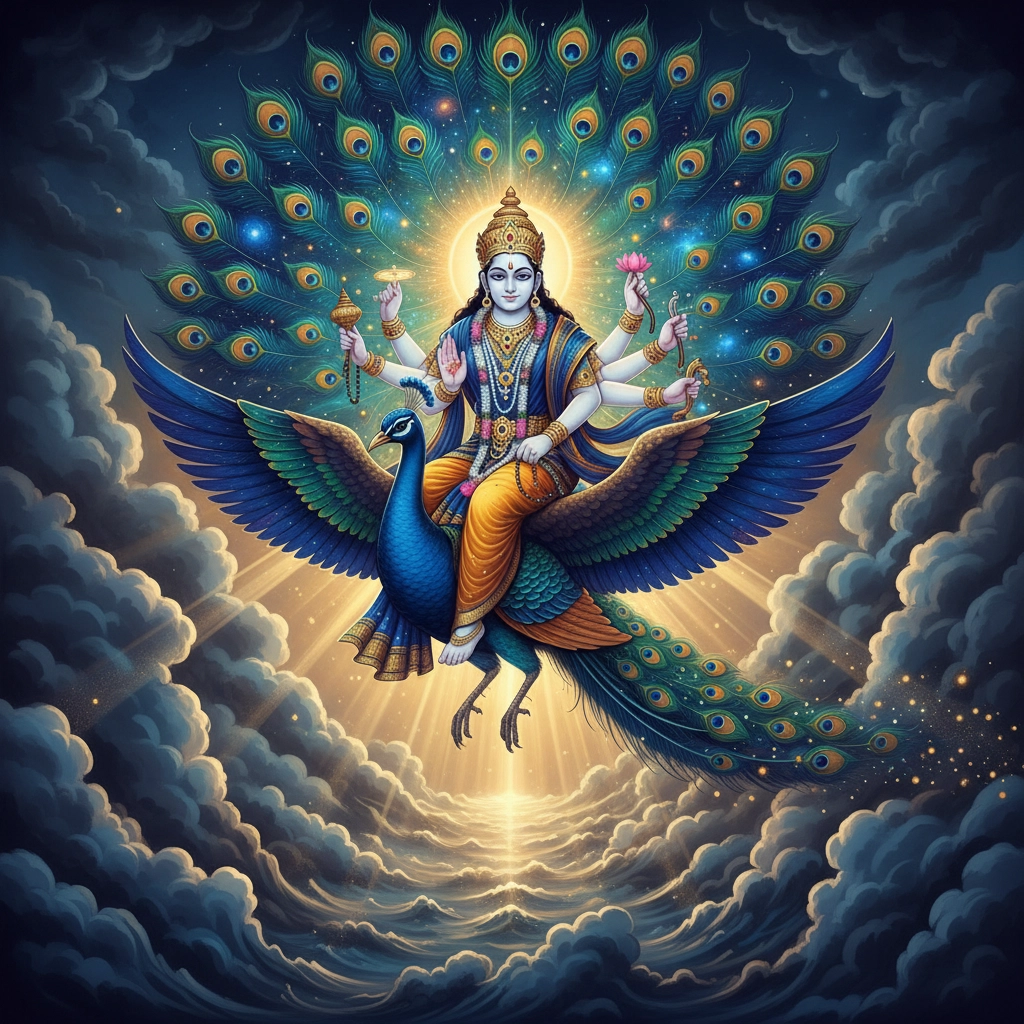
Unlike the familiar round-bellied, gentle Ganesha we often see, Mayureshvara appears as a formidable six-armed deity with a brilliant white complexion that radiates divine energy. This specific incarnation manifested during the Treta Yuga, born to Lord Shiva and Goddess Parvati for a very particular mission – one that required extraordinary power and divine authority.
The six arms aren't just for show; each represents a different aspect of cosmic power, equipped to handle the multifaceted challenges that face both gods and mortals. His white complexion symbolizes purity, righteousness, and the clarity of divine purpose. When you're dealing with demons who've gained control over the nectar of immortality, you need a deity who embodies absolute divine authority.
What makes Mayureshvara truly unique is his vahana – the magnificent peacock. While traditional Ganesha rides Mushika (the mouse), symbolizing the conquest of desire and ego, Mayureshvara's peacock represents something entirely different: the ability to transform poison into beauty, darkness into light, and obstacles into opportunities for growth.
The Rise of Demon Sindhu
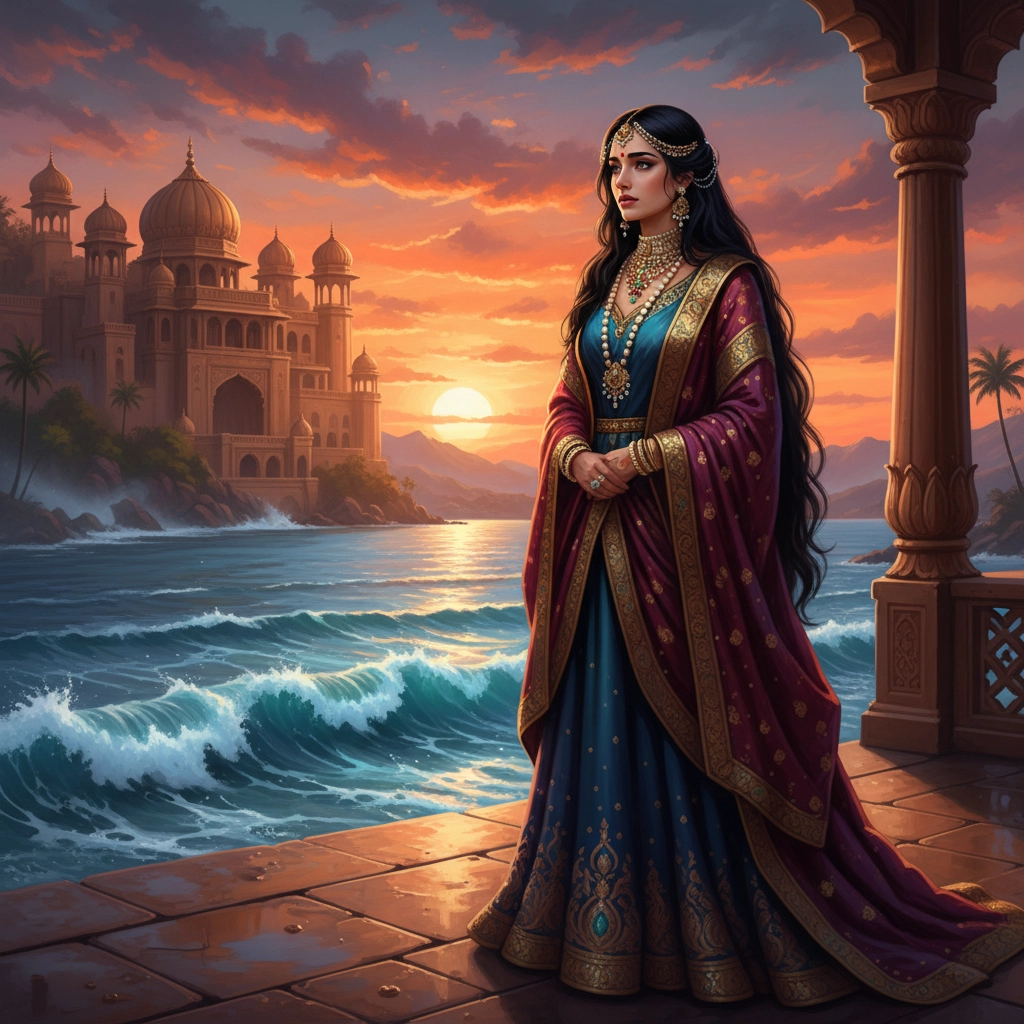
The legend begins in the kingdom of Mithila, ruled by King Chakrapani and Queen Ugra. After years of childlessness, Queen Ugra performed intense prayers to Surya, the sun god. Her devotion was so pure and powerful that Surya blessed her with a child, but this wasn't going to be an ordinary birth.
The fetus generated such intense solar energy that it literally burned within the womb. Unable to bear the scorching heat, Queen Ugra made the heartbreaking decision to cast the unborn child into the ocean. The ocean deity, moved by compassion, nurtured the child and eventually returned him to his parents, who named him Sindhu – meaning "ocean."
But here's where things get interesting. Sindhu wasn't content with ordinary life. He performed such severe penance that even Surya was impressed and decided to grant him a boon: a bowl of amrita, the nectar of immortality. However, Surya warned that Sindhu would remain invincible only as long as the bowl remained intact.
Sindhu, proving to be cleverer than most demons, simply swallowed the entire bowl. Now he had the nectar of immortality safely stored within himself, making him virtually unstoppable. Power, as it often does, corrupted him completely. He began terrorizing the three worlds, capturing and imprisoning even powerful gods like Indra and Vishnu.
The situation became so dire that the gods themselves were powerless. It was then that Goddess Parvati decided to intervene, requesting her son Ganesha to incarnate specifically to deal with this cosmic crisis.
The Peacock Connection
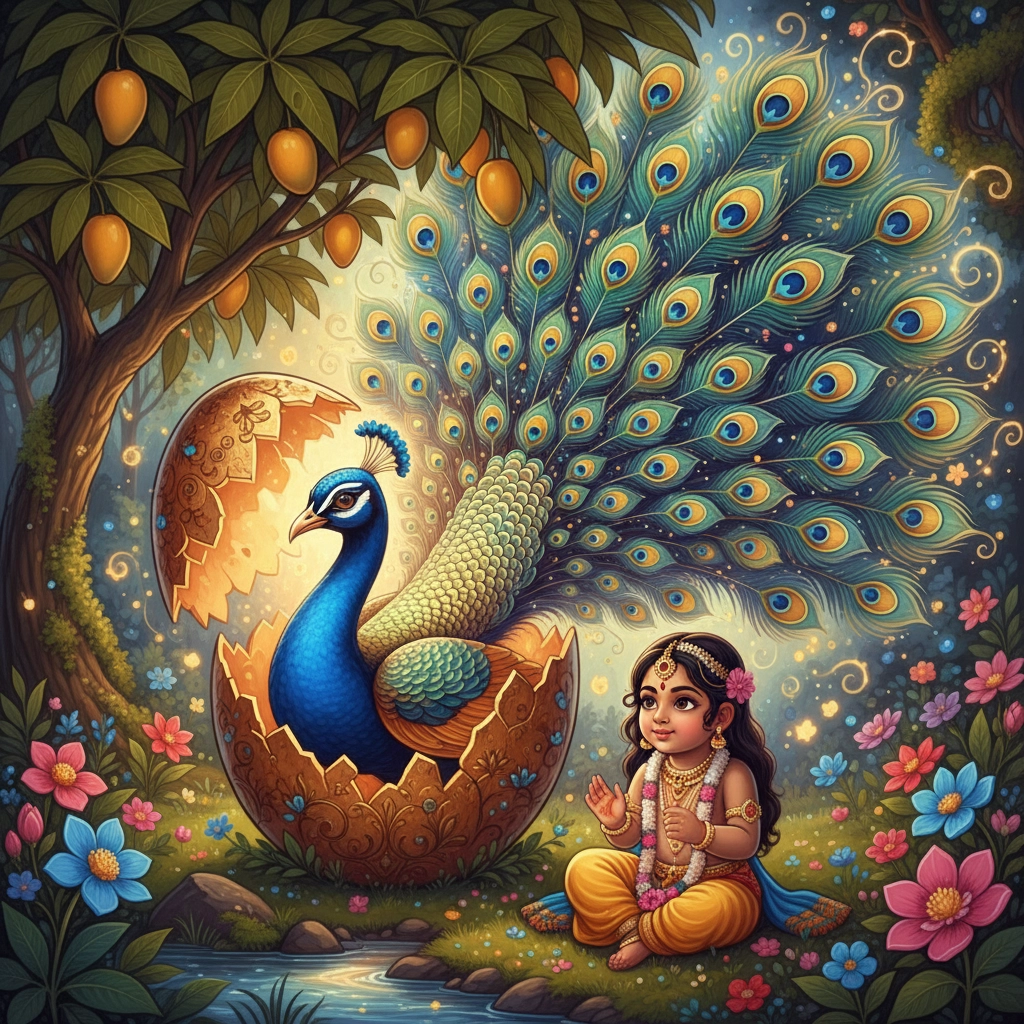
One of the most enchanting aspects of Mayureshvara's legend involves how he acquired his iconic peacock mount. As a divine child, Ganesha was playing beneath a mango tree when he accidentally knocked down a mysterious egg. When the egg cracked open, instead of a bird, a magnificent peacock emerged – but this wasn't just any peacock.
This celestial bird, grateful for its freedom, offered to serve as Ganesha's vahana. However, it had one condition: its name (Mayura) should be prefixed to the lord's name. This is how Ganesha became known as Mayureshvara or Mayureshwar in this incarnation.
The symbolism here runs deep. Peacocks are known for their ability to consume poisonous snakes without harm, transforming the venom into the brilliant colors of their plumage. Similarly, Mayureshvara has the power to transform the most toxic obstacles and negative energies into opportunities for growth and spiritual advancement.
After defeating Sindhu, Mayureshvara gifted this peacock to his younger brother Kartikeya (Murugan), which is why Kartikeya is traditionally depicted riding a peacock. This act of generosity shows that Mayureshvara's power isn't about possession but about purposeful action and divine love.
The Sacred Temple at Morgaon
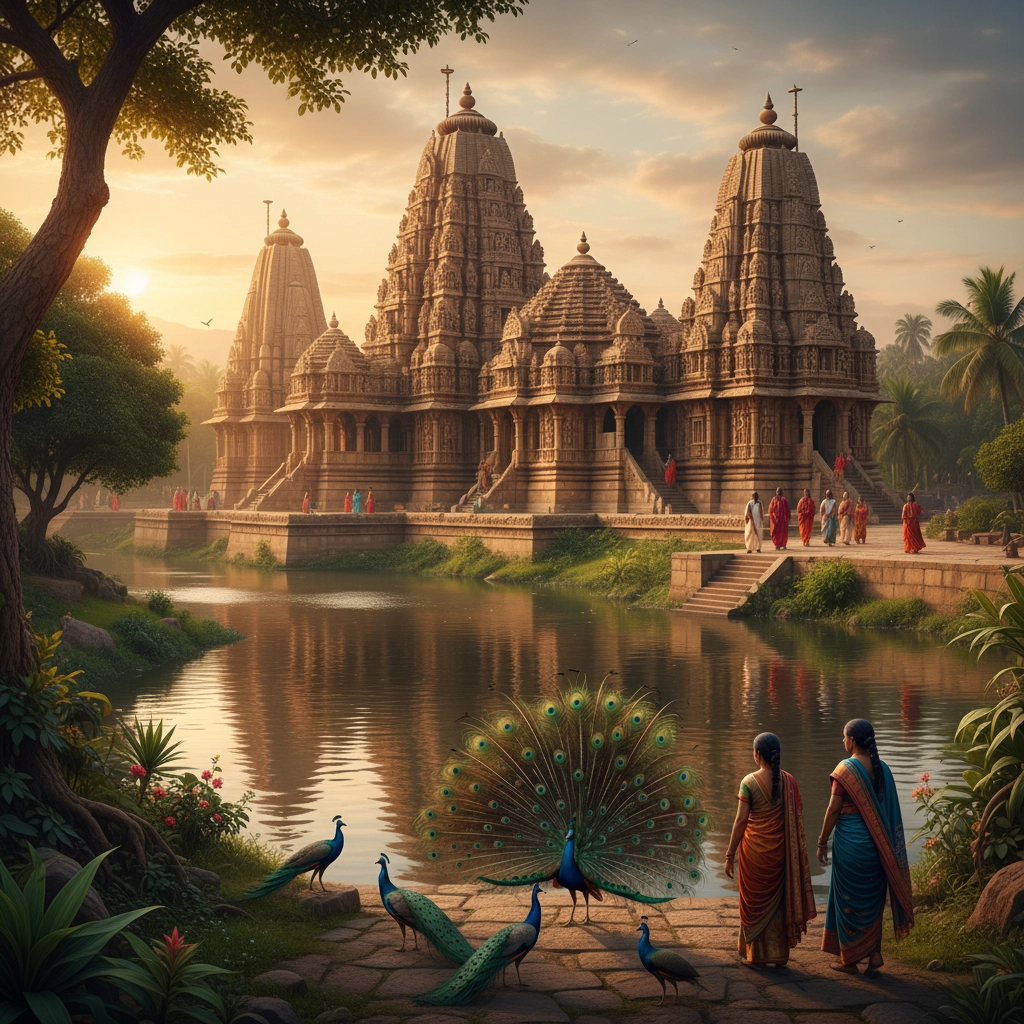
The primary temple dedicated to Mayureshvara stands in Morgaon village in Maharashtra's Pune district, situated beautifully along the Karha river. The very name "Morgaon" comes from "Mor" (peacock in Marathi), meaning "village of peacocks" – a testament to the abundant peacock population that once thrived in this region.
This isn't just any temple; it holds the prestigious position of being the first of the eight Ashtavinayak temples, making it the starting point for one of Maharashtra's most important pilgrimage circuits. The temple's significance goes beyond just religious importance – it's a spiritual powerhouse where devotees come seeking the removal of their most stubborn obstacles.
The famous chant "Ganapati Bappa Moraya!" that echoes through Maharashtra during Ganesh festivals has its roots here. "Moraya" is an affectionate reference to Mayureshvara, connecting millions of devotees to this powerful form of Ganesha.
The Spiritual Significance Today
In our modern context, Mayureshvara represents something we all need: the power to face seemingly impossible challenges with divine confidence. The demon Sindhu wasn't just any obstacle – he had consumed immortality itself, making him appear undefeatable. Yet Mayureshvara found a way.
This teaches us that no matter how insurmountable our problems appear, there's always a divine solution available. Whether you're facing career challenges, relationship issues, health problems, or spiritual blocks, Mayureshvara's energy reminds us that we can access the warrior aspect of consciousness – the part of us that doesn't just survive but transforms challenges into victories.
The peacock symbolism is particularly relevant for anyone on a spiritual journey. Just as the peacock transforms poison into beauty, we can learn to transform our negative experiences into wisdom, our setbacks into comebacks, and our obstacles into stepping stones.
Invoking Mayureshvara's Protection
Many practitioners find that connecting with Mayureshvara's energy is especially powerful when dealing with persistent obstacles that seem to have a life of their own – much like the demon Sindhu. His six-armed form represents the ability to handle multiple challenges simultaneously while maintaining divine grace and authority.
The white complexion reminds us to approach our challenges from a place of purity and clarity rather than anger or frustration. Sometimes the most effective way to remove an obstacle isn't to fight it directly but to elevate our consciousness to a level where the obstacle simply dissolves.
Whether you're drawn to Mayureshvara through his magnificent peacock imagery, his role as the ultimate obstacle remover, or his position as the first of the Ashtavinayak deities, his energy offers a unique blend of warrior strength and divine grace. In a world full of challenges that sometimes seem as immortal and persistent as Sindhu himself, we could all use a little of Mayureshvara's triumphant, protective energy.
His story reminds us that every challenge, no matter how formidable, contains within it the seed of its own transformation – we just need the divine vision to see it and the courage to act upon it.