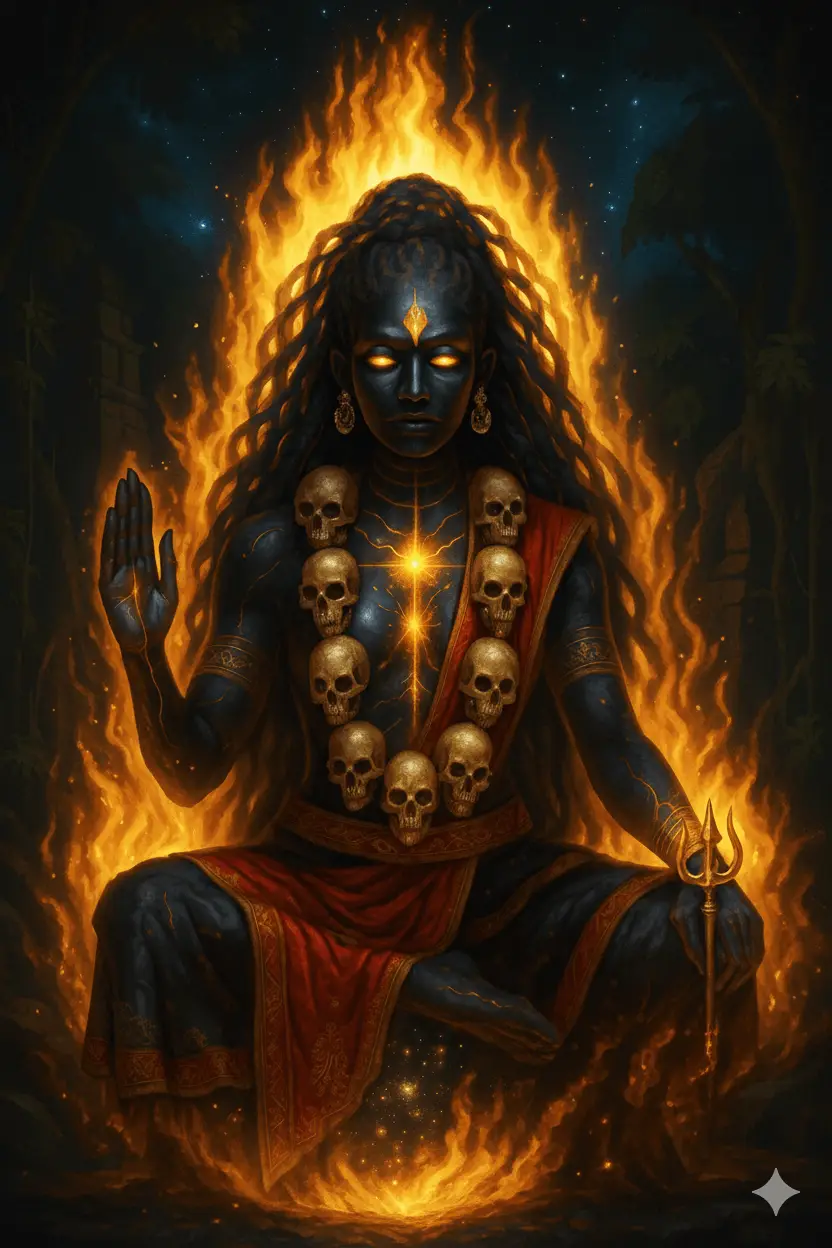


Most people think shadow work means diving into the dark corners of your psyche with a therapeutic flashlight, trying to "fix" what's broken. But tantric shadow work? It's completely different.
Instead of treating difficult emotions like unwanted guests you need to evict, tantra sees them as sacred messengers carrying the keys to your liberation. This ancient approach doesn't ask you to become perfect: it invites you to become whole.
Here's the thing: your anger, grief, shame, and fear aren't obstacles on your spiritual path. They're the path itself. And when you learn to work with them through tantric practice, something magical happens: they transform from sources of suffering into gateways of creative power.
The Tantric Lens: Everything Is Sacred
Traditional tantra operates from a radical premise: everything in creation is a manifestation of the divine union between Shiva (consciousness) and Shakti (energy). This means your shadow: those suppressed, denied, or unconscious parts of yourself: aren't spiritual mistakes that need correcting.
They're expressions of divine energy that got stuck, misunderstood, or pushed down. The tantric approach doesn't try to eliminate these aspects. Instead, it offers tools to purify and transform them back into their original creative essence.
Your body becomes your primary sacred space: a living mandala where this transformation happens. Unlike approaches that see the body as separate from spirit, tantra recognizes it as the vehicle through which liberation occurs. This shift changes everything about how you relate to difficult emotions.

The Three Pillars of Tantric Shadow Integration
Tantric shadow work rests on three foundational practices, each designed to help you "burn the seeds" of unconscious patterns and emotional blocks:
Pillar One: Somatic Practice
Your emotions aren't just mental experiences: they're energetic patterns stored in your physical body. Anger might live in your shoulders, grief in your chest, or fear in your belly. Somatic practice uses movement to release these blocked energies.
This isn't about aggressive "releasing" or forcing emotions out. Instead, you learn to sense areas of tension or discomfort and breathe into them while moving your body. Yoga, tai chi, or even simple stretching can become profound shadow work when approached with this tantric awareness.
The key is developing sensitivity to your body's energetic landscape. Where do you feel tight? Where does energy move freely? What emotions arise when you focus on specific areas? This somatic awareness becomes your first teacher in shadow integration.
Pillar Two: Meditative Awareness
The second pillar involves what tantrics call "sitting-still-and-listening" practice. This isn't traditional meditation where you try to empty your mind. Instead, you create a safe, non-judgmental space where your shadow aspects can arise naturally.
The attitude is crucial: "I'm willing to see whatever needs to be seen; I'm willing to feel whatever needs to be felt." You're not trying to achieve any particular state or fix anything. You're simply creating space for whatever wants to emerge.
This practice requires maintaining complete mindfulness while retaining mental clarity. When difficult emotions or memories surface, you don't push them away or get lost in their story. You witness them with the same reverence you'd show any sacred phenomenon.
Pillar Three: Sacred Self-Inquiry
The third pillar involves honest self-examination: not the harsh self-criticism many of us are familiar with, but a compassionate investigation into your inner landscape. This requires what tantric texts call "brutal honesty" with yourself.
You examine your motivations, patterns, and reactions without judgment but with unwavering truthfulness. Why do certain situations trigger you? What beliefs are driving your emotional responses? What parts of yourself are you still rejecting or hiding?
This isn't a solo journey. Traditional tantric shadow work often involves guidance from a qualified teacher who can hold up the mirror of accountability when your blind spots prevent self-awareness.

Sacred Union as Your Transformative Container
Here's where tantric shadow work gets really interesting. The concept of sacred union isn't just about partnership with another person: it's about the internal marriage of opposing forces within yourself.
When you're working with difficult emotions, you're essentially facilitating a union between your consciousness (your aware, witnessing self) and your energy (the emotional content that's arising). This internal sacred union becomes the container where transformation happens.
During shadow work practice: whether alone or with a partner: you maintain awareness of the subtle energy circulating through your body. You learn to channel this energy toward states of expanded awareness rather than getting caught in emotional loops.
Think of it like this: instead of being in your anger, you create sacred union with your anger. You're both the witness and the energy, the observer and the observed. This tantric perspective transforms every difficult emotion into an opportunity for deeper intimacy with the totality of your nature.
A Practical Tantric Shadow Work Session
Ready to try this yourself? Here's a simple 30-minute practice that integrates all three pillars:
Setup (5 minutes): Create sacred space. Light a candle, burn some incense, or simply sit quietly and connect with your intention to transform rather than fix. Call upon whatever divine energy feels supportive: whether that's AdiShakti (the divine mother), your highest self, or simply the wisdom of your body.
Somatic Awareness (10 minutes): Begin with gentle movement. Stretch, sway, or do simple yoga poses while scanning your body for areas of tension or emotional residue. When you find something, breathe into it. Let sound emerge if it wants to: moaning, sighing, or even crying are all welcome.
Meditative Witnessing (10 minutes): Sit quietly and invite whatever emotions or memories want to surface. Don't go hunting for problems, but create space for whatever's ready to emerge. When something arises, practice the sacred union: be both the awareness witnessing the emotion and the energy of the emotion itself.
Integration (5 minutes): Close with journaling or simply resting in awareness. What did you discover? What wants to be acknowledged or honored? How can you carry this expanded capacity for holding difficult emotions into your daily life?

Beyond Healing: Transformation as Creative Act
Traditional therapy often frames shadow work as healing: fixing what's broken so you can return to "normal." But tantric shadow work isn't about healing. It's about transformation, which is fundamentally a creative act.
When you successfully integrate shadow material through tantric practice, you're not just resolving old wounds. You're literally creating new neural pathways, new energetic patterns, and new ways of being in the world. The energy that was trapped in old emotional patterns becomes available for creative expression, spiritual expansion, and deeper intimacy.
This is why tantric shadow work often has a sensual, pleasurable quality that distinguishes it from other spiritual approaches. You're not just processing trauma: you're harvesting its creative potential. The same energy that manifests as depression can become profound spiritual depth. The same fire that shows up as rage can become passionate creativity.
Living the Integration
The real test of tantric shadow work isn't what happens during formal practice: it's how you relate to difficult emotions in daily life. Can you meet your partner's anger with the same sacred awareness you cultivate in meditation? Can you hold your own grief as divine energy rather than personal failure?
This doesn't mean you become emotionally flat or spiritually bypassing. If anything, you become more emotionally available because you're not afraid of the full spectrum of human experience. You develop what tantrics call "stability in instability": the capacity to remain centered while feeling everything.
Your difficult emotions stop being problems to solve and become doorways to deeper intimacy with life itself. Each challenging feeling becomes an invitation to practice sacred union, to meet what is with what you are, and to discover the creative potential hidden in every aspect of your humanity.
This is the gift of tantric shadow work: not the elimination of difficult emotions, but their transformation into allies on your path to wholeness. When you stop trying to fix yourself and start practicing sacred union with all that you are, the real journey begins.

