


Here's something most tantric teachers won't tell you upfront: jumping into advanced embodiment practices without proper foundation work can actually re-traumatize your nervous system. It's not their fault, many traditional approaches simply didn't have access to what we now understand about trauma and the body.
The truth is, your body holds incredible wisdom about healing, pleasure, and authentic connection. But if you've experienced trauma (and most of us have in some form), that wisdom might be locked behind protective barriers your nervous system created to keep you safe. Trauma-informed approaches aren't just trendy additions to ancient practices, they're essential bridges that help you access your body's intelligence without triggering old wounds.
The Body Remembers Everything
When we talk about trauma, we're not just referring to major life events. Developmental trauma, cultural trauma, medical trauma, and even the everyday stresses of modern life all leave imprints in our nervous system. Research shows that trauma literally changes how our brains and bodies function, creating patterns of hypervigilance, dissociation, or emotional numbing that can persist for years.
Here's what happens: trauma disrupts the natural flow of information between your brain and body. Your nervous system, trying to protect you, essentially puts up walls against feeling too much. While this serves as crucial protection during overwhelming experiences, it also blocks access to the subtle sensations, pleasure, and intuitive guidance that tantric practices aim to cultivate.
Think about it, if your body learned that feeling deeply wasn't safe, how can you suddenly ask it to open to profound states of connection and embodied awareness? This is why trauma-informed approaches matter so much. They help your nervous system remember that it's safe to feel again.

Safety First: The Foundation of All Embodied Work
Traditional tantric texts often assume practitioners come from stable, supportive communities with strong nervous system regulation. But most of us live in a world that's pretty activating, constant stimulation, social media, work stress, relationship challenges. Our nervous systems are often already maxed out before we even step into any kind of embodied practice.
Trauma-informed yoga recognizes this reality and starts with the basics: creating safety, offering choices, and building nervous system resilience. This isn't about being overly cautious or "babying" anyone. It's about being smart. When your nervous system feels safe, your body's natural wisdom becomes accessible. When it doesn't, you're essentially practicing while in survival mode, which limits how deep the work can go.
In trauma-informed approaches, every invitation comes with choices. You're encouraged to modify, pause, or completely opt out of anything that doesn't feel right. This isn't just nice, it's neurologically necessary. Your nervous system needs to know it has agency and control to truly relax into vulnerability.
Reconnecting With Your Body's Intelligence
One of the most profound aspects of trauma-informed work is how it helps you rebuild trust with your own body. Trauma often creates a split between mind and body, you might find yourself living mostly in your head, disconnected from physical sensations, or alternately, overwhelmed by body sensations you can't understand or regulate.
Trauma-informed practices help bridge this gap gradually. Through breath awareness, gentle movement, and mindful attention to sensation, you begin to rebuild the neural pathways that connect thinking and feeling, mind and body. This isn't just feel-good theory, neuroscience research shows that trauma-informed yoga actually changes brain structure, strengthening areas responsible for self-awareness and emotional regulation while calming overactive fear centers.
What does this mean for tantric work? Everything. Tantric practices rely on your ability to track subtle energy, distinguish between different types of sensation, and stay present with intensity without becoming overwhelmed. These skills require a robust mind-body connection that trauma-informed approaches help restore.
The Wisdom Your Body Is Trying to Share
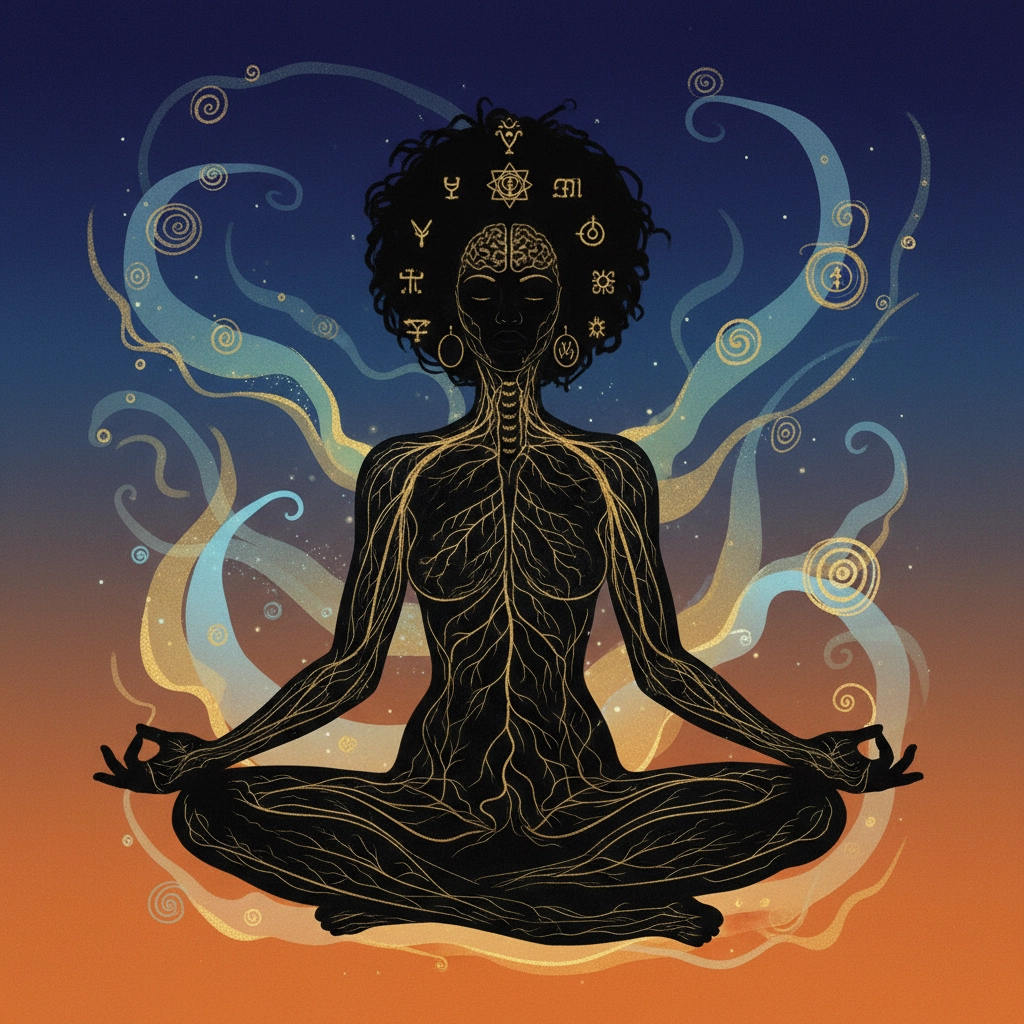
Your body is constantly communicating with you through sensation, emotion, and intuitive knowing. This communication system is incredibly sophisticated, it can help you distinguish between authentic desire and old patterns, recognize your true boundaries, and guide you toward experiences that serve your growth and healing.
But here's the thing: trauma scrambles these signals. What feels like excitement might actually be anxiety. What seems like surrender might be dissociation. What appears to be openness could be old patterns of compliance or people-pleasing. Without the foundation of nervous system regulation and somatic awareness, it's easy to mistake one signal for another.
Trauma-informed practices help you develop what we might call "somatic discernment", the ability to feel the subtle differences between various internal states. You learn to recognize the difference between healthy activation and trauma response, between authentic vulnerability and old patterns of collapse, between genuine pleasure and performance.
Why Ancient Wisdom Needs Modern Understanding
This isn't about rejecting traditional teachings or saying they're wrong. Ancient tantric practices developed in specific cultural contexts with built-in community support, initiation processes, and mentorship structures that naturally provided many trauma-informed principles. But most of us don't have access to those traditional contexts.
What we do have access to is incredible new understanding about how trauma affects the nervous system and how the body heals. Integrating this knowledge with ancient wisdom creates approaches that are both deeply rooted and remarkably effective for modern practitioners.
The goal isn't to make tantric practices "safer" by making them less powerful. It's to make them more accessible by creating the conditions where their full power can actually be received and integrated. A nervous system that feels safe and regulated can handle much more intensity than one that's constantly in survival mode.
Practical Integration: What This Looks Like
So what does trauma-informed tantric work actually look like in practice? It starts with building body awareness and nervous system resilience through gentle, choice-rich approaches. You might spend months just learning to track your breath, notice tension patterns, or recognize early signs of activation before moving into more advanced practices.
It means learning practical skills for self-regulation: breathing techniques, grounding practices, ways to calm your nervous system when things get intense. These aren't just preliminary exercises; they're ongoing tools that support deeper work throughout your practice.
It also means approaching your body with curiosity rather than agenda. Instead of pushing toward particular experiences or outcomes, you learn to listen to what wants to emerge and follow your body's wisdom about pacing and timing.
The Revolutionary Act of Body Trust
In a culture that often treats bodies as objects to be controlled, optimized, or transcended, learning to trust your body's wisdom is genuinely revolutionary. Trauma-informed approaches to tantric work help you develop this trust gradually, safely, and sustainably.
When your nervous system knows it's safe to feel, when you have tools for regulation and choice, when you can distinguish between different internal states: that's when the real magic of embodied practice becomes possible. Your body's wisdom can finally be heard, and the deeper teachings of tantric work can actually land and integrate.
This isn't about making things easier or less intense. It's about creating the conditions where intensity can be met with presence rather than protection, where vulnerability feels like empowerment rather than exposure, and where your body becomes your wisest teacher rather than something to override or ignore.
The revolution isn't in the techniques themselves: it's in trusting that your body knows how to heal and that creating safety is the first step in accessing that profound, embodied intelligence.

