


You've probably seen it on your Instagram feed or heard friends talking about this "humming breath" thing that's supposedly crushing anxiety. But before you roll your eyes at another wellness trend, here's the thing: there's actually solid science behind why Bhramari Pranayama works so well for calming frazzled nerves.
And the deeper story? This ancient practice holds profound wisdom about how our bodies and minds connect: wisdom that modern neuroscience is finally catching up to.
What exactly is Bhramari Pranayama?
Bhramari translates to "humming bee" in Sanskrit, and that's exactly what this practice sounds like. You close your eyes, plug your ears with your thumbs, place your fingers gently over your eyelids, and create a deep humming sound as you exhale. Simple as that.
But don't let the simplicity fool you. What's happening inside your body during those few minutes of humming is pretty remarkable.

The nervous system science that makes it work
Here's where things get interesting from a scientific perspective. When you create those deep, resonant vibrations, you're directly stimulating your vagus nerve: the longest cranial nerve in your body and a key player in your parasympathetic nervous system.
Think of the vagus nerve as your body's natural "chill pill." When it's activated, it sends signals throughout your body to slow your heart rate, lower blood pressure, and shift you out of fight-or-flight mode into what researchers call the "rest and digest" state.
Research published in multiple studies has shown that regular Bhramari practice measurably changes heart rate variability patterns. Specifically, it increases the intervals between heartbeats and enhances the high-frequency power of your heart rhythm: both markers of a calmer, more resilient nervous system.
What happens in your brain during the humming
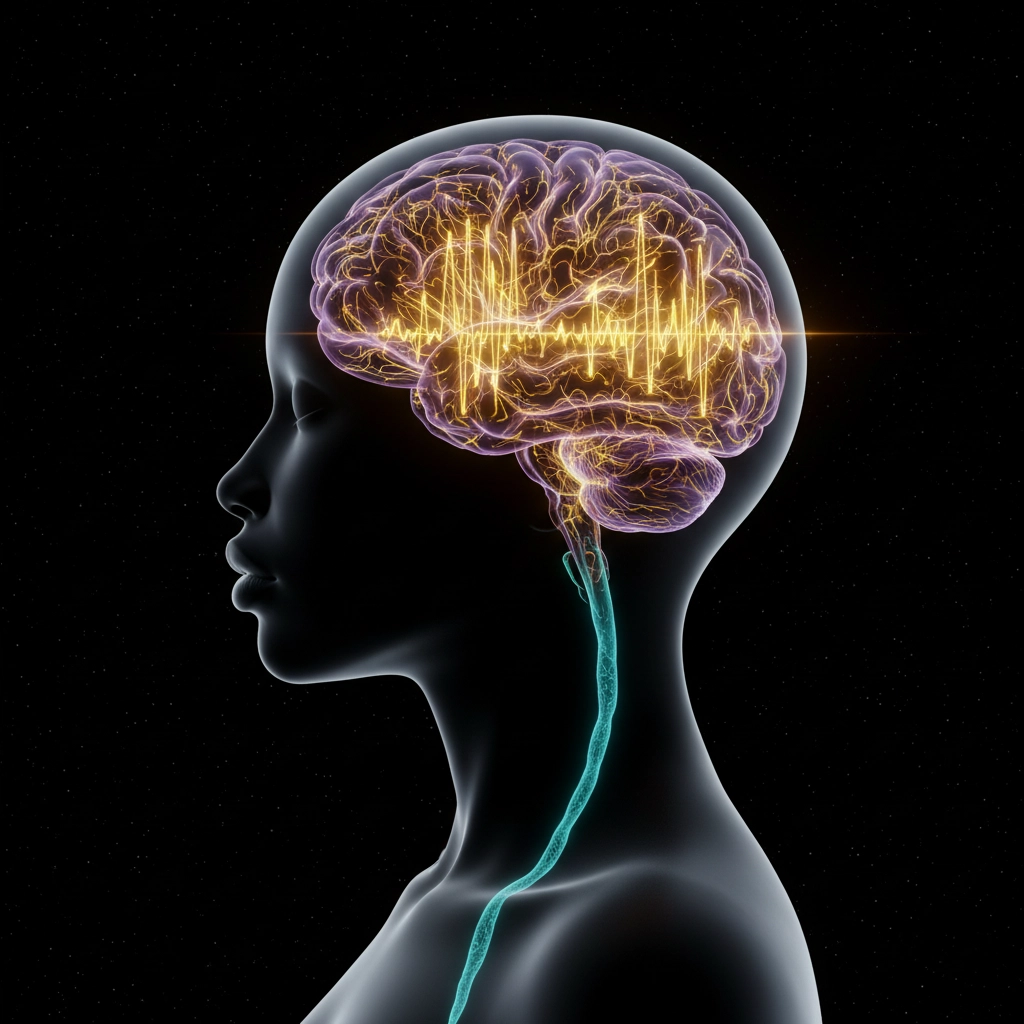
The neurological effects are even more fascinating. Studies using EEG monitoring have found that Bhramari Pranayama generates increased gamma brain wave activity. Gamma waves are associated with higher-level cognitive processing, improved focus, and enhanced emotional regulation.
In practical terms, this means your brain literally becomes better at handling stress and anxiety while you're humming. It's not just relaxation: it's actually rewiring your neural patterns toward greater resilience.
The practice also triggers the release of several beneficial neurochemicals. The vibrations increase nitric oxide production in your nasal cavity, which promotes better breathing and circulation. Your brain also releases more endorphins, oxytocin, and melatonin: your body's natural anxiety-busters and sleep promoters.
The clinical research backing it up
Multiple controlled studies have validated these effects across different populations. One comprehensive study found that people practicing Bhramari regularly showed significant reductions in depression, anxiety, and stress scores, while experiencing improvements in sleep quality, attention, and overall quality of life.
Another study with hypertensive patients found that just a few weeks of practice effectively lowered blood pressure while increasing parasympathetic nervous system activity. For people dealing with tinnitus, the practice provided substantial relief from both the condition itself and the anxiety it typically creates.
What makes these results particularly compelling is that the benefits show up quickly: often within a single session: and compound over time with regular practice.
Why it's trending now (beyond the science)
Sure, the research is convincing, but why is Bhramari exploding on social media right now? A few factors are converging perfectly.
First, our collective anxiety levels are through the roof. Between global uncertainties, social media overwhelm, and the lingering effects of pandemic stress, people are desperately seeking accessible tools that actually work. Bhramari delivers immediate relief without requiring expensive equipment, subscriptions, or extensive training.
Second, it's incredibly shareable. The practice is simple enough to demonstrate in a short video, and the effects are noticeable enough that people want to tell others about it. When something works this well and this quickly, word spreads fast.
Finally, there's growing appreciation for practices that bridge ancient wisdom with modern science. People want evidence-based solutions, but they're also drawn to techniques with deep historical roots and spiritual significance.

The tantric perspective: beyond stress relief
Here's where we move beyond the clinical research into the deeper wisdom traditions. In classical tantric texts, Bhramari isn't just a relaxation technique: it's a sophisticated method for harmonizing the subtle energy body and awakening higher states of consciousness.
Traditional tantric understanding views the humming vibrations as activating the nadis: energy channels that carry prana (life force) throughout the body. The specific frequency and internal resonance created during practice is believed to clear energetic blockages and harmonize the flow between different chakras, particularly the throat and heart centers.
But here's what's fascinating: these ancient descriptions align remarkably well with what modern science is discovering about vagal tone, heart-brain coherence, and the role of vibration in nervous system regulation.
The bee as spiritual metaphor
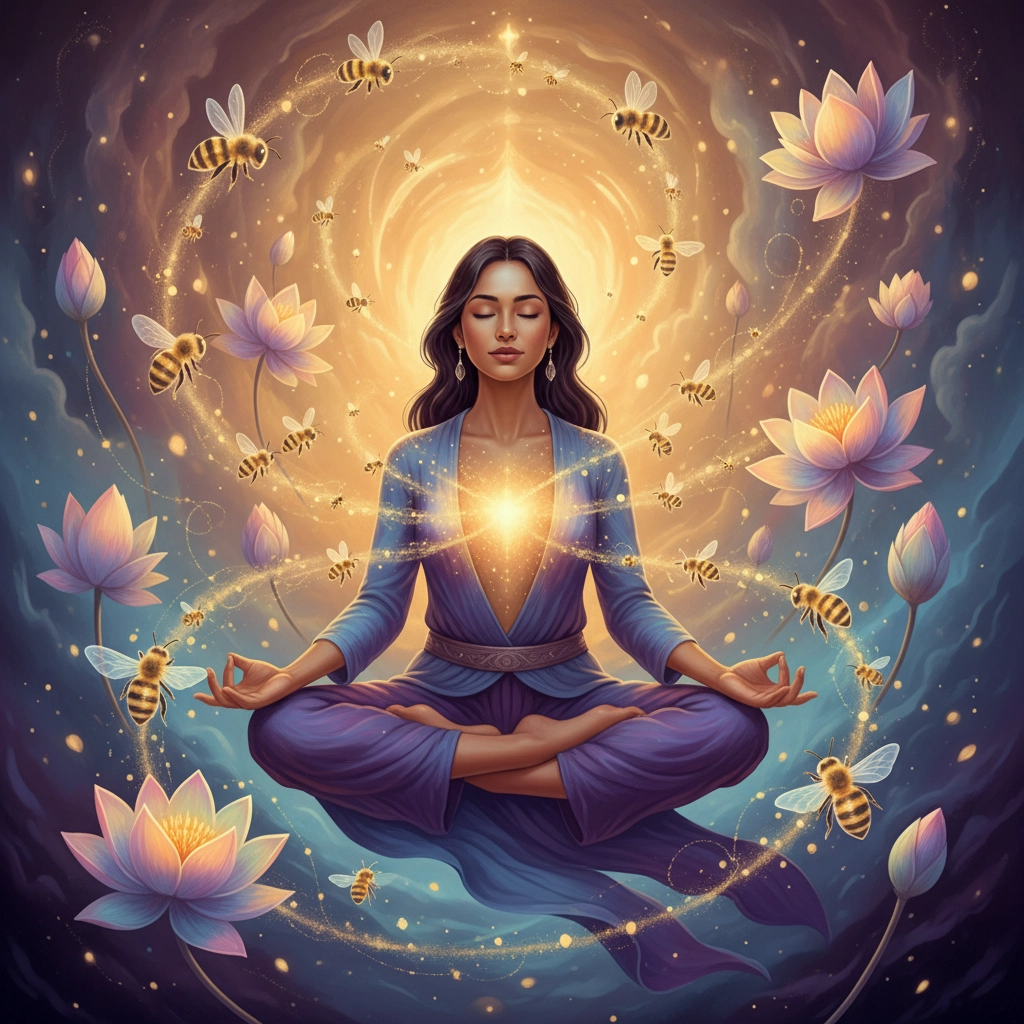
The symbolism of the bee in tantric tradition runs deep. Bees represent the soul's ability to extract sweetness and wisdom from all experiences: even difficult ones. They move between flowers (experiences) gathering nectar (insight) to create honey (wisdom) back in the hive (the heart center).
When you practice Bhramari, you're embodying this principle energetically. The internal humming creates a kind of sacred container where you can process and transform whatever emotional states arise, much like a bee transforms raw nectar into refined honey.
This isn't mystical fantasy: it's a sophisticated understanding of how conscious breathing and sound can facilitate emotional processing and integration. Modern trauma therapy is discovering similar principles about how vibration and breath can help process stored emotional energy.
Practical integration: making it real
The beauty of Bhramari is that you don't need to choose between the scientific and spiritual perspectives. Both are true simultaneously, and both enhance the practice.
Start with the simple mechanics: find a quiet space, close your eyes, plug your ears with your thumbs, rest your fingers gently over your closed eyelids, and hum as you exhale. Do this for 5-10 breaths initially, working up to longer sessions as it becomes comfortable.
From a scientific perspective, you're activating your vagus nerve, shifting your brain into gamma wave states, and flooding your system with calming neurochemicals. From a tantric perspective, you're harmonizing your energy body, clearing subtle blockages, and creating space for deeper self-awareness.
Both framings support the same outcome: a calmer, more centered, more resilient you.
The bigger picture
What's really trending isn't just Bhramari Pranayama: it's the recognition that ancient practices often contain sophisticated understandings of human physiology and consciousness that modern science is only beginning to validate.
The humming bee breath represents something larger: the possibility of integrating time-tested wisdom with evidence-based approaches to create more effective, holistic methods for managing anxiety and cultivating wellbeing.
Whether you're drawn to the neuroscience or the spiritual dimensions (or both), the practice offers a simple, accessible way to work with anxiety that honors both the complexity of your nervous system and the deeper wisdom of your embodied experience.
In a world that often feels overwhelming, sometimes the most revolutionary thing you can do is close your eyes and hum like a bee. Your nervous system: and your spirit( will thank you for it.)

