

Your Instagram feed is probably full of them right now. Those perfectly curated posts about "manifesting abundance," "staying positive," and "choosing joy." The self-help industrial complex has convinced us that spiritual growth means feeling good all the time, eliminating negative emotions, and transcending our messy human experience.
But what if that's exactly backwards?
Deep in the tantric tradition lives a group of ten goddesses called the Mahavidyas, and they have something radically different to offer. These aren't your typical divine feminine archetypes wrapped in soft pastels and gentle affirmations. They're fierce, complex, and unapologetically real. They represent every aspect of existence: the beautiful and the terrifying, the creative and the destructive, the ecstatic and the heartbreaking.
And that's exactly what makes them so powerful in our sanitized spiritual landscape.
The problem with spiritual perfectionism
Modern self-help culture has created a weird kind of spiritual perfectionism. We're supposed to be grateful, positive, and high-vibe at all times. Got fired? "Everything happens for a reason!" Relationship ended? "You're attracting better!" Feeling depressed? "Just shift your vibration!"
This relentless positivity isn't just exhausting, it's spiritually bypassing at its finest. It asks us to skip over our actual human experience in favor of some idealized version of enlightenment.
The Mahavidyas laugh at this approach. Not because they're cruel, but because they know something we've forgotten: our struggles, shadows, and breakdowns aren't obstacles to awakening. They are awakening.
Meet the goddesses who don't sugarcoat reality
The ten Mahavidyas each represent a different facet of the Divine Mother, and none of them are interested in making you feel comfortable. They're interested in making you whole.
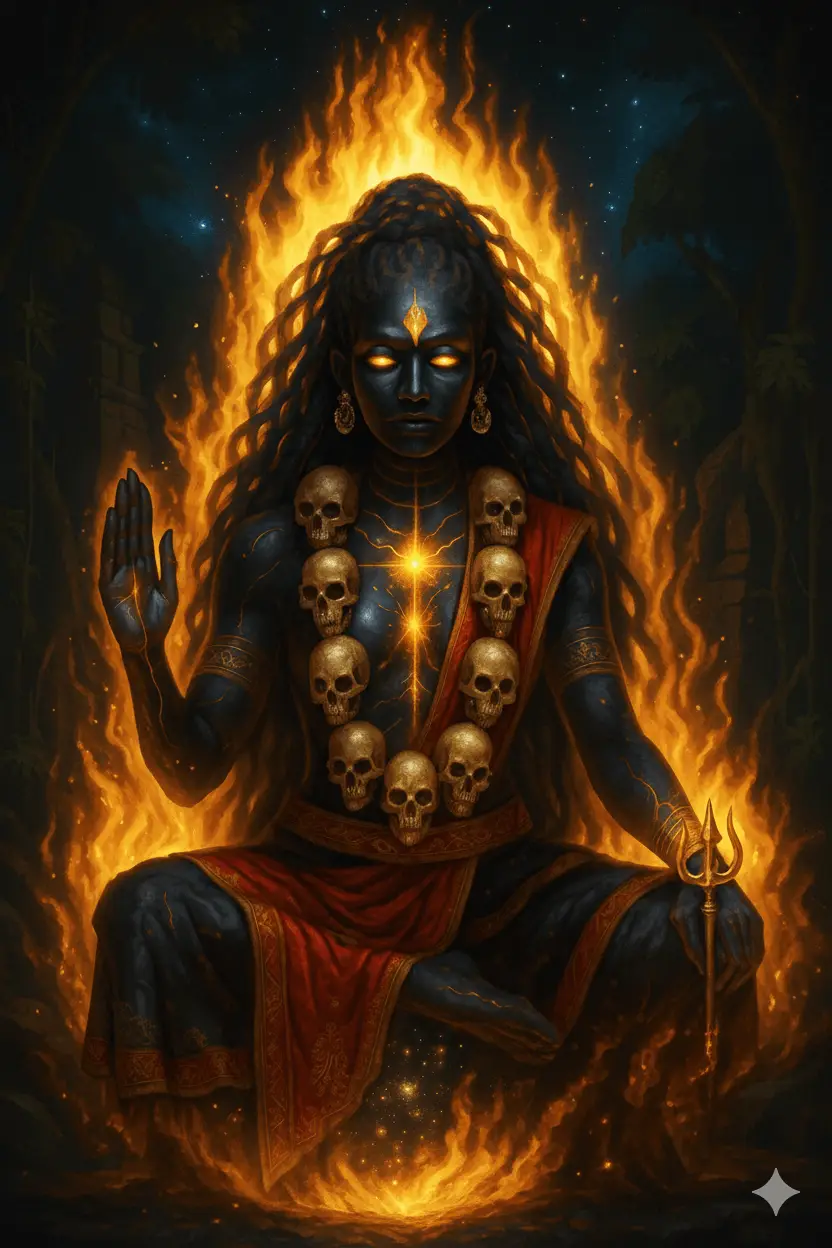
Kali shows up when your life is falling apart, not to fix it, but to help you see what needs to die so something new can be born. She's there in your 3 AM breakdown, in the moment your marriage ends, in the day you realize your career isn't feeding your soul anymore. Instead of promising everything will be fine, she asks: "What are you ready to let go of?"
Dhumavati is the widow goddess, the one who knows the wisdom hidden in loss and endings. While self-help culture tells you to "bounce back" quickly from grief, Dhumavati invites you to sit in the emptiness, to learn from the void. She's present in that hollow feeling after someone dies, in the silence after your kids leave home, in the space between who you were and who you're becoming.
Chhinnamasta literally holds her own severed head, a visceral reminder that ego death isn't pretty or comfortable. She's the moment you realize you've been living someone else's life, the instant you see through your own bullshit so clearly it's almost violent. Modern wellness wants to make transformation gentle and gradual. Chhinnamasta knows sometimes awakening happens like lightning.
The revolutionary act of embracing it all
What makes the Mahavidyas so different from typical spiritual approaches is their refusal to cherry-pick experience. They don't divide life into "spiritual" and "mundane," "positive" and "negative," "enlightened" and "unenlightened." They see it all as sacred, including the parts that make us squirm.
This isn't about being negative or wallowing in darkness. It's about recognizing that trying to eliminate half of human experience is like trying to breathe with only one lung.
Bagalamukhi teaches this through the power of strategic silence, knowing when to speak and when to hold back. She shows up in that moment when you want to defend yourself but realize staying quiet is more powerful. Or when you finally stop explaining yourself to people who aren't listening anyway. Modern self-help often encourages endless expression and communication. Bagalamukhi knows that sometimes the most radical act is to say nothing at all.
Matangi works with the energy of the outcast, the rebel, the one who doesn't fit society's molds. She's present when you realize you're different and stop apologizing for it. While mainstream spirituality often tries to make us more palatable and acceptable, Matangi celebrates what makes you weird, difficult, or unconventional.
How this shows up in your actual life
Working with the Mahavidyas isn't about elaborate rituals or esoteric practices (though those have their place). It's about meeting life with radical honesty instead of spiritual bypassing.
When you lose your job, instead of immediately jumping to "everything happens for a reason," you might ask: "What is Kali trying to teach me about what needs to die in my life?" You sit with the fear, the uncertainty, the grief of an ending, not to wallow, but to extract the wisdom that only comes through direct experience.
When you're dealing with a difficult person, instead of trying to send them love and light, you might call on Durga, the warrior goddess who knows how to set boundaries while staying centered. She teaches you that compassion doesn't mean becoming a doormat, and that sometimes the most loving thing you can do is say no.
When you're facing a creative block, instead of pushing through with positive affirmations, you might work with Bhuvaneshwari: the goddess who creates through space and patience. She shows you that creativity often requires emptiness, waiting, not knowing. The void isn't the enemy of creation; it's creation's birthplace.
The fierce tenderness of complete acceptance
What the Mahavidyas ultimately offer is something our culture desperately needs: permission to be fully human. Not human-lite, not human-with-the-difficult-parts-edited-out, but messy, complicated, contradictory, beautiful human.
This doesn't mean indulging every emotion or never working on yourself. It means recognizing that your anger might contain important information about your boundaries. Your sadness might be pointing toward what you truly value. Your fear might be protecting something precious that needs tending.
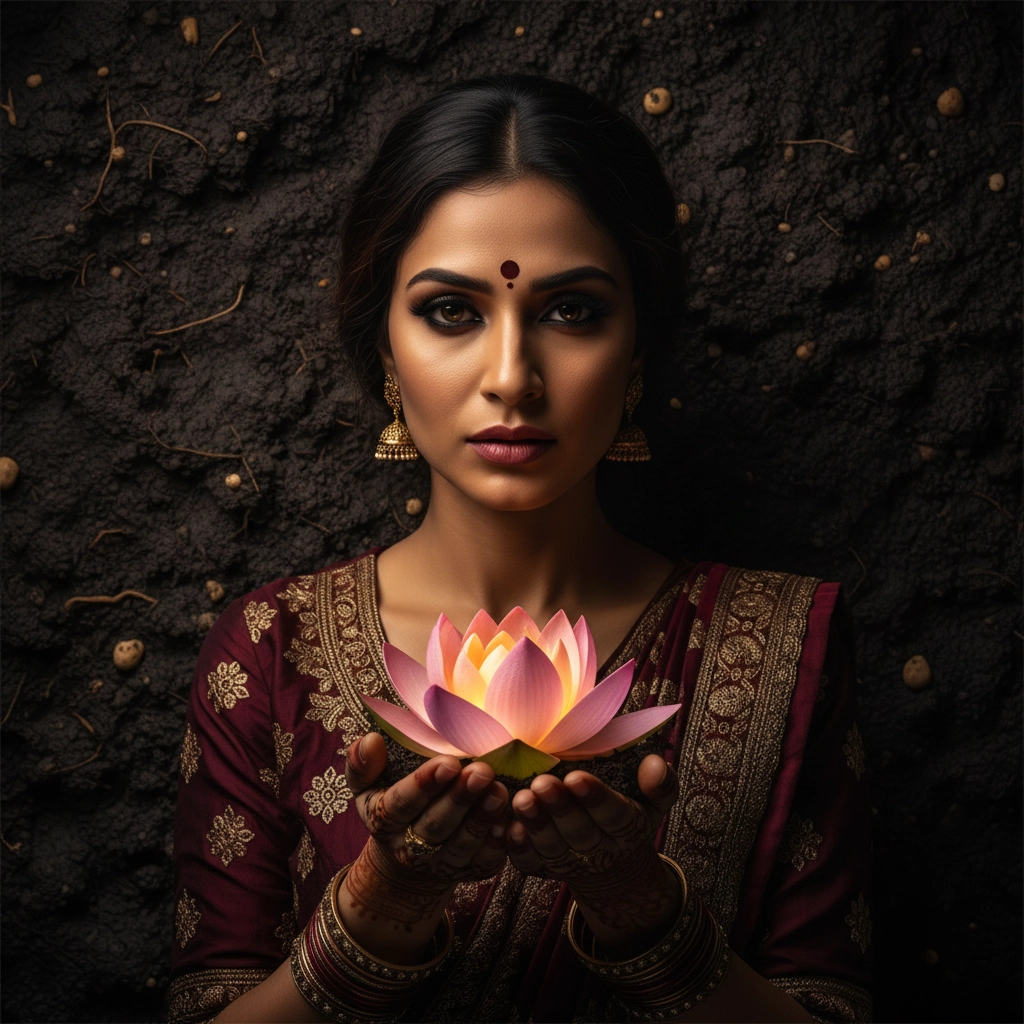
Kamala (also called Kamalatmika) embodies this perfectly: she's the lotus goddess who shows how beauty and purity can emerge from mud. Not despite the mud, but because of it. The muck isn't something to transcend; it's the very condition that makes the lotus possible.

Beyond the spiritual perfectionism trap
The Mahavidyas offer an antidote to spiritual perfectionism because they're not interested in making you perfect. They're interested in making you real.
They show up in your kitchen when you're crying over burnt dinner after a terrible day. They're present in your bedroom when you're having the fight with your partner that finally gets to the real issue. They witness you in the grocery store when you're overwhelmed by choices and realize how much of your life you've been living on autopilot.
This is where the rubber meets the road: not in meditation retreats or yoga studios (though those are beautiful too), but in the moments when life refuses to cooperate with your spiritual ideals.
Tara embodies this perfectly. She's often called the goddess who helps you cross over troubled waters: not by calming the storm, but by teaching you to navigate through it. She doesn't promise smooth sailing. She promises you won't drown.
The invitation to wholeness
Modern self-help culture often feels like a never-ending optimization project. There's always something to fix, improve, or transcend. The Mahavidyas offer something different: the recognition that you're already whole, even in your brokenness. Especially in your brokenness.
This doesn't mean giving up on growth or settling for dysfunction. It means approaching change from a place of basic acceptance rather than self-rejection. When you're not fighting half of your experience, you have twice as much energy available for actually living.
The ten Mahavidyas together form a complete mandala of existence. They show us that the Divine isn't just light and love (though it includes those). It's also fierce truth-telling, necessary endings, creative destruction, and the wild, untameable force that moves through all things.
In a culture obsessed with avoiding discomfort, they remind us that some of life's most profound gifts come wrapped in difficulty. In a world that wants to spiritually bypass our humanity, they invite us to find the sacred right in the middle of our messy, complicated, perfectly imperfect lives.
That's not just refreshing; it's revolutionary.

