


Walk into most spiritual communities today and you'll hear a lot about shadow work. It's become the trendy buzzword for everything from weekend workshops to Instagram affirmations. But there's a version of shadow work that rarely gets discussed, the uncomfortable, messy, ego-shattering kind that exposes the very shadows within spiritual communities themselves.
The truth is, spiritual circles have their own shadows that remain largely unexamined. And until we're willing to look at these blind spots honestly, our shadow work remains incomplete, performative, and ultimately ineffective.
The Spiritual Status Game
Let's start with the elephant in the meditation room: the unspoken hierarchy that exists in almost every spiritual community. There's the teacher who never admits uncertainty, the long-time student who subtly flexes their spiritual credentials, and the newcomer desperately trying to prove their worthiness through the right vocabulary and practices.
This craving for spiritual status creates a shadow that spiritual communities rarely acknowledge. We see it in the competition over who has the most profound insights, who's had the most dramatic healing breakthrough, or who can speak most eloquently about non-duality while still very much attached to being seen as spiritually advanced.
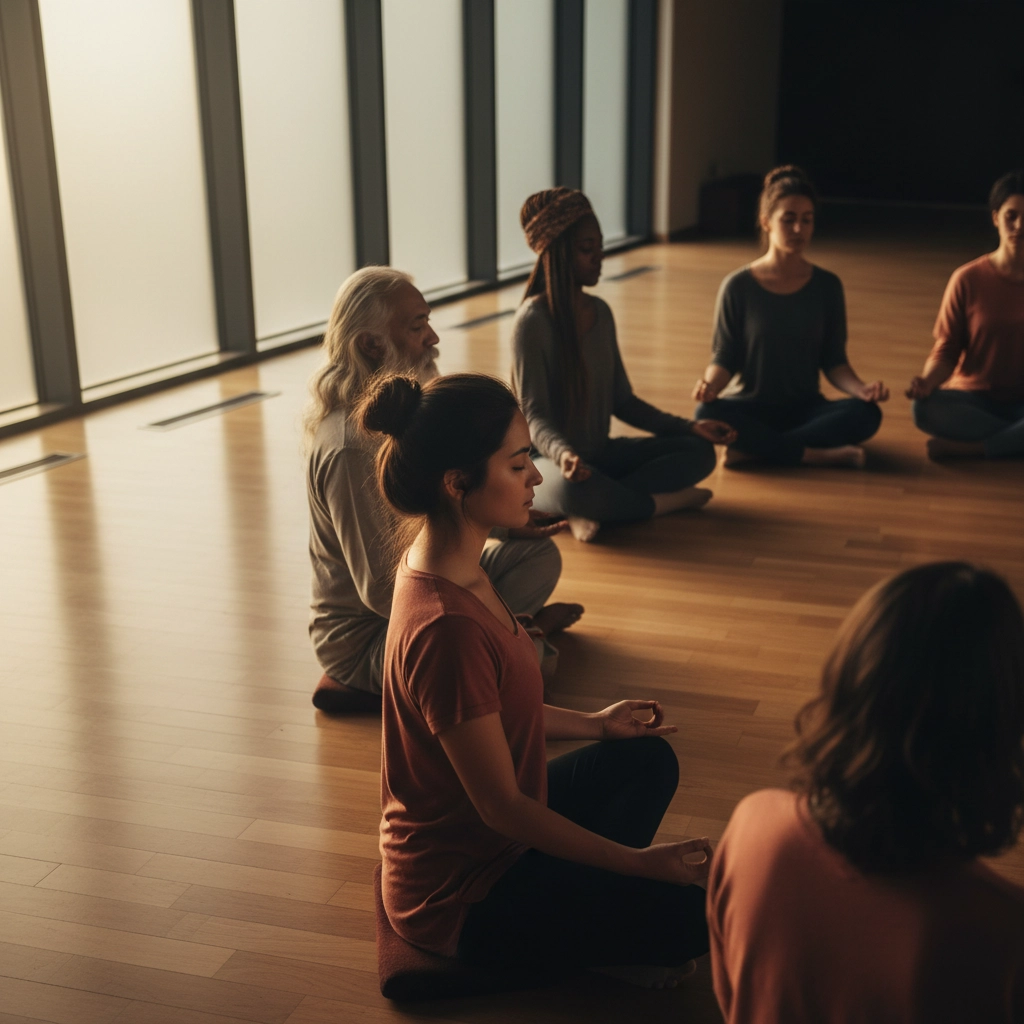
The real shadow work here isn't just recognizing our own need for validation, it's examining how spiritual communities unconsciously reward performance over authenticity. When someone shares a vulnerable struggle, does the community respond with genuine presence, or do they quickly offer spiritual platitudes that shut down raw honesty?
The Trauma That Gets Spiritually Bypassed
Most spiritual communities talk about shadow work as if it's separate from psychological trauma, but this separation is artificial and often harmful. Your shadow isn't just some mystical dark side, it's often unprocessed trauma, ancestral patterns, and nervous system dysregulation that needs genuine healing, not just spiritual concepts.
When someone is triggered in a spiritual setting, the common response is often to spiritually bypass the emotional reality. "Everything happens for a reason," "It's all perfect," or "You're choosing to be triggered" are phrases that shut down the messy, non-linear process of actually integrating difficult emotions and experiences.
The shadow work that doesn't get discussed is how spiritual communities often become havens for people avoiding therapy, medication, or other forms of psychological support they actually need. The belief that spiritual practice alone can heal everything isn't just naive, it can be dangerous for people dealing with serious mental health challenges.
Jealousy and Competition in Sacred Spaces
Here's an uncomfortable truth: spiritual communities are filled with jealousy, and nobody wants to talk about it. Jealousy of the teacher's apparent enlightenment. Jealousy of other students who seem to "get it" faster. Jealousy of those who can afford expensive retreats or have the luxury of dedicating their lives to spiritual practice.
This jealousy is compounded by the fact that most spiritual teachings tell us we shouldn't feel jealous. So instead of acknowledging and working with these natural human emotions, they get suppressed, projected, or expressed through passive-aggressive spiritual one-upmanship.

Real shadow work in spiritual communities would involve creating space for people to admit: "I'm jealous of your breakthrough," "I resent that you have financial freedom to do this work," or "I'm angry that the teacher seems to favor certain students." But these honest admissions rarely happen because they threaten the carefully maintained atmosphere of spiritual positivity.
Cultural Appropriation and Spiritual Privilege
Many Western spiritual communities are built on practices extracted from cultures that have been systematically oppressed. Yet the shadow around cultural appropriation rarely gets examined with the depth it deserves. It's not enough to acknowledge that yoga comes from India or that meditation has Buddhist roots, we need to examine the power dynamics of who gets to profit from these practices and who gets marginalized.
The shadow work here involves white practitioners examining their privilege to pick and choose spiritual practices without understanding their cultural context or the ongoing oppression of the people who originated these teachings. It means questioning whether paying for a Sanskrit certification while ignoring the struggles of actual Indian spiritual teachers is ethical spiritual practice.
This also extends to the way spiritual communities often center experiences and perspectives of privileged practitioners while marginalizing voices from the cultures these practices come from, or from people dealing with systemic oppression.
The Shadow of Spiritual Teachers
Perhaps the most avoided topic is the shadow within spiritual teaching itself. The teacher who uses their position to manipulate students sexually, emotionally, or financially. The guru who preaches non-attachment while living lavishly. The spiritual leader whose enlightenment somehow doesn't extend to how they treat their family or employees.
But it's not just about obvious abuses of power. It's also about the subtler shadows: teachers who become addicted to being needed, who unconsciously keep students dependent rather than empowering their autonomy, or who project their own unhealed wounds onto their students' spiritual journeys.

The real shadow work for spiritual communities involves creating systems of accountability that don't rely on blind faith in spiritual authority. It means being willing to question teachers and teaching methods, even when it's uncomfortable or challenges the community's beliefs about enlightenment and spiritual hierarchy.
Spiritual Materialism and the Wellness Industrial Complex
The commercialization of spirituality has created shadows that most communities refuse to examine. The $4.4 trillion wellness industry has turned spiritual practices into consumer products, complete with Instagram-worthy aesthetics and promises of quick transformation.
This creates a shadow where genuine spiritual seeking gets confused with spiritual materialism, collecting experiences, practices, and credentials as spiritual trophies. The person who has done ayahuasca in Peru, studied with Tibetan monks, and completed multiple yoga teacher trainings but still treats their family with unconscious cruelty.
The shadow work here involves questioning our own motivations: Are we seeking genuine transformation, or are we seeking spiritual experiences that enhance our identity and social status? Are we using spiritual practices to avoid dealing with mundane responsibilities and relationships?
The Uncomfortable Emotions We Spiritually Bypass
Most spiritual communities excel at processing certain emotions, grief, for example, is often welcomed as sacred and transformative. But other emotions get spiritually bypassed or pathologized. Anger is often seen as "low vibrational." Disgust is rarely acknowledged as potentially wisdom. Sexual desire is either demonized or artificially sanctified.
Real shadow work means being willing to feel and express the full range of human emotions without immediately trying to transcend, transform, or spiritualize them. Sometimes anger is just anger. Sometimes jealousy is information about our unmet needs. Sometimes disgust is our nervous system protecting us from what's genuinely harmful.
What Honest Shadow Work Actually Looks Like
So what would shadow work look like if spiritual communities were willing to engage with these uncomfortable truths? It would be messier, slower, and far less Instagram-worthy than the version currently being marketed.
It would involve creating spaces where people can admit their spiritual failings without being judged or given immediate advice. It would mean acknowledging that healing isn't linear and that spiritual practice doesn't make us immune to human psychology.
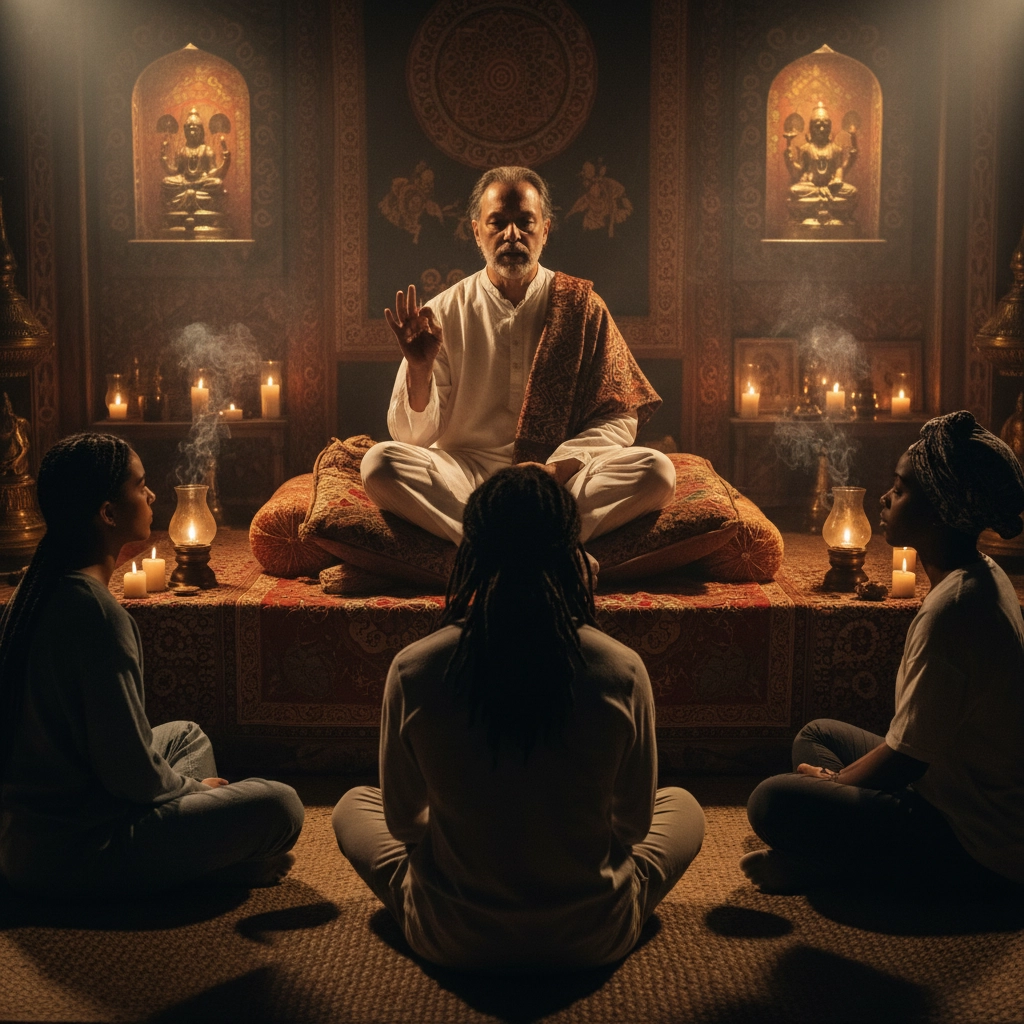
Honest shadow work in spiritual communities would include regular examination of power dynamics, cultural sensitivity training for teachers and students, and transparent discussions about money, privilege, and access. It would mean being willing to sit with uncomfortable emotions and difficult conversations rather than rushing toward resolution and harmony.
Most importantly, it would recognize that the goal isn't to eliminate our shadows but to develop a conscious relationship with them. The teacher who knows they have control issues. The student who acknowledges their spiritual materialism. The community that can discuss its blind spots without defensiveness.
This kind of shadow work doesn't promise quick transformation or spiritual superiority. Instead, it offers something more valuable: the possibility of genuine authenticity in spiritual practice and the integration that comes from embracing our full humanity, shadows and all.
The shadows within spiritual communities aren't obstacles to authentic practice: they're invitations to deepen it. But only if we're brave enough to look.

