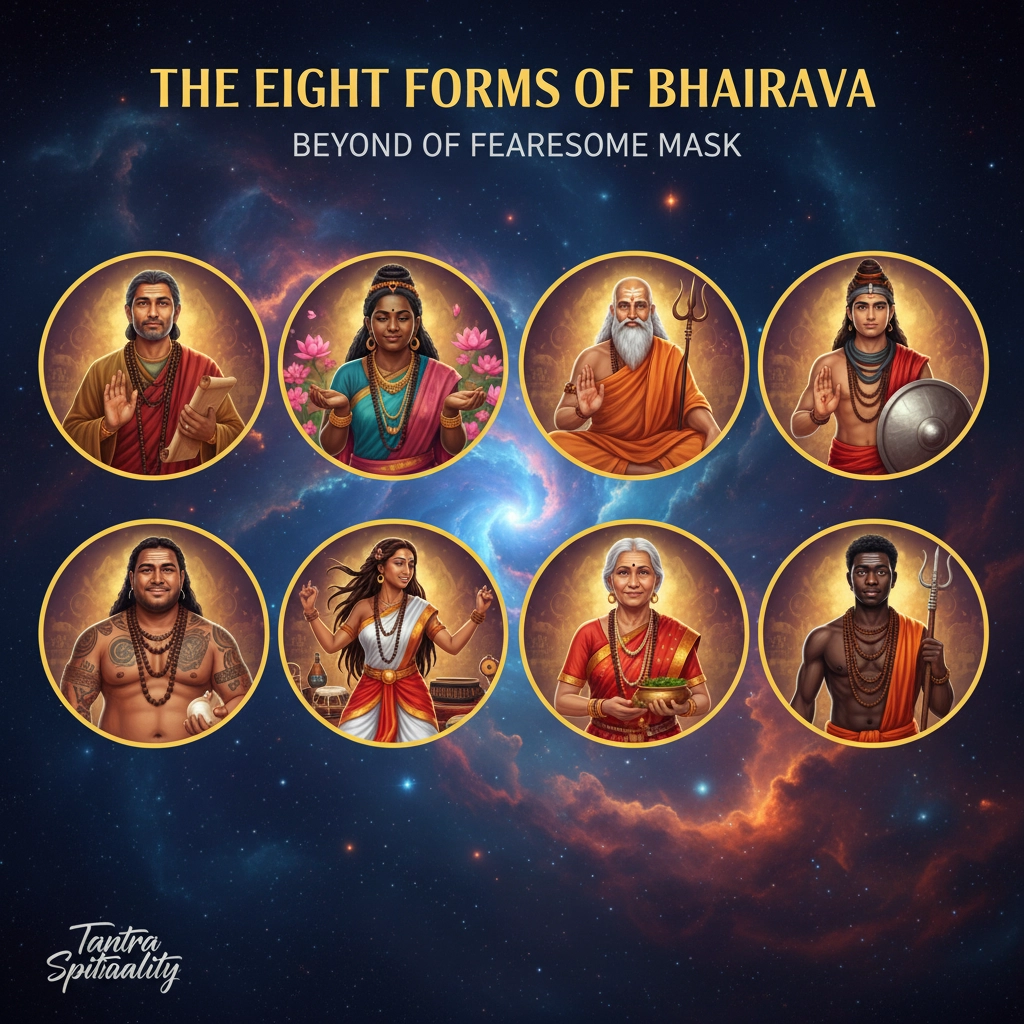
When most people hear the word "Tantra," their minds jump to a very specific, often over-sexualized corner of the internet. But if you walk through the ancient gates of Trimbakeshwar or sit with a 32nd-generation lineage holder, the reality is much more grounded, practical, and: at times: intense. In these sacred spaces, Tantra isn’t a lifestyle brand; it’s a technology of the soul.
At its core, Tantra simply means "action" or "technique." If you are performing a Pooja, you are practicing the first level of Tantra. It is the science of doing something specific to achieve a specific result. It’s not about philosophy or sitting around debating the nature of the universe; it’s about the "how." How do we move energy? How do we clear the path? How do we interface with the divine?
The Two Poles: Bhairava vs. Krishna
One of the most profound insights from the masters at Trimbakeshwar is the understanding of spiritual "personality types." Not everyone is built for the same path.
Think about the difference between a soldier and a poet. They both seek truth, but they move through the world differently. This is the difference between Bhairava Upasana and Krishna Upasana.
Krishna represents the path of total surrender and bliss. It is the "sweet" path. To follow Krishna, you must be willing to let go of your ego through love and devotion. It is soft, expansive, and focused on the heart.
Bhairava, the fierce manifestation of Shiva, is a different story. Bhairava is the "Police" of the spiritual realm. He is the guardian of the threshold. To walk the path of Bhairava, you don't necessarily start with "surrender": you start with fury, determination, and a touch of what looks like madness to the outside world. This is the path for the eccentric, the warrior, and those who have a fire in their gut that won't be extinguished by soft chants.

Choosing a deity: or rather, being chosen by one: is about matching your internal frequency. If you have an intense, protective, or uncompromising nature, Bhairava is the mirror that reflects your highest potential. This isn't just about Tantra spirituality; it’s about radical self-honesty.
The Practical Mechanics: How to Start
In the world of Shiva and Shakti, the theory is useless without the work. If you’re looking to incorporate these energies into your life, the priests of Trimbakeshwar suggest a very specific progression. It starts with the physical and moves toward the vibrational.
1. Lingam Worship
The Lingam is the primary symbol of Shiva. It represents the union of the masculine and feminine: the static consciousness of Shiva and the dynamic energy of Shakti. Beginning your day by offering water or milk to a Lingam is the most basic "technique" (Tantra) to ground your energy. It’s a physical anchor for your spiritual intent.
2. The Power of Ganesha
Before you can reach for the heights of Kali or the depths of Bhairava, you have to clear the ground. This is where Ganesha comes in. But there is a catch: the pronunciation matters more than the meaning.
The mantra ‘Om Gang Ganapataye Namah’ is often butchered in the West. The "Gang" isn't pronounced like a group of people; it’s a nasal, resonant sound that should vibrate the roof of your mouth. When you get the frequency right, it acts like a sonic key that unlocks the obstacles in your nervous system.
3. The Bija Mantras
Once the path is clear, you move to the core energies. The mantra ‘Om Aim Hreem Shreem’ is a powerhouse. Each of these syllables is a "seed" (Bija) that carries the blueprint of a specific force:
- Aim: The energy of wisdom and sound (Saraswati).
- Hreem: The energy of transformation and the heart (Bhuvaneshwari).
- Shreem: The energy of abundance and grace (Lakshmi).
Repeating these isn't about asking for things; it’s about tuning your internal radio to those frequencies.
The Preta State: Why Lineage Matters
There is a darker side to the conversation that often gets ignored in modern spiritual circles: what happens when we leave the body?
In the Trimbakeshwar tradition, there is a deep understanding of the "Preta" or ghost state. Unless a person is a saint or has achieved a high level of realization, they don't immediately "dissolve into the light." They enter a state of transition. For most people, this state can last for three generations. This is why ancestral work and specific rituals are so vital in healing: we are carrying the energetic residues of those who came before us.
Tantra provides the tools to clear these "ghostly" imprints, ensuring that the living are not weighed down by the unresolved energy of the dead. It’s spiritual hygiene on a multi-generational level.

The Warrior Kings: Shakti in Action
The history of India is punctuated by the Maratha Empire, led by kings like Shivaji and Sambhaji. These weren't just political leaders; they were deep practitioners of Tantra. Their devotion to Goddess Bhavani (a form of Shakti) was the secret to their sovereignty.
They understood that you cannot protect a culture or a kingdom with "peace and love" alone. You need the fierce, protective power of the Mother. They utilized specific Tantric rituals to gain the edge in battle and to maintain their mental fortitude. This connection between the warrior and the Goddess shows that Tantra is not about escaping reality: it’s about mastering it. It’s about having the strength to stand your ground and the wisdom to know when to strike.
Integrating the Fierce into the Modern World
So, how does this apply to you, sitting in London or Berlin, trying to navigate a 9-to-5 life?
The "Path of the Fierce" is about taking responsibility for your own energy. It’s about moving away from the idea that spirituality is always soft and comforting. Sometimes, healing requires a wrecking ball. Sometimes, to find peace, you have to invoke the part of yourself that is willing to fight for it.
Bhairava represents that part of us. He is the one who cuts through the illusions and the "nice" masks we wear. When you engage with these practices, you are essentially saying: "I am ready to see the truth, no matter how uncomfortable it is."

Final Thoughts on the Journey
Whether you are drawn to the intensity of Kali or the protective embrace of Shiva, remember that Tantra is a living science. It’s not a hobby; it’s an engagement with the raw forces of creation.
Start small. Focus on the "action." Get the pronunciation right. And most importantly, check your intent. Are you looking for a distraction, or are you looking for a transformation? The fierce path is always open, but it requires you to show up with your whole self: the madness, the fury, and the determination included.
Ready to explore the depths of your own energy?
If you're looking to move beyond theory and into direct experience, we offer spaces and guidance to help you navigate your spiritual path. Whether you need a sanctuary for practice or a deeper understanding of emotional release, we’re here to support the journey.
- Explore our London healing spaces for local sessions.
- Check out our Germany accommodation for a dedicated retreat.
- Learn more about emotional release through bodywork to clear the "Preta" states within your own nervous system.
Visit Tantric Journey to start your transformation today.