

There's a question that comes up often when people start exploring the deeper layers of Shiva worship: What's the difference between Mahakala and Kalabhairava? Aren't they the same? They sound similar. They're both fierce. Both connected to time and death. Both wrapped in that dark, mysterious energy that makes the ego want to look away.
But here's the thing: they're not the same. Not quite. And understanding the difference between them opens up something profound about how we approach our own spiritual practice. It's the difference between stillness and movement. Between potential and expression. Between the seed and the tree.
Let's break it down.
Mahakala: The Still Point Beyond Time
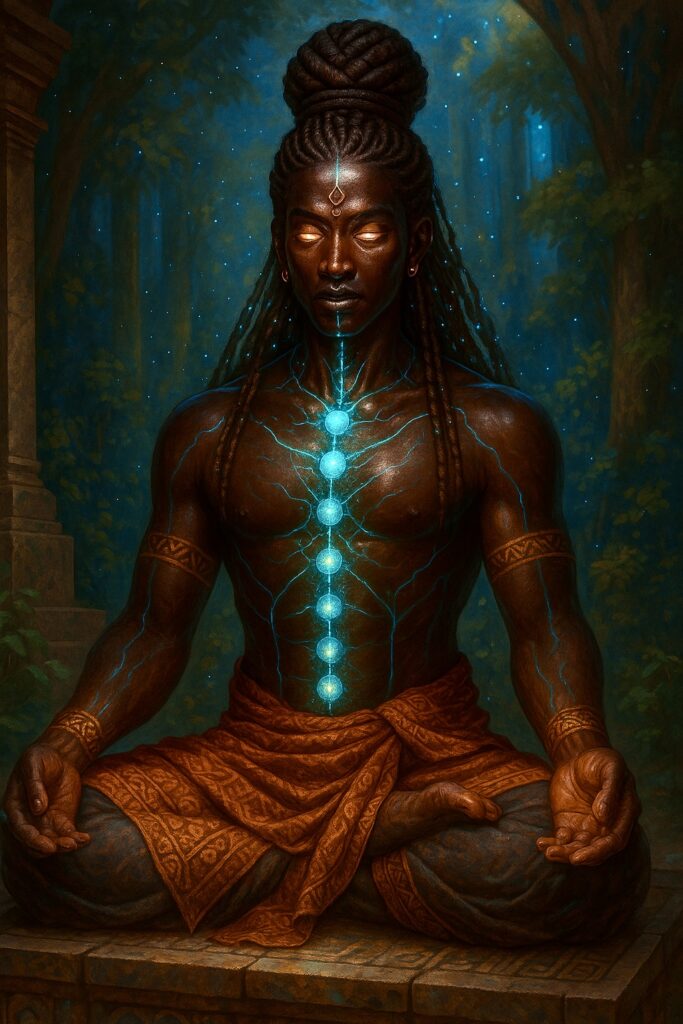
Mahakala literally means "Great Time" or "Beyond Time." He is Shiva in his most absolute, unmoving state. Think of him as the pause between breaths. The silence before sound. The darkness before light even knows it wants to exist.
Mahakala is latent energy. Pure potential. He's the yogic Shiva: seated in eternal meditation, unmoved by the play of creation and destruction happening around him. He doesn't act. He doesn't move. He simply is.
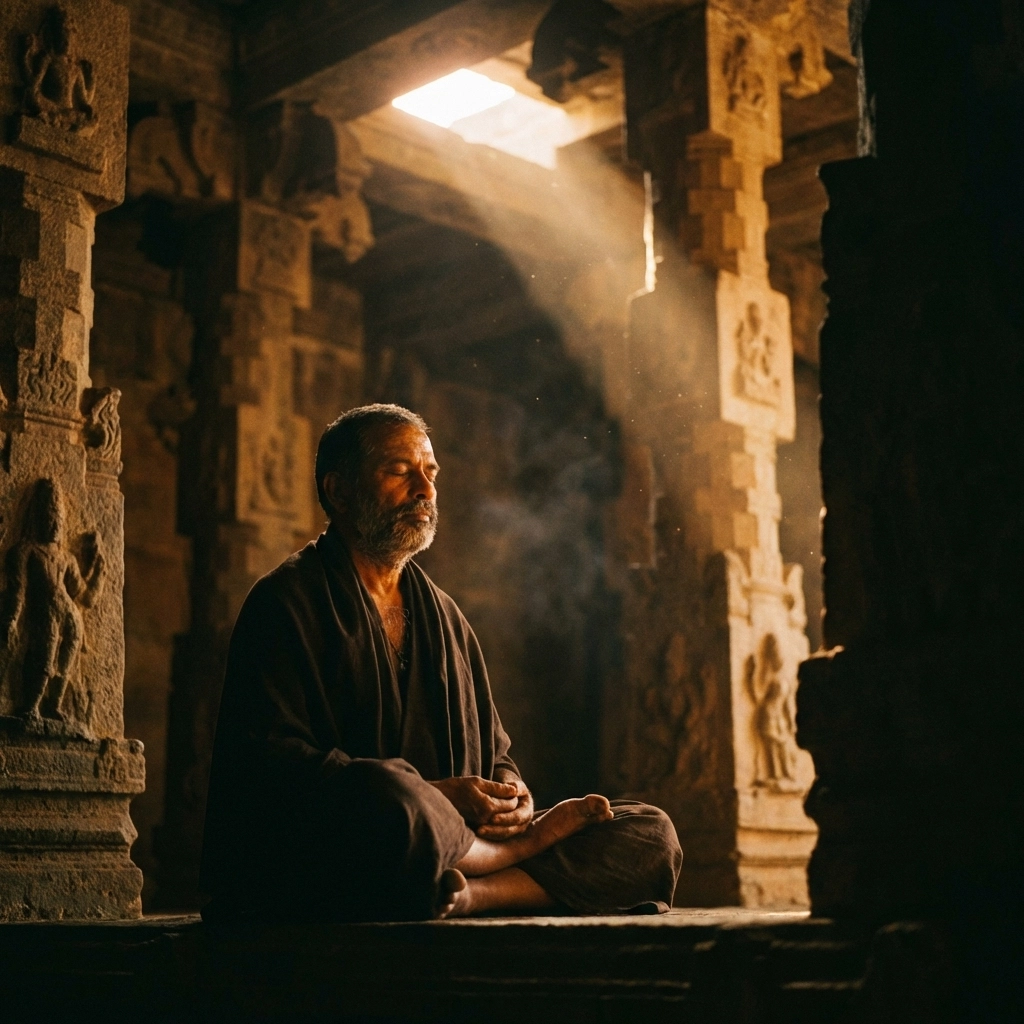
In the tantric understanding, this is consciousness without expression. Awareness without object. It's that place you touch in deep meditation when everything drops away and there's just… presence. No doing. No becoming. Just being.
This is powerful. Essential, even. But it's also incomplete on its own.
Because what good is infinite potential if it never moves? What good is the seed if it never cracks open?
Kalabhairava: When Stillness Catches Fire
Now we come to Kalabhairava: and this is where things get interesting.
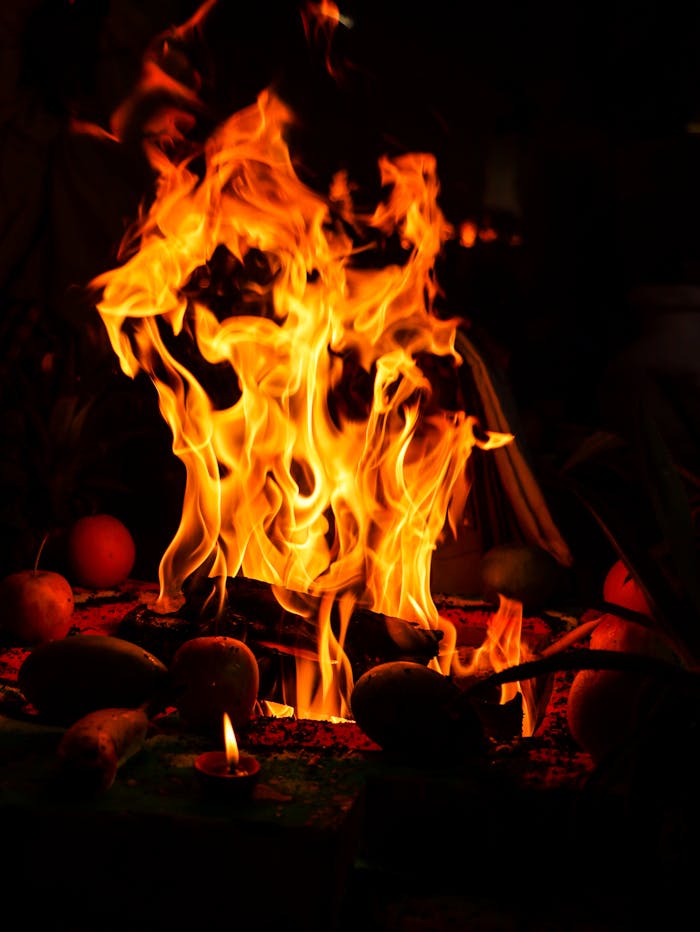
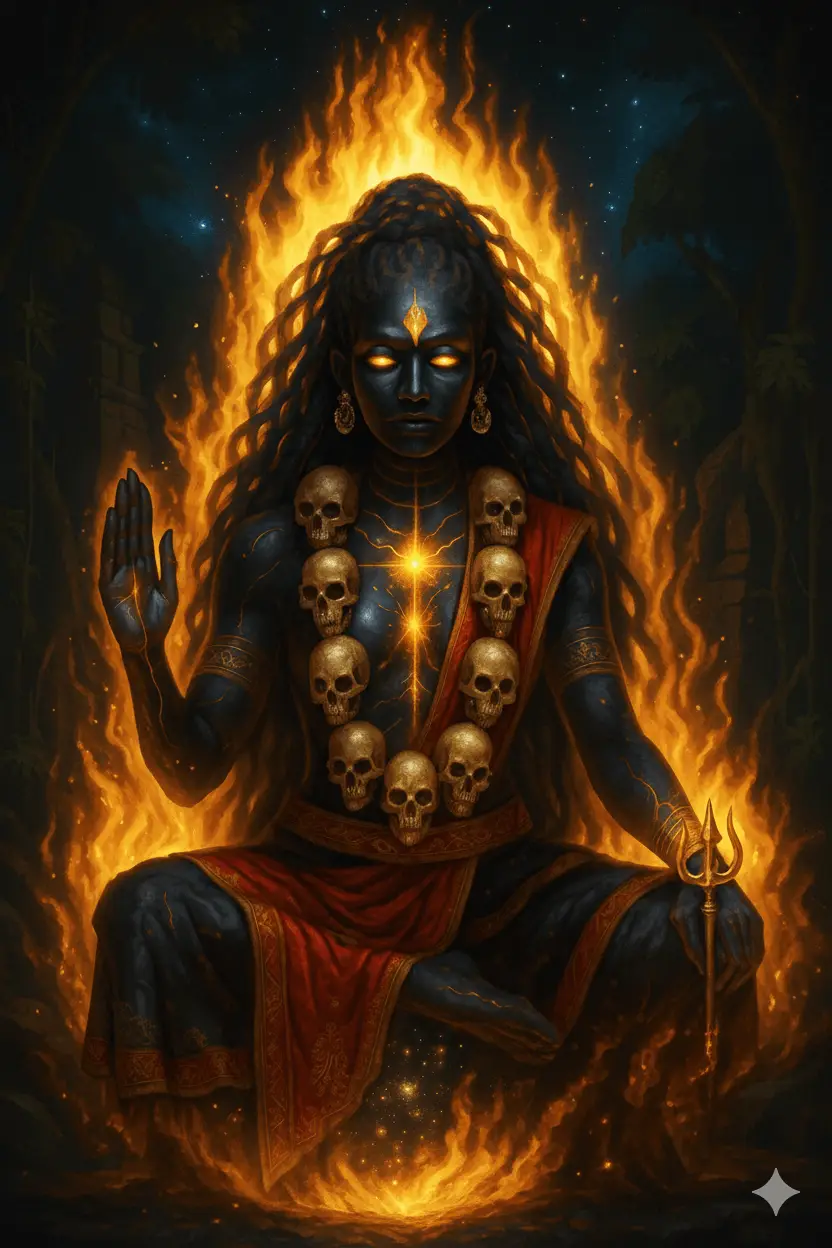
Kalabhairava is what happens when Mahakala's stillness meets Shakti's fire. He's the awakened force. The moving principle. Where Mahakala is the unlit match, Kalabhairava is the flame.
The name itself tells us something important: Kala (time) + Bhairava (the fierce one, the one who dispels fear). Kalabhairava is time in motion. He's the force that devours everything that isn't real, everything that keeps us small, everything we're afraid to face.
But here's what often gets missed in popular understanding: Kalabhairava isn't just destruction for destruction's sake. He's not chaos. He's the fierce compassion that burns away illusion so truth can emerge.
When Shiva's latent power gains Shakti: gains movement, expression, direction: Kalabhairava is born. This is the union. The marriage of stillness and dance. Consciousness meeting energy. Purusha meeting Prakriti.
The Ten Mahavidyas: Shakti's Faces Within Bhairava
Here's something beautiful that often surprises people: Kalabhairava embodies the ten Mahavidyas.
The Mahavidyas are the ten wisdom goddesses: Kali, Tara, Tripura Sundari, Bhuvaneshvari, Bhairavi, Chinnamasta, Dhumavati, Bagalamukhi, Matangi, and Kamala. Each represents a different face of Shakti. A different aspect of the divine feminine. A different doorway into awakening.
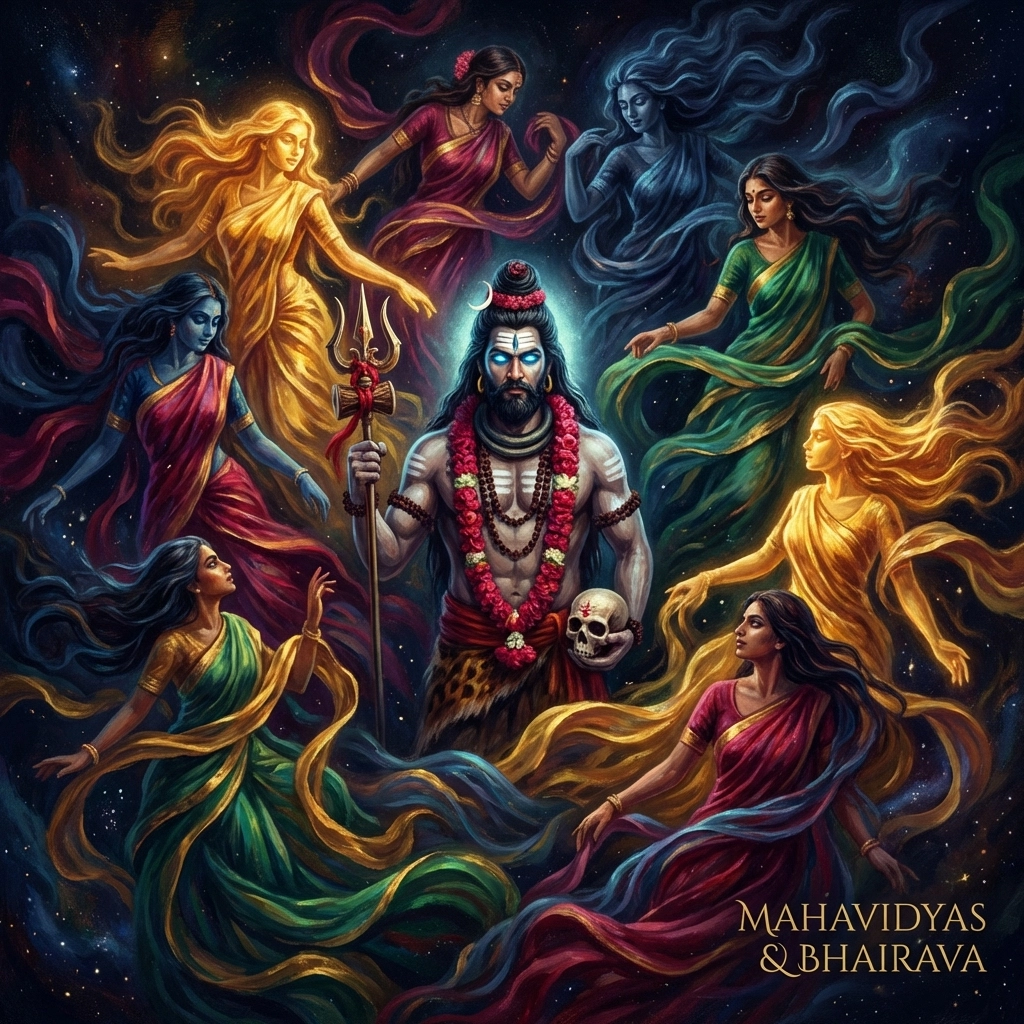
When we say Kalabhairava carries all ten Mahavidyas, we're saying something radical: the fierce masculine and the awakened feminine are not separate. They dance together. They need each other. Kalabhairava is the form that holds all these Shakti energies in dynamic expression.
This is why authentic tantra never separates Shiva from Shakti. You can't have movement without stillness to move from. You can't have stillness that means anything without the potential to move.
Why This Matters for Your Sadhana
So what does this mean for your actual practice? Why does understanding Mahakala and Kalabhairava matter when you sit down to meditate or approach your spiritual work?
Because authentic sadhana requires both.
You need the Mahakala principle: the ability to become still, to drop into that place beyond time, to let go of all the doing and achieving and becoming. This is the foundation. Without stability, without that unshakeable ground of pure awareness, everything else becomes spiritual entertainment.
But you also need the Kalabhairava principle: the willingness to let that stillness ignite. To let Shakti move through you. To face what needs to be faced. To burn what needs to burn.
Too many seekers get stuck in one or the other.
Some become "spiritual" in a way that's actually just dissociation dressed up in Sanskrit. They float above life, never grounded, never confronting their shadows, using meditation as escape rather than transformation.
Others are all fire, all action, all intensity: but without the still center to return to. They burn out. They confuse spiritual ambition with spiritual growth. They move and move and move but never arrive anywhere.
The path that actually works? It weaves between both. Stillness and movement. Rest and action. Being and becoming.
Shadow Work: What Bhairava Really Demands
Let's talk about something that often gets glossed over when people approach fierce deities like Kalabhairava: shadow work.

Bhairava is called the "dispeller of fear" for a reason. Not because he makes fear magically disappear. But because he takes you directly into it.
The shadows we carry: the shame, the rage, the grief, the parts of ourselves we've locked away: these don't dissolve through positive thinking or spiritual bypassing. They transform through facing. Through feeling. Through letting the fire of awareness touch what we've kept in darkness.
Kalabhairava energy is the energy of confrontation. But it's not cold or punishing. This is important.
True Bhairava energy: true Guru energy: carries warmth. Forgiveness. Fierce compassion.
It says: "I see all of you. The parts you're proud of and the parts you hide. And I'm not going anywhere."
This is what real transformation requires. Not judgment. Not punishment. But unflinching presence that holds space for everything to be seen, felt, and integrated.
The Guru Tatwa: Finding This Energy Within
There's a tendency to project Kalabhairava outward: onto a statue, a teacher, a concept. And while external forms can be powerful doorways, the real invitation is to recognize this energy within yourself.
The Guru Tatwa: the principle of the Guru: isn't just something out there. It's the inner fire that refuses to let you stay comfortable in your smallness. It's the part of you that knows when you're lying to yourself. It's the fierce love that won't let you settle.
When you cultivate both Mahakala stillness and Kalabhairava fire in your own practice, you become your own teacher in a very real sense. Not in an ego way. Not in a "I don't need guidance" way. But in the way that all true teachers are pointing you toward: your own direct relationship with truth.
Bringing It Home
Mahakala and Kalabhairava aren't just interesting mythology. They're maps of consciousness. Maps of how stillness becomes movement. How potential becomes expression. How the unmanifest becomes manifest.
In your own life, in your own practice, ask yourself:
Where am I too still? Where have I used "spirituality" to avoid the fire of transformation?
Where am I too much in movement? Where am I burning without center, acting without awareness?
The goal isn't to choose one over the other. The goal is the dance between them. The marriage. The union that creates something new.
That's tantra. That's the path. And it's available to you right now, wherever you are.
If you're feeling called to explore these energies more deeply, reach out or explore what we offer at Tantric Journey. This work is meant to be lived, not just understood.