


Your yoga teacher guides the class through three rounds of rapid fire breathing. "Breathe out all that trauma!" she cheerfully instructs. "Let it go!" Around you, people are gasping, some crying, others looking dizzy. One person quietly slips out the back door.
This scene plays out in studios worldwide, and it reveals a dangerous gap in how we understand the relationship between breath and healing. Most yoga teachers treat pranayama like a universal cure-all, not realizing they might be inadvertently re-traumatizing the very people seeking healing.
The truth about breathwork and trauma processing is far more nuanced than what you'll hear in most classes: and understanding it could be the difference between genuine healing and deeper wounding.
The Nervous System Bridge Most Teachers Don't Understand
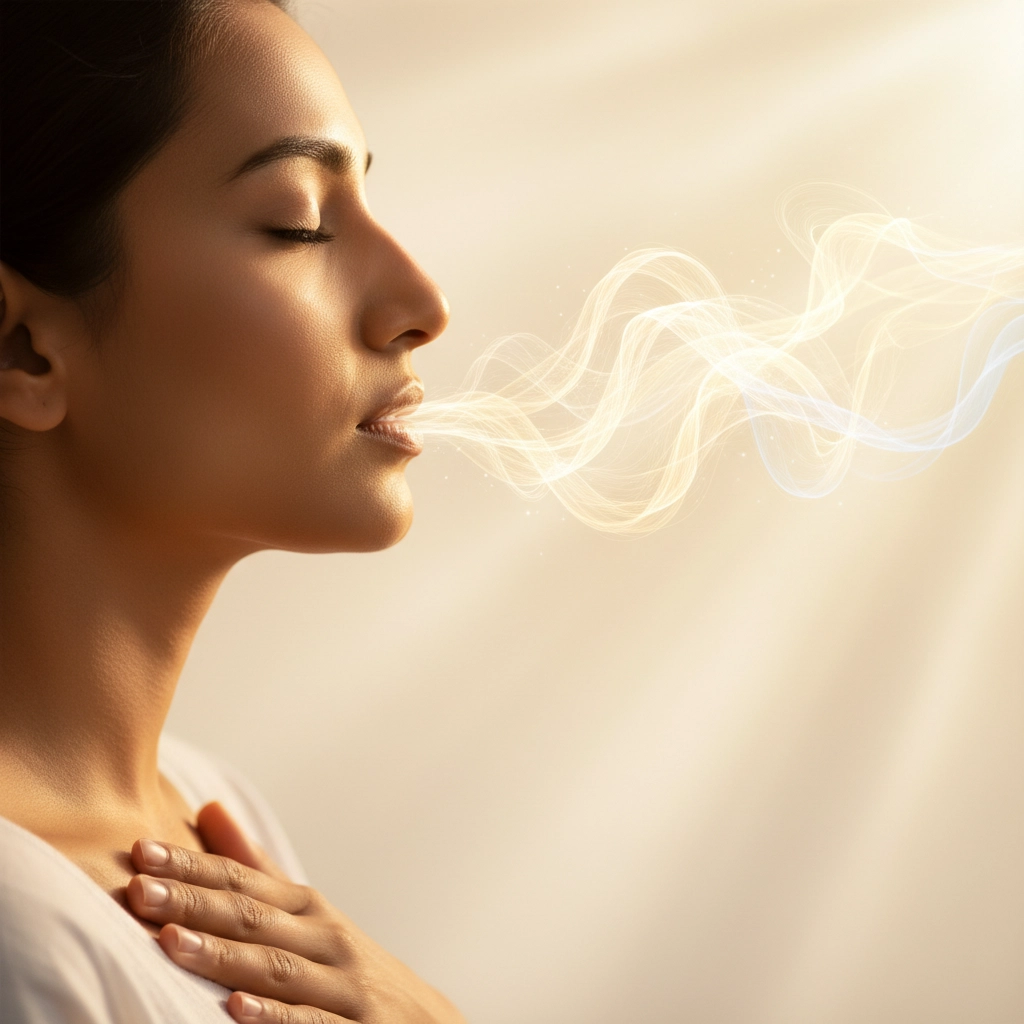
Your breath isn't just air moving in and out of your lungs. It's a direct hotline to your nervous system, specifically through the vagus nerve that threads through your diaphragm like a biological telephone wire. When you consciously alter your breathing pattern, you're literally sending messages to your brain about whether you're safe or in danger.
For trauma survivors, this connection is both a gateway to healing and a potential minefield. Their nervous systems are often stuck in hypervigilance: constantly scanning for threats, muscles tense, always ready to fight, flee, or freeze. Deep, intentional breathing can signal safety to this overwired system, shifting it into the parasympathetic "rest and digest" state where actual healing happens.
But here's what most teachers miss: this same pathway can trigger the trauma response if approached incorrectly.
The Dark Side of "Letting Go"
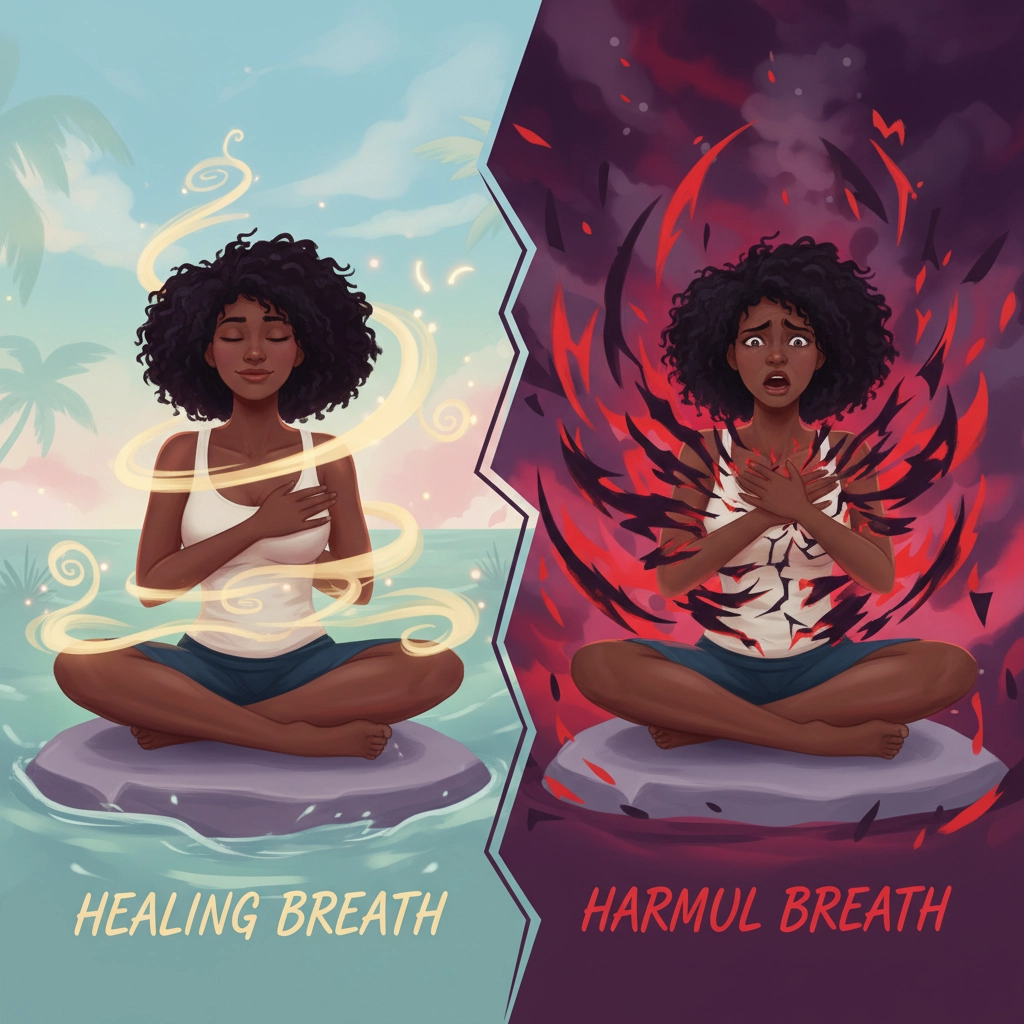
Not all breathing techniques are created equal, especially for trauma survivors. Those intense, rapid-fire breathing sessions that promise to "release everything" can actually cause more harm than healing. Aggressive breathwork: including breath retention, circular breathing, and holotropic techniques: can create altered states of consciousness that feel overwhelming to someone whose nervous system is already compromised.
Think about it: many traumatic experiences involve a loss of control, feeling trapped, or being unable to breathe properly. When a trauma survivor holds their breath for extended periods or hyperventilates in a yoga class, their body might interpret this as a threat, triggering the same survival responses they experienced during their original trauma.
Research backs this up. A clinical study found that PTSD patients who experienced adverse reactions during breath-holding practices showed significantly higher trauma severity scores afterward. The very technique meant to heal them made their symptoms worse.
Where Trauma Actually Lives in Your Body
Here's another piece most teachers gloss over: trauma isn't just stored in your mind: it's locked in your muscles, organs, and nervous system. When something overwhelming happens, and there's no safe way to process it in the moment, your body essentially hits the pause button. That survival energy gets trapped, showing up later as chronic tension, emotional numbness, or sudden waves of panic that seem to come from nowhere.
Pranayama can help unlock these stored emotions, but only when practiced with awareness and safety. The breath becomes a gentle key that can open doors to buried feelings: but if you're not prepared for what's behind those doors, the experience can feel chaotic rather than healing.
This is why some people have emotional releases during breathwork. It's not necessarily cathartic: it might be their nervous system finally feeling safe enough to discharge energy it's been holding for years.
What Trauma-Informed Breathwork Actually Looks Like
Real healing through breath isn't about dramatic releases or pushing through intensity. It's about subtlety, choice, and building safety slowly. Trauma-informed pranayama focuses on techniques that emphasize the relaxation response rather than activation.
Extended exhale breathing: where you make your exhale twice as long as your inhale: specifically targets nervous system regulation. When you lengthen your exhale, you're activating the vagus nerve's calming response, telling your body it's safe to relax. This is far more effective for trauma healing than aggressive techniques that might overwhelm an already sensitized system.
Alternate nostril breathing (nadi shodhana) works similarly, creating balance between your sympathetic and parasympathetic nervous systems while maintaining a sense of control and groundedness. The key is that these practices feel manageable, not overwhelming.
The golden rule for trauma survivors? If a breathing technique makes you feel more anxious, disconnected, or out of control, it's not right for you: regardless of what the teacher says about "pushing through" or "letting go."
The Missing Piece: Individual Differences
Here's what the yoga world often ignores: trauma shows up differently in every body. What heals one person might trigger another. Someone with complex PTSD will have different needs than someone processing a single traumatic event. People with concurrent anxiety disorders, chronic pain, or other mental health conditions need even more specialized approaches.
Clinical research shows that while pranayama can significantly reduce PTSD severity for some people, others experience adverse reactions: particularly those with somatoform disorders or complex trauma histories. This isn't a failure of the practice or the person; it's evidence that we need more nuanced, individualized approaches to healing.

The Practitioner's Dilemma
Most yoga teachers receive minimal training in trauma-informed practices. They learn breathing techniques as universal tools without understanding how these practices might affect someone carrying unprocessed trauma. This isn't necessarily their fault: traditional yoga teacher training programs rarely include comprehensive trauma education.
The result is well-meaning instructors who inadvertently create unsafe spaces for trauma survivors, using language like "just breathe through it" or "surrender to the discomfort" without recognizing that for some students, surrendering or pushing through sensations can be re-traumatizing.
A New Framework for Breath and Healing
The most effective approach to pranayama for trauma processing isn't about intensity: it's about building what trauma specialists call "window of tolerance." This is your nervous system's capacity to stay present and grounded during challenging experiences without becoming overwhelmed or shutting down.
Trauma-informed breathwork expands this window gradually, using the breath as a tool to develop resilience rather than force release. It emphasizes:
- Choice and control: You always have the option to modify, pause, or stop
- Present-moment awareness: Staying connected to your body's signals
- Gentle progression: Building capacity slowly rather than diving into intensity
- Safety first: If it doesn't feel safe, it's not healing
The Science of Slow Healing
Recent neuroscience research reveals that trauma healing happens through small, consistent experiences of safety rather than dramatic cathartic releases. Your nervous system needs repeated proof that it's safe before it will release stored survival energy.
This means that quiet, gentle breathwork practiced consistently over time might be far more effective than intense weekend workshops that promise immediate transformation. Your body heals at its own pace, and the breath can support this natural process when approached with patience and respect.
Moving Forward with Awareness
If you're drawn to breathwork for healing, start with the gentlest techniques. Work with practitioners who understand trauma-informed approaches and create space for your individual needs. Remember that healing isn't linear, and what works for others might not work for you: and that's perfectly okay.
The breath is indeed a powerful tool for processing trauma, but like any powerful tool, it needs to be used with knowledge, respect, and careful attention to safety. When approached this way, pranayama can become a trusted ally in your healing journey rather than another source of overwhelm.
Your breath has been with you through everything. It can be part of your healing too: when honored with the depth and care it deserves.

