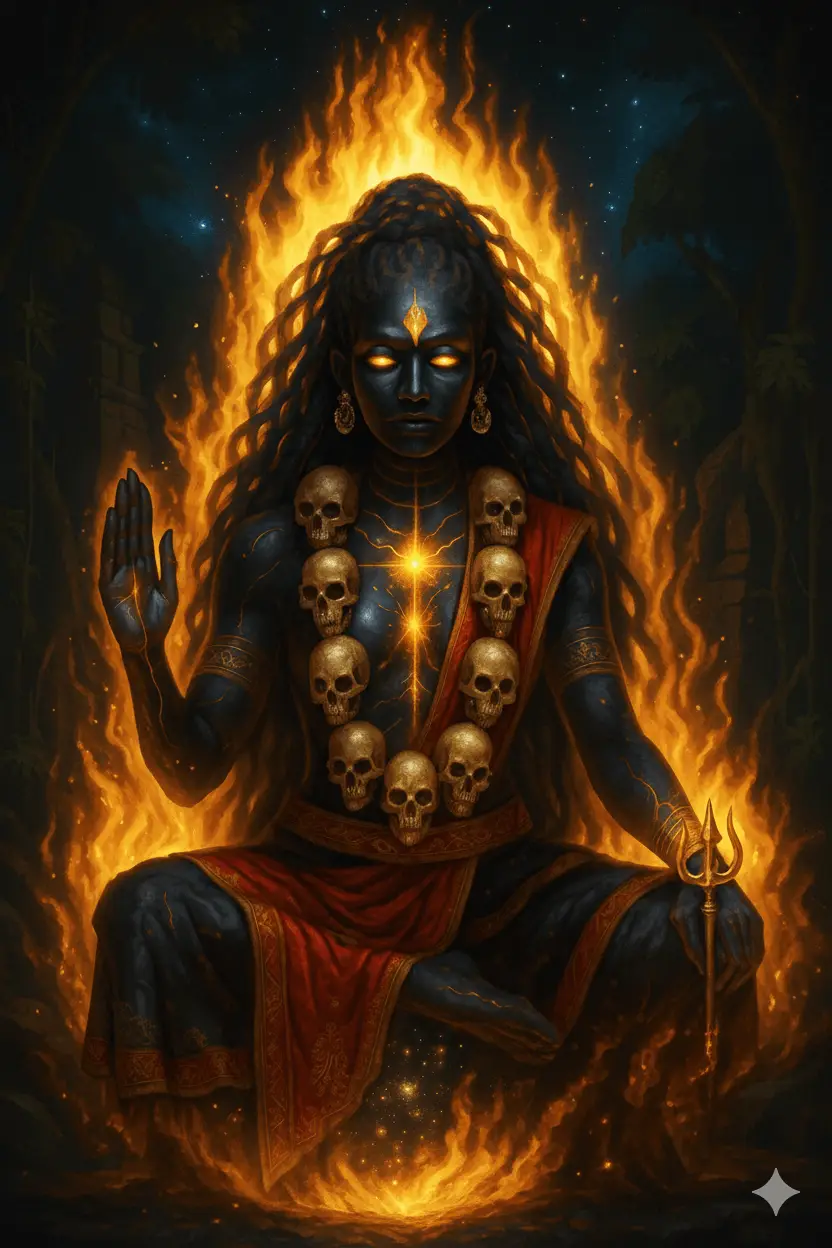


Let's cut through the fluff. When ancient tantric texts talked about the "energetic body," they weren't peddling mystical nonsense. They were describing a practical map of how consciousness moves through your physical form: and why that matters for your actual life.
Think of it this way: your body isn't just flesh and bone. It's also a living system of energy flow, information processing, and awareness. Ancient tantra developed sophisticated methods to work with this system, long before modern science started catching up.
What Is the Energetic Body, Really?
The energetic body is your consciousness operating through channels, centers, and flows that exist alongside your physical anatomy. It's not separate from your body: it IS your body, experienced from the inside out.
Ancient tantric practitioners mapped this inner landscape with the same precision that anatomists map muscles and bones. They identified three main components:
Energy channels (nadis) – pathways through which life force flows
Energy centers (chakras) – focal points where consciousness gathers and transforms
The animating force itself – what makes you "you" instead of just organized matter
The Three Main Highways
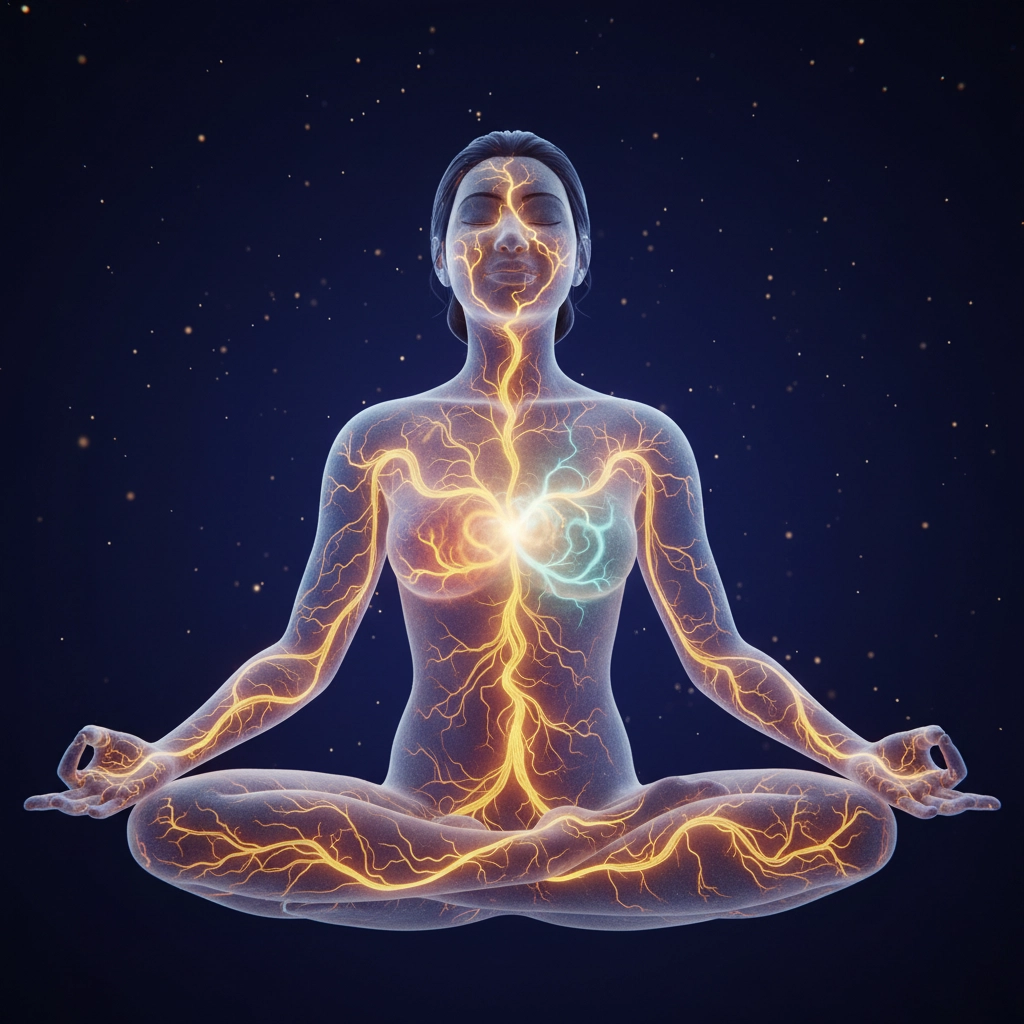
Your energetic system has three primary channels running through your torso:
Ida represents your receptive, cooling, introspective qualities. It corresponds roughly to your parasympathetic nervous system: the "rest and digest" response that helps you process and integrate.
Pingala embodies your active, warming, expressive qualities. This aligns with your sympathetic nervous system: your "fight or flight" mechanism that mobilizes energy for action.
Sushumna is your central channel, running along your spinal column. When ida and pingala achieve balance, energy can flow freely through sushumna, creating what tantric texts describe as expanded awareness and deep aliveness.
This isn't mystical theory. These correspond to real physiological processes. When your nervous system finds balance between activation and rest, you feel more present, grounded, and capable of responding rather than reacting.
Energy Centers That Actually Matter
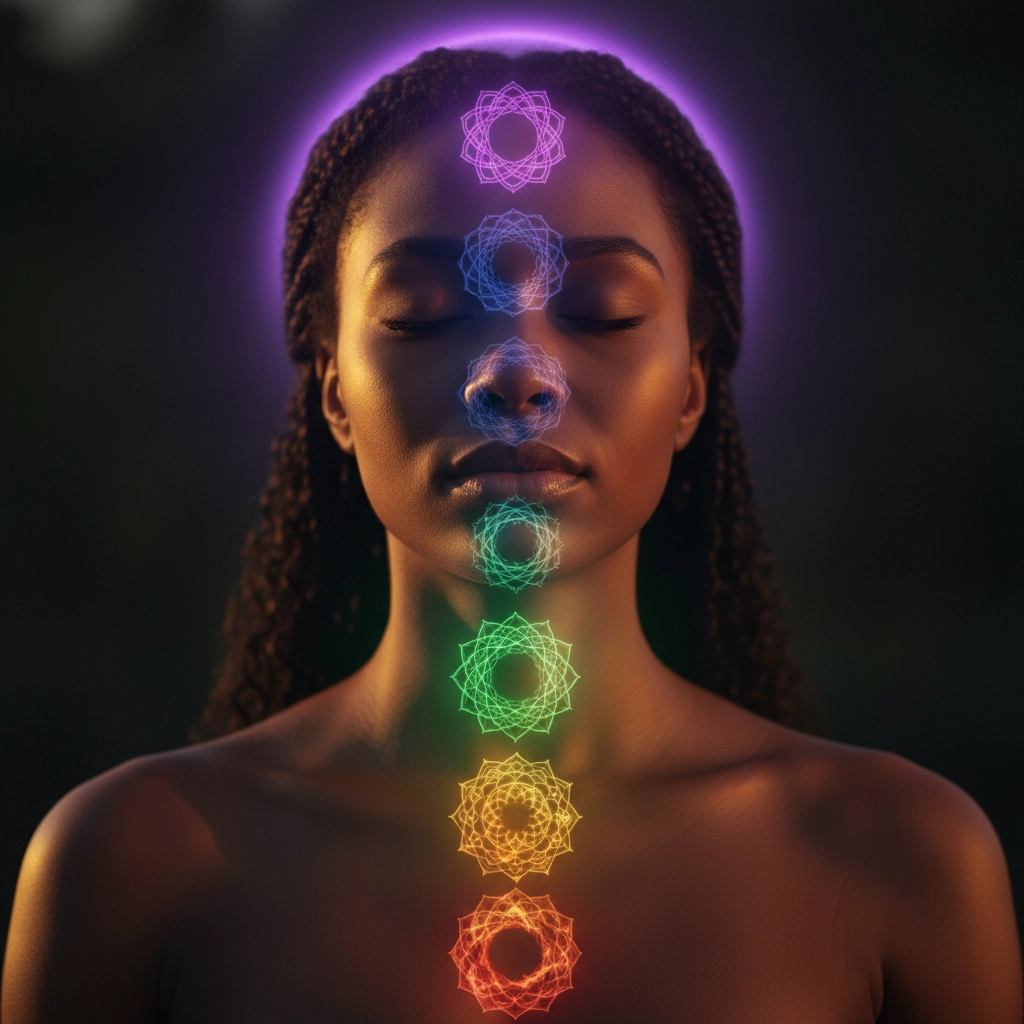
Chakras aren't New Age inventions: they're practical focal points for working with consciousness. Different tantric traditions recognize different numbers of chakras, from five to twenty-one, depending on the specific practice and purpose.
Think of chakras as transformers in an electrical system. They're places where energy can be concentrated, refined, and directed. Each center corresponds to different qualities of awareness and different areas of life mastery.
The base chakra relates to your connection with physical reality and basic survival. The heart center connects to your capacity for relationship and emotional intelligence. The throat chakra involves authentic self-expression. And so on.
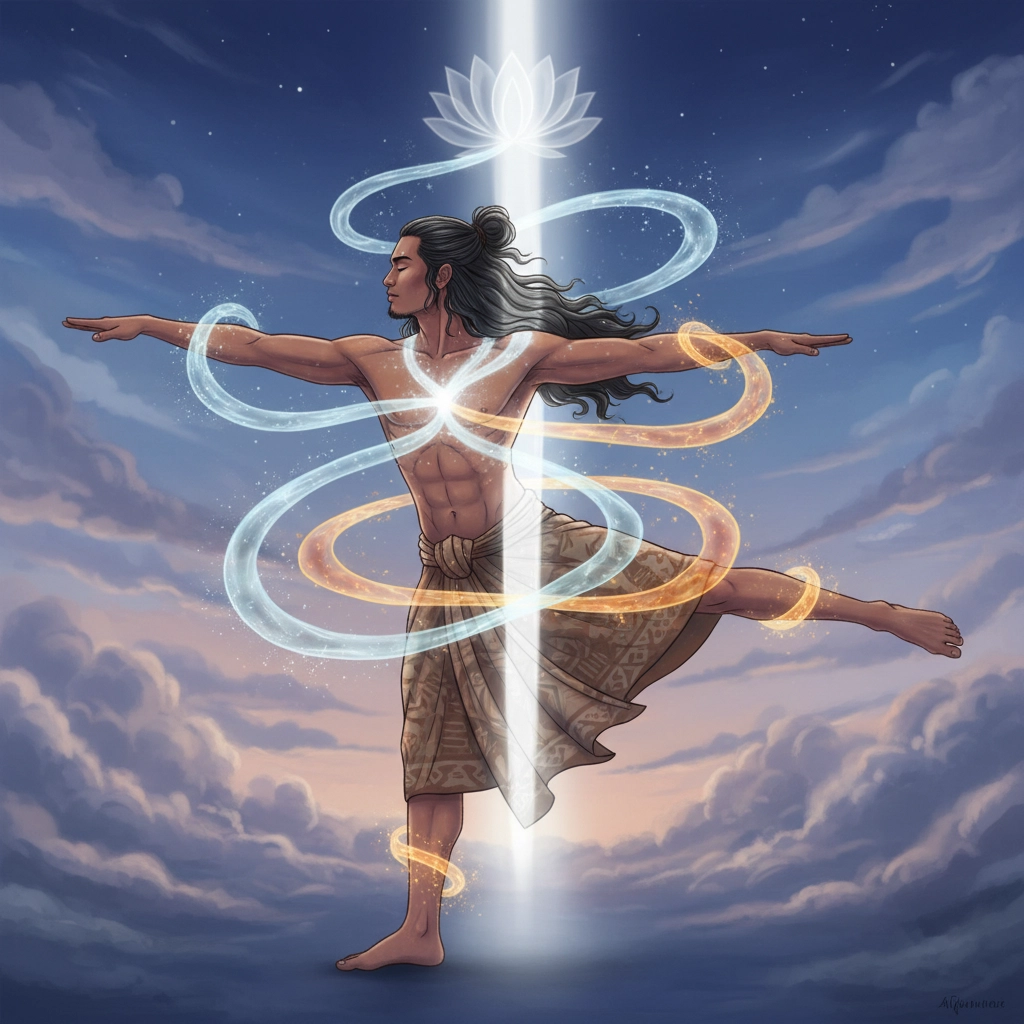
Rather than getting lost in elaborate color systems or Sanskrit names, the practical point is this: you can learn to direct attention to specific areas of your body-mind and cultivate different qualities of consciousness.
The Source Energy
At the foundation of this system lies what tantric traditions call kundalini: the fundamental life force that animates your entire being. It's often described as a serpent coiled at the base of the spine, but that's metaphorical language for something quite practical.
Kundalini represents your unrealized potential for consciousness. It's the difference between existing on autopilot and living with full awareness. When this energy awakens and moves freely through your system, you experience what the texts call "expansion of consciousness leading to liberation."
This isn't about achieving some transcendent state removed from ordinary life. It's about becoming fully present to the life you're already living.
How Energy Blockages Actually Work
Tantric anatomy recognizes granthi: energetic knots or blockages that restrict the flow of consciousness through your system. These aren't mystical obstructions. They're patterns of held tension, unprocessed emotion, and unconscious reactivity that keep you stuck in limited ways of being.
When energy can't flow freely, you experience this as:
- Chronic tension or numbness in specific body areas
- Emotional reactivity that seems to come from nowhere
- Mental loops that repeat the same limited thoughts
- A general sense of being disconnected from your vitality
Working with the energetic body means learning to identify and dissolve these patterns, not through force, but through conscious attention and skillful practice.
The Union of Consciousness and Energy
Ancient tantra teaches that everything arises from the dynamic interplay between Shiva (pure consciousness) and Shakti (creative energy). This isn't religious doctrine: it's a practical understanding of how awareness and aliveness work together in your direct experience.
Shiva represents your capacity for witnessing, knowing, and being present. Shakti is the dynamic force that creates thoughts, emotions, sensations, and actions. When these two principles operate in harmony within your energetic system, you experience what the traditions call "sacred union."
This union isn't something you achieve once and maintain forever. It's an ongoing dance of awareness and energy that you can learn to participate in more consciously.
Why This Actually Matters
Your energetic body isn't separate from your psychological well-being, your relationships, your creativity, or your ability to navigate challenges. It's the foundation for all of these.
When your energy moves freely:
- Your nervous system becomes more resilient
- Emotions flow through you without getting stuck
- You have access to more of your intelligence and creativity
- Relationships become more authentic and connected
- You respond to life from choice rather than compulsion
When energy gets blocked or imbalanced:
- You feel chronically tired or overstimulated
- Emotional reactions seem to control you
- Creativity feels blocked or forced
- Relationships become reactive and disconnected
- You operate from old patterns rather than present awareness
Practical Integration
Understanding the energetic body gives you a practical framework for working with consciousness in daily life. Instead of trying to fix problems at the surface level, you learn to work with the underlying energy patterns that create them.
This might involve:
- Breath practices that balance ida and pingala
- Body awareness techniques that clear blockages
- Attention training that strengthens your capacity for presence
- Movement practices that encourage healthy energy flow
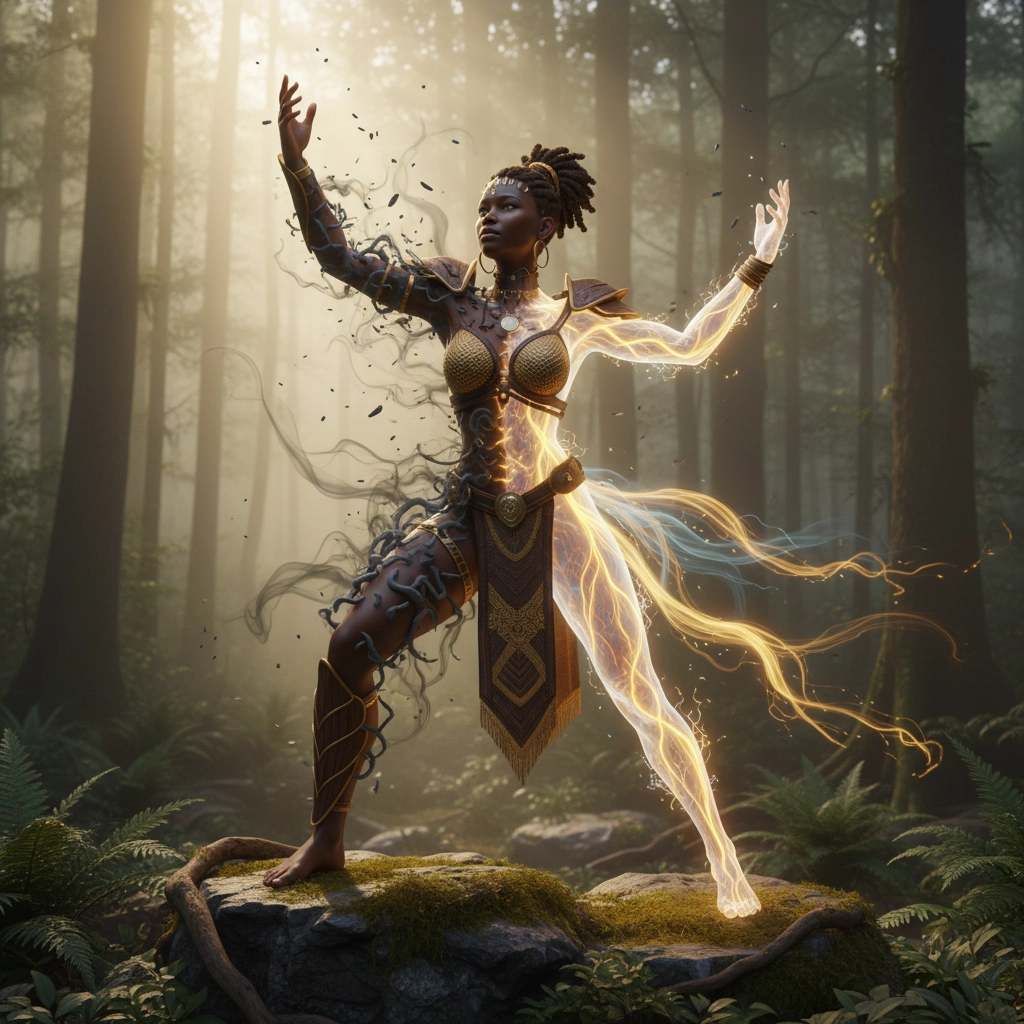
The key insight from ancient tantra is that your consciousness isn't trapped in your skull. It permeates your entire energy system, and you can learn to work with it skillfully.
Beyond the Buzzwords
Modern wellness culture has turned much of this wisdom into trendy concepts that miss the practical point. The energetic body isn't about accumulating mystical experiences or developing special powers.
It's about understanding how consciousness actually operates in your lived experience, and learning to work with those principles for greater freedom, creativity, and authentic connection.
Ancient tantric practitioners developed these maps through thousands of years of careful observation and practice. They weren't interested in creating belief systems: they were mapping the territory of human consciousness with scientific precision.
The energetic body is real, practical, and accessible. You don't need to believe anything exotic to work with it. You just need to pay attention to what's already happening in your direct experience, and learn to participate more consciously in the dance of awareness and energy that you already are.
When you understand your energetic body, you understand something essential about what it means to be human. You discover that consciousness isn't something you have: it's something you are, flowing through channels and centers that connect you to the creative source of existence itself.

