


Walk into most yoga studios today and you'll witness something that would be unrecognizable to the ancient rishis who developed this practice thousands of years ago. Students contorting into Instagram-worthy poses, checking their form in mirrors, wiping sweat from power flows designed to burn calories and build muscle tone.
This isn't yoga. It's fitness wearing yoga's clothes.
The distinction between yoga as fitness versus yoga as spiritual science isn't just academic: it's the difference between temporary physical relief and profound spiritual transformation. And most of us have been sold the wrong version entirely.
The Great Reduction: How Yoga Became Exercise
Modern Western yoga studios have systematically reduced one of humanity's most sophisticated consciousness technologies into what amounts to spiritual gymnastics. The typical class runs 60-90 minutes, features physical sequences designed to challenge flexibility and strength, and sends students back to their regular lives with perhaps some temporary stress relief and a good stretch.
This fitness-focused approach treats the body as the primary vehicle and physical achievement as the goal. Success is measured in how deep your forward fold goes, whether you can hold crow pose, or how many calories you burned in hot yoga class.
But here's what most practitioners don't realize: the physical postures: asanas: were never meant to be the destination. They were developed as preparation for the real work.
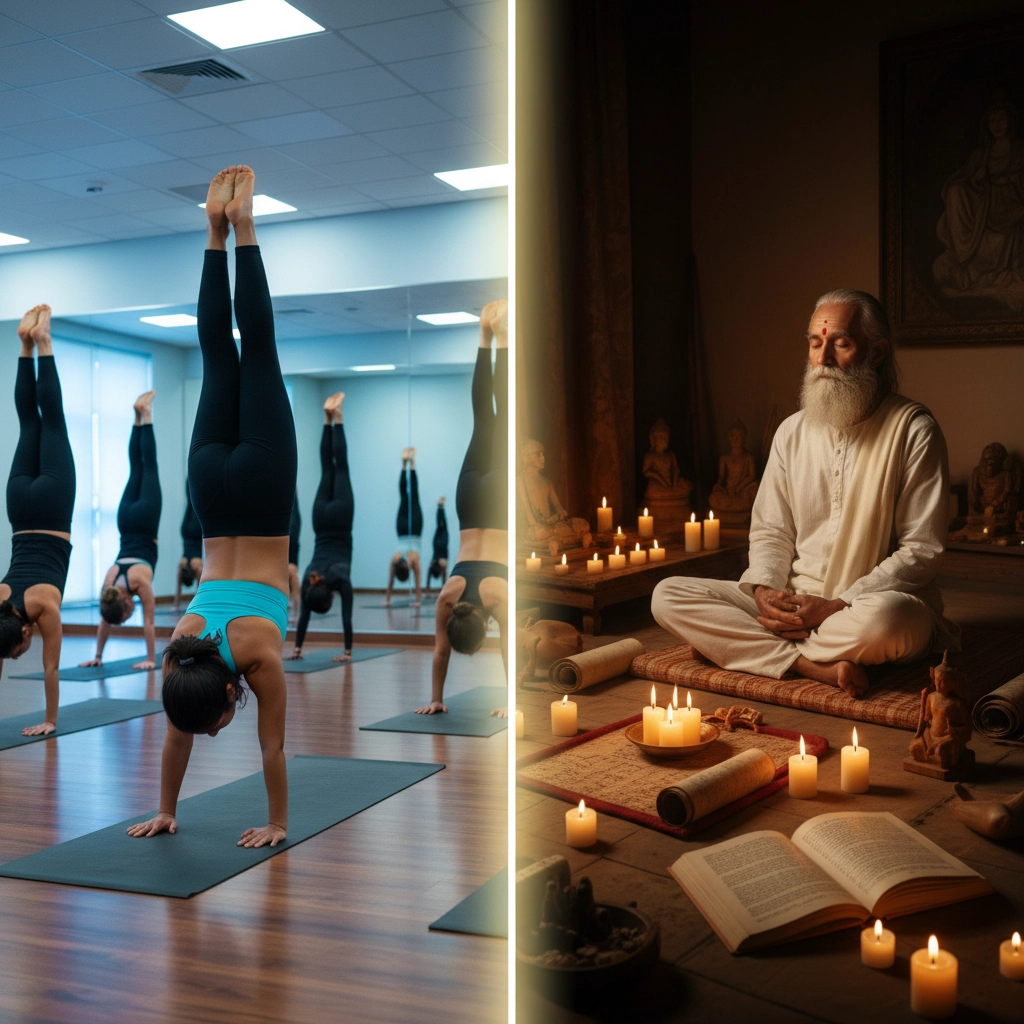
Yoga as Spiritual Science: The Original Blueprint
Traditional yoga operates as a methodical science with three fundamental characteristics that distinguish it from mere physical exercise:
Systematic Method: Every authentic branch of yoga: whether Hatha, Raja, Bhakti, Jnana, or Kriya: follows precise procedures developed by practitioners who functioned as spiritual scientists. These aren't random movements or feel-good philosophies, but systematic approaches to consciousness transformation.
Measurable Results: The experiences and shifts in awareness that emerge validate the methods being used. When followed correctly, these practices produce consistent, repeatable results across cultures and centuries.
Universal Applicability: Anyone who follows the prescribed procedures with dedication achieves similar evidence and transformation, regardless of their starting point or background.
The ancient yogis understood something we've forgotten: the physical improvements from yoga practice are merely "the icing, not the cake." Even the mental clarity, emotional stability, and stress relief that modern practitioners prize are just "sprinkles" on the actual experience.
The real substance of yoga involves transcending the physical, emotional, and mental realms entirely to access dimensions of consciousness beyond ordinary human experience.
What's Actually Happening in Most Studios
Modern yoga studios, driven by commercial pressures and Western expectations, have inverted yoga's priorities. Physical achievement becomes the goal, spiritual development becomes the afterthought.
Students learn to push through discomfort to achieve poses, measure progress by external flexibility and strength markers, and treat meditation as a brief cooldown rather than the practice's ultimate aim. The emphasis remains on what the body can do rather than what consciousness can become.
This approach produces what yogic tradition might call "spiritual materialism": using sacred practices to enhance the ego rather than transcend it. Students might develop impressive physical abilities while remaining fundamentally unchanged at the level of consciousness where yoga's real transformation occurs.
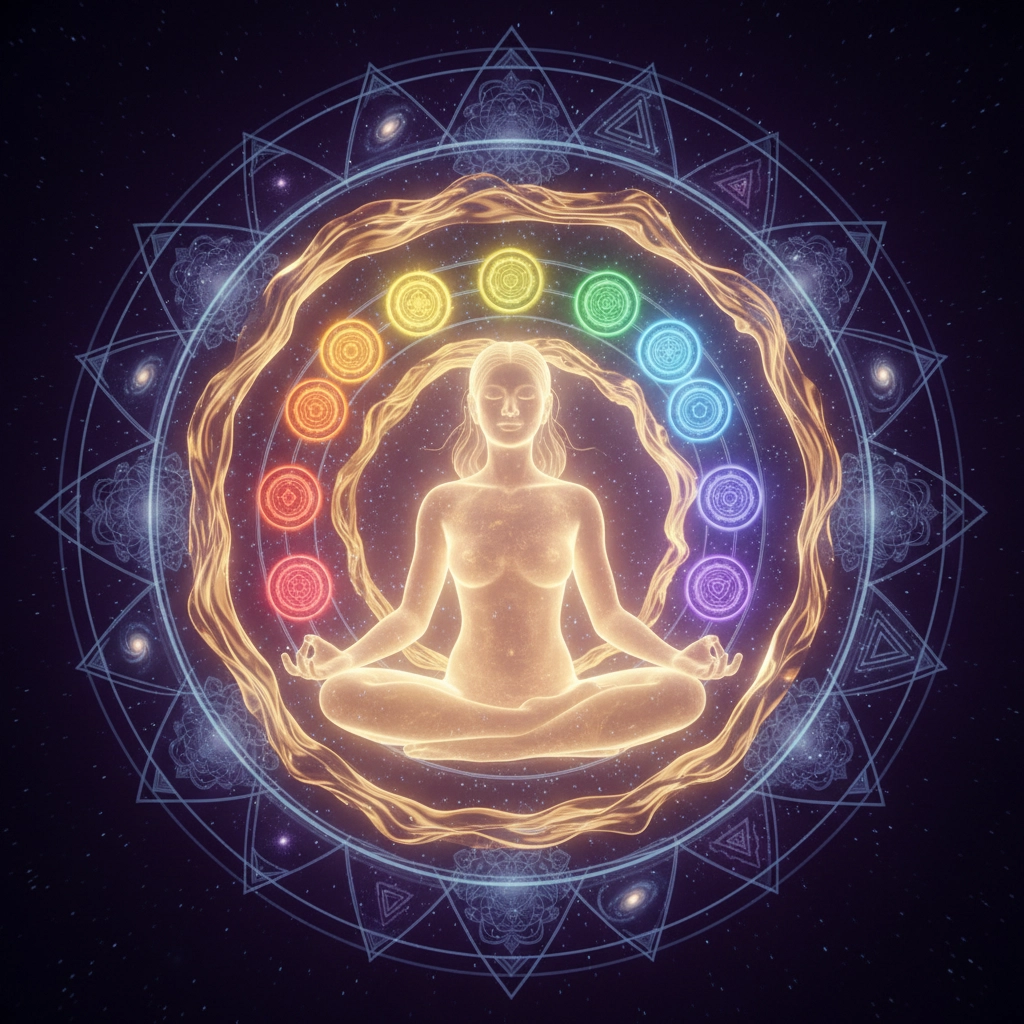
The Science of Inner Transformation
Authentic yoga operates as a comprehensive system for spiritual intelligence development. Research confirms that traditional practice positively affects all aspects of what scientists call "spiritual intelligence": including transcendental consciousness, existential thinking, personal meaning-making, and expanded awareness states.
Practitioners of traditional yoga report enhanced spiritual health, more positive life outlooks, reduced death anxiety, and deeper connections with both divine presence and nature. These aren't vague feelings but measurable shifts in how consciousness operates.
The traditional approach cultivates self-awareness, centeredness, and presence as foundational capacities. Rather than focusing on external physical achievements, practitioners develop the ability to remain centered regardless of external circumstances: a quality that creates profound life transformation.
Why the Fitness Approach Falls Short
The fitness-focused approach isn't wrong because physical health doesn't matter: it's incomplete because it stops at yoga's preparatory stages. It's like learning to tune a violin but never playing music.
Physical yoga postures were designed to prepare the body for extended periods of meditation and pranayama. They build the strength, flexibility, and energetic stability required for consciousness work. But when the physical preparation becomes the end goal, practitioners miss yoga's actual purpose entirely.
This is why many people can practice "yoga" for years while remaining fundamentally unchanged in their daily lives. They've developed physical flexibility without developing mental flexibility, learned to control their bodies without learning to witness their minds.

Recognizing Authentic Practice
How can you discern whether your yoga practice connects to the spiritual science tradition or remains trapped in fitness conditioning? Look for these markers:
Emphasis on Internal Experience: Authentic yoga teachers guide attention inward rather than toward external achievement. They teach students to feel rather than perform, to witness rather than judge.
Integration of All Eight Limbs: Traditional yoga includes ethical guidelines (yamas and niyamas), breath practices (pranayama), sensory withdrawal (pratyahara), concentration (dharana), meditation (dhyana), and absorption (samadhi): not just physical postures.
Systematic Progression: Authentic teachers follow established methodologies rather than creating novel sequences for entertainment. They understand that yoga's transformative power lies in consistent, systematic practice rather than constant variety.
Focus on Consciousness: The ultimate goal remains expanded awareness and spiritual development, with physical benefits as valuable but secondary outcomes.
Making the Shift
If you've been practicing fitness yoga and want to explore yoga's spiritual science potential, the transition requires patience and often guidance from teachers trained in traditional methods.
Start by approaching your current practice with different intentions. Instead of focusing on physical achievement, use each pose as an opportunity to develop present-moment awareness. Notice the mind's commentary, observe your reactions to challenge and ease, and practice maintaining equanimity regardless of what arises.
Incorporate pranayama and meditation as primary rather than supplementary practices. The breath is yoga's most direct entry point into nervous system regulation and consciousness transformation.
Seek teachers who understand yoga's systematic methodology and can guide you beyond physical preparation into the practice's deeper dimensions. This often means looking beyond popular studios toward teachers with traditional training backgrounds.
The Soul's Need for Real Nourishment
The difference between yoga as fitness and yoga as spiritual science ultimately comes down to what part of yourself you're trying to feed. Fitness yoga nourishes the body and temporarily soothes the mind. Spiritual science yoga nourishes the soul's longing for transcendence and authentic transformation.
In a culture obsessed with physical optimization and external achievement, we've forgotten that human beings have consciousness needs that can't be met through physical practice alone. The spiritual science of yoga addresses these deeper needs through systematic development of awareness, presence, and connection to dimensions beyond the material realm.
This isn't about rejecting physical health or dismissing the benefits of strength and flexibility. It's about remembering that yoga offers something infinitely more profound than better abs or stress relief: it offers a path home to your essential nature.
Most studios are teaching the wrong version of yoga because they've forgotten what yoga actually is. But once you understand the difference between fitness and spiritual science, you can't unsee it. And once you taste the depth of authentic practice, physical yoga alone will never satisfy your soul's hunger for real transformation.

