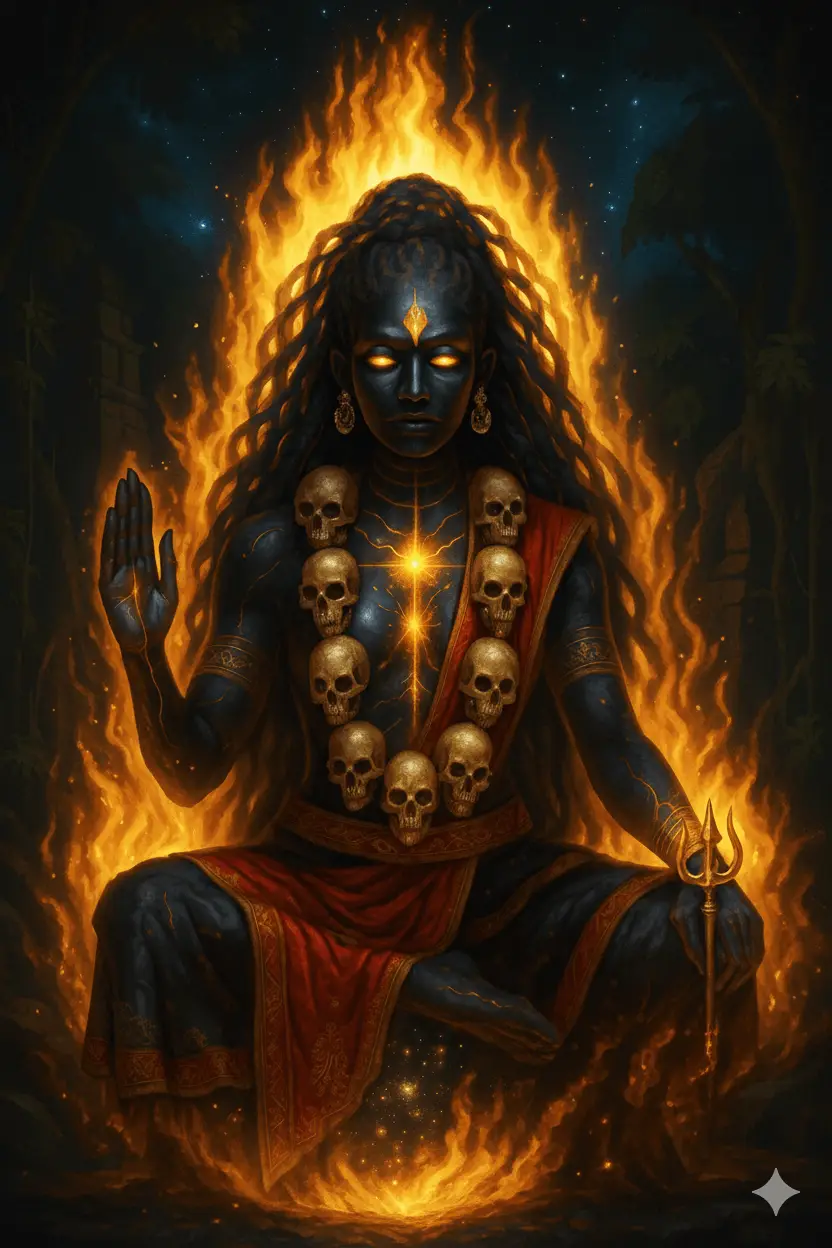


Walk into most "tantric" workshops today and you'll witness something that would probably mystify ancient masters: people straining for visible results, chasing dramatic experiences, and measuring their progress by how intense their reactions look from the outside.
But here's what those masters knew that we've largely forgotten: real tantric energy work is profoundly quiet, internal, and often completely invisible to observers. The difference between energy mastery and performance in tantric practice isn't just academic. It's the difference between sustainable spiritual development and spiritual theater.
What energy mastery actually looks like
True energy mastery in tantric practice resembles skilled meditation more than anything dramatic. It's about developing sophisticated awareness of subtle energies within your body: learning to recognize, feel, and consciously direct these forces without forcing anything.

Think of it like learning to tune a musical instrument. A master doesn't bang away at the strings hoping for the right sound. They listen carefully, make tiny adjustments, and work with the instrument's natural resonance. Energy mastery operates the same way.
Practitioners focused on energy mastery spend years developing sensitivity to what tantric traditions call the "five bodies of man": layers of increasingly subtle energy that extend beyond the physical body. The physical body is just the densest layer. The more refined energy bodies require delicate attention to perceive and work with.
This kind of work happens through:
- Subtle breathwork that creates gentle shifts in your energetic state rather than dramatic breathing patterns designed to produce intense experiences
- Quiet visualization practices that help you learn to direct energy consciously without forcing or straining
- Gradual development of energetic sensitivity through consistent, patient practice rather than dramatic breakthrough sessions
Energy masters understand that authentic tantric work is fundamentally about attention control. They learn to direct and manipulate energy through refined awareness, not through forceful techniques designed to create visible results.
The performance trap
Performance-oriented tantric practice, by contrast, focuses on achieving specific outcomes: energy orgasms, blissful states, dramatic emotional releases, or visible signs of "transformation." While these experiences can certainly occur in authentic practice, making them the goal fundamentally changes the entire approach.
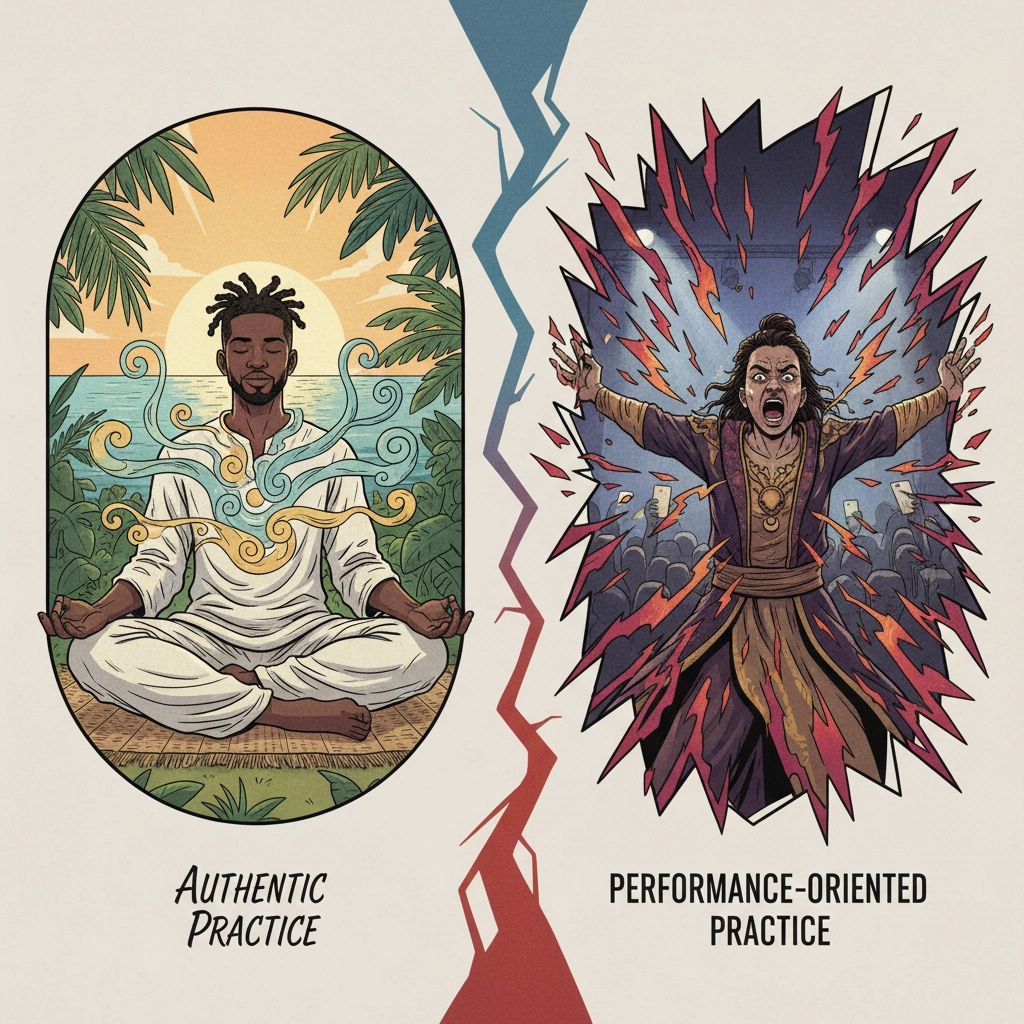
The performance trap shows up in several ways:
Chasing peak experiences: Instead of developing consistent energetic awareness, practitioners become addicted to dramatic moments of intensity. They measure their progress by how "high" they can get rather than how skillfully they can work with energy day-to-day.
External validation: Performance-oriented practitioners often need others to witness or confirm their experiences. They might make sounds, movements, or expressions designed to communicate their internal state rather than simply experiencing it.
Force over finesse: When the goal is producing a specific result, practitioners tend to use forceful techniques: aggressive breathing, straining visualizations, or pushing energy around their bodies rather than learning to work with natural energetic flows.
Spiritual materialism: This approach treats tantric experiences like spiritual achievements to collect rather than tools for deeper self-understanding and connection.
The irony is that performance-oriented approaches often block the very experiences they're trying to create. Energy responds to gentle, consistent attention: not to force or desperation.
Key differences in practice
The distinctions between energy mastery and performance become clear when you observe how practitioners approach their work:

Intention and mindset
Energy masters approach practice with patient curiosity. They're interested in understanding how energy moves naturally through their system and learning to work with these flows skillfully. Their intention is long-term development rather than immediate results.
Performance-oriented practitioners approach practice with goal-oriented intensity. They want specific experiences and measure each session by whether they achieved their desired outcome.
Relationship to results
Masters understand that authentic tantric work produces sustainable transformation through consistent practice. They're not particularly attached to dramatic experiences because they know that real change happens gradually through patient cultivation.
Performance practitioners become attached to specific results and disappointed when practices don't produce the expected outcomes. They might hop between different techniques or teachers, always seeking the approach that will finally deliver the experience they're chasing.
Use of energy
Energy mastery involves learning to work with your natural energetic rhythms rather than imposing artificial patterns. Masters understand that sexual and spiritual energy functions like a "nuclear reactor" within human beings: incredibly powerful but requiring skillful handling rather than forceful manipulation.
Performance approaches often involve pushing or forcing energy to create dramatic experiences. This can actually create energetic imbalances or blockages that interfere with natural flows.
Recognizing authentic energy work
How can you tell if your tantric practice is developing genuine energy mastery rather than performance habits? Here are some reliable indicators:
Your practice feels sustainable: You can engage with tantric work regularly without exhausting yourself or needing increasingly intense experiences to feel satisfied.
Results integrate naturally: Instead of dramatic peaks followed by crashes, you notice gradual, consistent changes in your energetic awareness, emotional balance, and capacity for intimacy.
Less becomes more: Over time, you need subtler practices to achieve deeper states. Your sensitivity increases rather than requiring more dramatic techniques.
Focus shifts inward: You become less interested in how your practice looks from the outside and more interested in the quality of your internal experience.

Cultivating genuine energy mastery
If you recognize performance patterns in your tantric practice, don't worry: this is incredibly common in our results-oriented culture. Here's how to shift toward authentic energy mastery:
Start with basic energy awareness: Before working with sexual or kundalini energy, develop sensitivity to more basic energetic flows. Practice feeling the energy of your breath, the subtle sensations in your hands, or the energetic quality of different emotions.
Embrace subtle practices: Work with gentle breathwork, quiet meditation, and soft visualization rather than dramatic techniques. Let your practice be boring by external standards.
Develop patience: Energy mastery unfolds over years, not sessions. Trust the process and resist the urge to push for faster results.
Work with qualified teachers: Find instructors who emphasize inner development over visible results and who can guide you in developing genuine energetic sensitivity.
Practice integration: Rather than focusing on peak experiences during formal practice sessions, pay attention to how tantric work influences your daily life, relationships, and overall well-being.
The quiet revolution
Perhaps the most radical thing about authentic tantric energy mastery is how unremarkable it appears from the outside. Masters often look perfectly ordinary: they're not glowing, levitating, or radiating obvious spiritual accomplishment.
But spend time with someone who has genuinely mastered tantric energy work, and you'll notice something subtle yet profound: a quality of presence, an ease with their own sexuality and spirituality, and a capacity for intimacy that goes far beyond performance or technique.

This is what the ancient masters were actually pointing toward: not dramatic spiritual theater, but a refined way of being that integrates energy awareness into every aspect of life. It's less flashy than performance-oriented approaches, but infinitely more transformative.
The choice between energy mastery and performance isn't just about tantric practice: it reflects how we approach spiritual development in general. Do we chase experiences, or do we cultivate understanding? Do we perform transformation, or do we embody it?
In a culture obsessed with visible results and dramatic breakthroughs, choosing the path of quiet mastery might be the most rebellious thing you can do. But for those willing to trade spiritual theater for genuine development, it's also the most rewarding.

