

Every year, as the monsoon gathers over Assam, the land enters a season of renewal. Rain softens the earth, rivers rise, seeds awaken, and the power of fertility returns to the visible world.
In the Shakta tradition, this is not merely a change in weather. It is a sacred rhythm connected to the body of the Goddess.
Atop Nilachal Hill in Assam stands the temple of Ma Kamakhya, one of the most important centers of Shakti worship and tantric practice. Kamakhya is revered as the living power of creation: the yoni, the source from which birth, manifestation, and transformation emerge. She is not an abstract idea. She is the force that moves through the earth, the body, desire, death, blood, birth, and the renewal of life.
Within the devotional vision of the temple, the annual monsoon period marks the fertility cycle of the Mother. For three days, the temple doors close. Ordinary rituals cease. The sanctum enters a period of seclusion, silence, and inward gathering. On the fourth day, the temple reopens, and the Goddess is welcomed again into visible ritual presence.
This sacred pause offers a profound teaching: not all power announces itself through movement. Some power must gather in darkness.

Kamakhya and the Sacred Feminine
Kamakhya belongs to a stream of worship in which the feminine is not treated as secondary, symbolic, or passive. Shakti is the dynamic power of existence. She is the energy through which consciousness becomes form.
Kamakhya is closely associated with the yoni as the source of creation and manifestation. This does not reduce the Goddess to sexuality. It restores the generative center of life to its sacred dignity.
The yoni is the threshold through which the unseen becomes seen. It is the place of gestation, emergence, and transformation. It holds the mystery of how life forms, develops, and enters the world. In tantric understanding, this power is not separate from spiritual realization. The body is not an obstacle to the sacred. The body is one of the places where the sacred reveals itself.
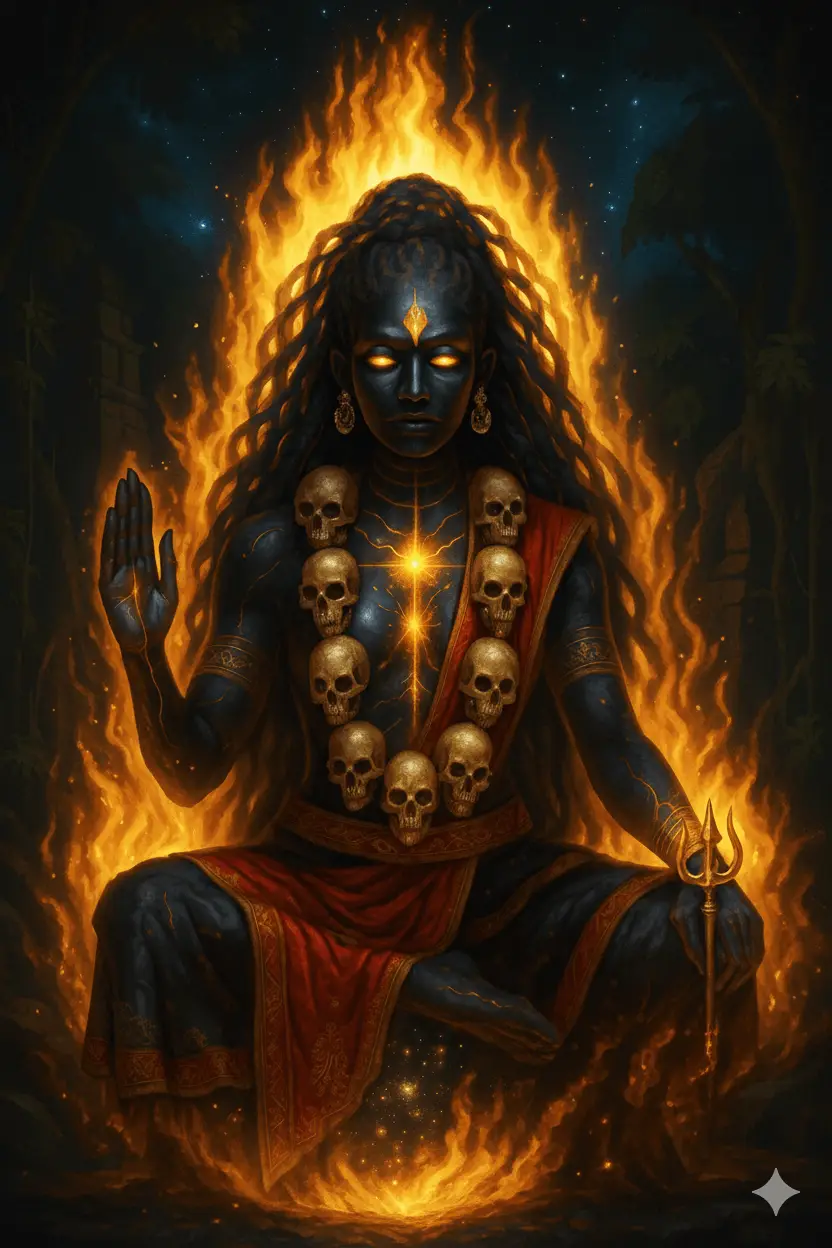
Kamakhya is also understood as an expression of the fierce and transformative energy of Ma Kali. Kali destroys what cannot continue, but her destruction is not nihilistic. She clears what has become false, stagnant, or obstructive so that life may return to its deeper order.
This is why the presence of Kamakhya can feel both nourishing and intense. The Mother does not only comfort the parts of us that are ready to be comforted. She also brings attention to what has been hidden.
The Monsoon as the Mother's Fertility Cycle
The monsoon is a season of saturation. Dry ground receives water. Rivers move with new force. The atmosphere becomes heavy with the promise of growth.
In the traditional imagination, the fertility of the earth and the fertility of the Goddess are not separate realities. Nature is not spiritually empty matter. The earth is alive with Shakti.
The annual closing of the Kamakhya temple during Ambubachi is a ritual acknowledgment of this truth. The Goddess is believed to enter her menstrual cycle and withdraw into seclusion. During those three days, the temple does not perform its ordinary rituals. The doors remain closed while the power of the sanctum gathers in silence.
The symbolism is direct and uncompromising. Menstruation is not presented as shameful or contaminating. It is honored as part of the creative rhythm of the divine feminine.
For women, the symbolism may carry a direct bodily resonance. Some may feel that their own cycles become more emotionally or spiritually significant during this period. Yet such experiences should be approached with reverence rather than forced interpretation. Menstrual cycles are affected by many physical and emotional conditions, and no spiritual teaching should replace proper medical care.
The deeper point is not to prove that every body follows the same rhythm. It is to remember that cyclical change is not a failure of the body. Rest, withdrawal, bleeding, gestation, and renewal all belong to the sacred order of life.
Purification from the Sacral Center
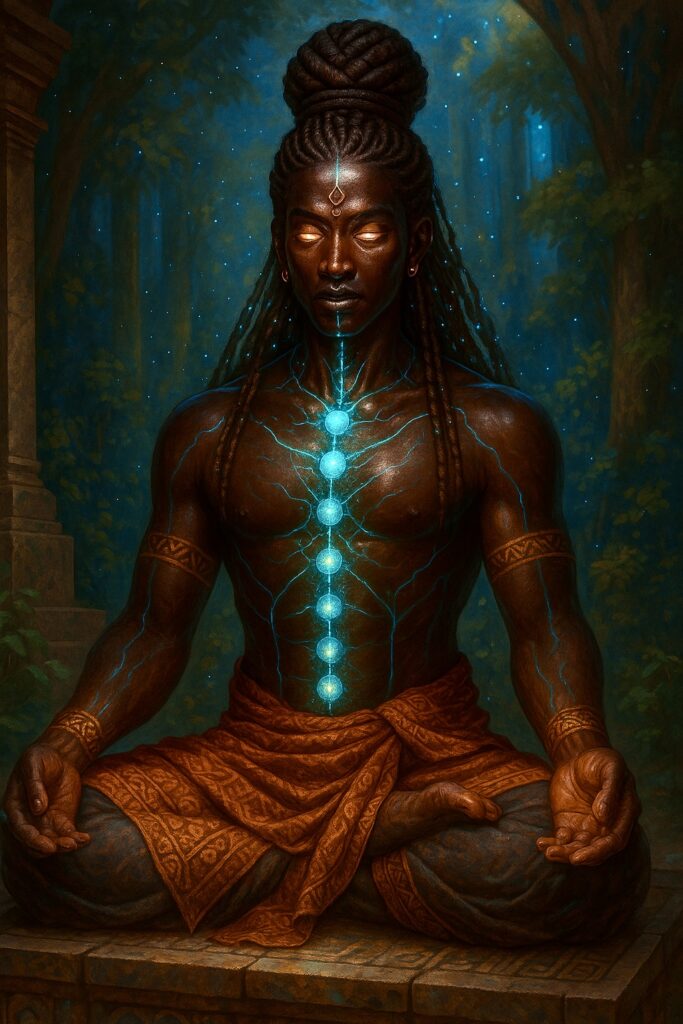
The teaching associated with this period speaks of energy rising from the sacral or womb center and moving upward toward clearer perception. In the language of yoga and tantra, this can be contemplated as the awakening of dormant Shakti within the body.
The sacral region is connected with generation, intimacy, pleasure, grief, fear, attachment, and the unfinished impressions held in the body. When these layers begin to loosen, the process may not feel peaceful at first.
A person may experience unexpected tears, anger, fatigue, restlessness, bodily warmth, or a deep sense of calm after an emotional release. These experiences should not automatically be treated as proof of a supernatural event. They may also reflect stress, memory, hormonal changes, grief, or the natural movement of the nervous system.
Tantric practice asks for awareness rather than exaggeration. What arises should be witnessed carefully. Do not suppress it, but do not build an identity around it either.
Purification means that what has been buried may become visible. Feelings of guilt, embarrassment, or impurity may come to the surface. The purpose is not self-punishment. It is to meet what has been rejected and return it to a larger field of understanding.
The movement toward the brow or third-eye center can be understood as a movement toward discernment. The energy of the lower body is not being rejected. It is being brought into relationship with awareness. Creation, desire, emotion, and instinct become capable of serving clarity rather than controlling the person.
Dreams, Snakes, and Deep Water
During periods of inner change, dreams may become vivid. Traditional symbolism often gives special attention to snakes, deep water, mountains, caves, blood, temples, and unfamiliar faces.
A snake may suggest transformation, hidden force, or the shedding of an old condition. Deep water may point toward the unconscious, grief, mystery, or the depth of life beneath ordinary thought. A mountain may represent discipline, ascent, and the effort required to rise above confusion.
These symbols should not be treated as simple predictions. Nor should dreams be used to accuse another person or justify revenge.
The value of a dream is often found in the awareness it creates. It may reveal where fear still governs you, where an old relationship continues to occupy your mind, or where you have given away your authority. The Mother’s wisdom does not require obsession with enemies. It calls you back to self-knowledge.
When something hidden becomes clear, the appropriate response is not immediate reaction. It is steadiness.

Do Not Give Your Power to Reaction
Purification often brings triggers to the surface. A person may say something designed to provoke you. An old betrayal may be remembered. A delay may expose your impatience. A familiar pattern may appear again, asking whether you will respond from consciousness or compulsion.
Tantric discipline does not mean becoming passive. It means learning to distinguish action from reaction.
Reaction spends energy before understanding has arrived. It can pull you back into the very pattern you are trying to leave. When anger rises, pause before speaking. When suspicion arises, observe before accusing. When the desire for revenge appears, ask what part of you is still bound to the person who caused harm.
Karma does not require personal interference in every situation. Some matters reveal themselves through time and consequence. Your responsibility is to protect your conduct, your attention, and your inner direction.
Silence can be a form of power. If you are preparing for a new stage of life, a spiritual practice, or a creative undertaking, you do not need to expose every movement to public discussion. Growth requires protection while it is still forming.
Gossip disperses attention. It creates bonds with confusion. What is being cultivated in you may need privacy, discipline, and patience.
Simple Offerings for Clearing Space
Traditional offerings can help establish a devotional atmosphere during this season. Their power does not come from performance or superstition. It comes from attention, purity of intention, and relationship with the Goddess.
You may place fresh water in a clean bowl with red hibiscus or another red flower. If flowers are unavailable, a small amount of red sandalwood paste may be used. Offer it at a home altar or, with respect for the space, at the entrance of the home while speaking a simple prayer for the removal of obstacles.
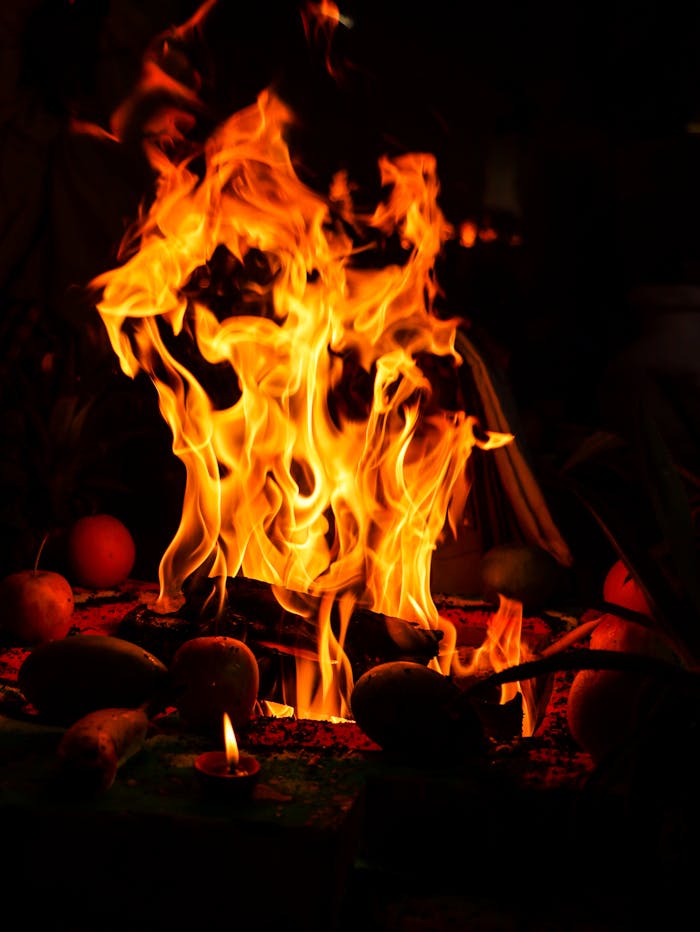
Camphor and incense may be used to mark the clearing of a room. Keep windows open where possible, use fire safely, and never leave a flame unattended. The physical act of cleaning the home should accompany the devotional act. A sacred space is not created by smoke alone. It is created through care.
Sindoor or crimson kumkum may be offered at the feet of the Goddess or placed before an image on the altar. Lotus flowers, hibiscus, and other offerings associated with Shakti may be presented according to your tradition. Rudraksha may be worn as a reminder of discipline and remembrance, but no object is compulsory.
The essential offering is sincerity.

The Thirteen Days of Preparation
The thirteen days following this period can be approached as a time for clearing space. Not as a promise that every desire will immediately manifest, but as an opportunity to remove what obstructs new life.
Clean one neglected area. Complete an unfinished obligation. Reduce unnecessary speech. Step away from gossip. Rest when the body asks for rest. Write down what you are ready to release and what you are prepared to cultivate.
The Mother’s fertility is not only about receiving more. It is also about becoming capable of holding what is new.
Before a field can receive seed, it must be prepared. Before a womb can nourish life, it must become a place of protection. Before a spiritual insight can mature, the mind must stop scattering itself across every distraction and conflict.
Kamakhya teaches that creation requires both opening and withdrawal. There is a time to emerge and a time to remain unseen. There is a time for ritual action and a time when the most faithful practice is silence.
The monsoon returns each year with this reminder: what appears still may be gathering force beneath the surface.
Ma Kamakhya is the power of that hidden movement. She is the blood of life, the dark womb of becoming, and the fierce intelligence that removes what prevents growth. To approach her is to approach the body, the earth, and the cycles of existence with greater reverence.
May this season clear what has become stagnant. May it restore dignity to the body. May it teach patience in the darkness. And may whatever is ready to be born find a worthy ground in which to take form.
Read more from Tantric Journey’s archive on embodiment, sacred practice, and transformation