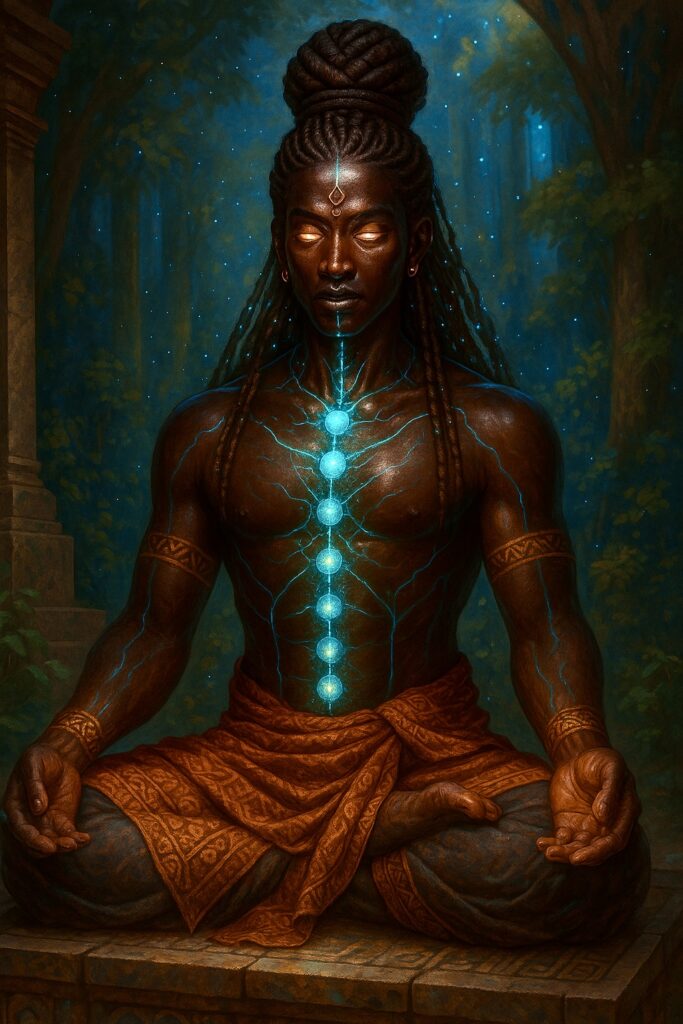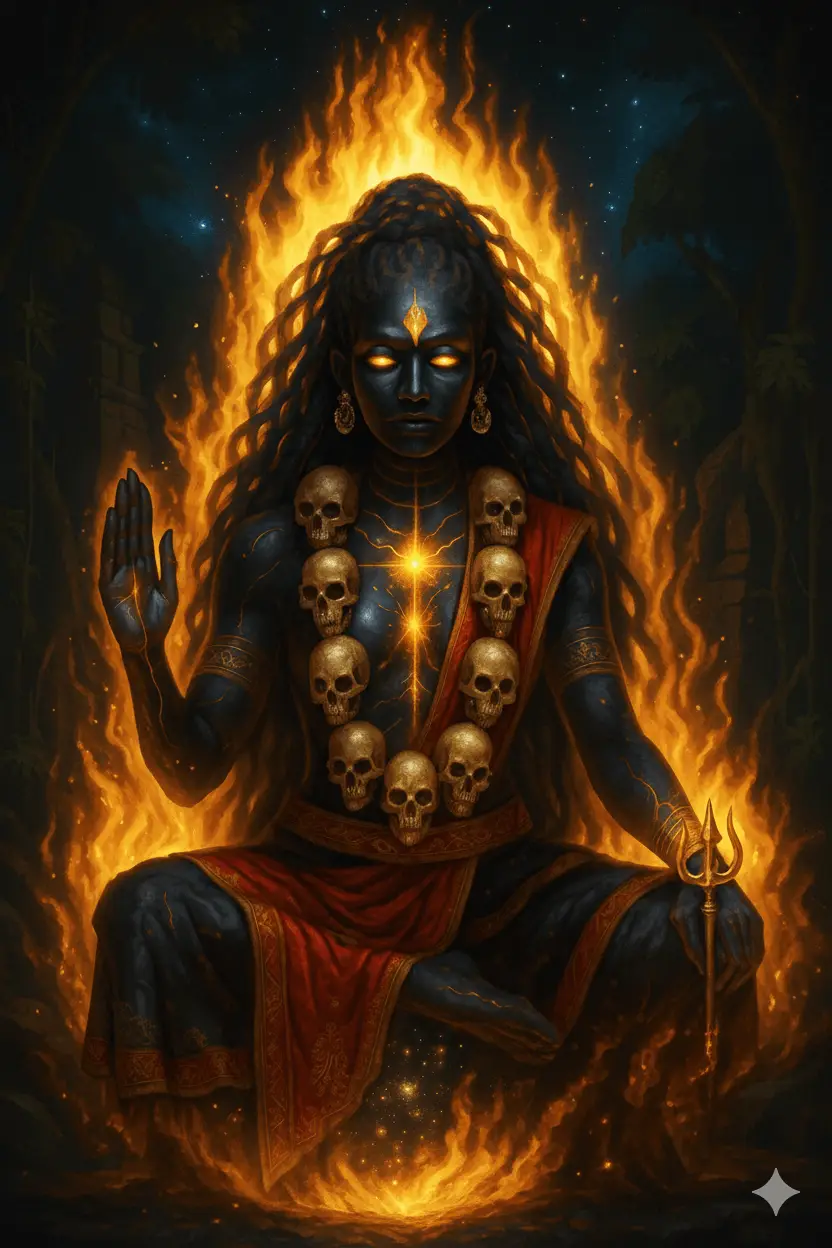

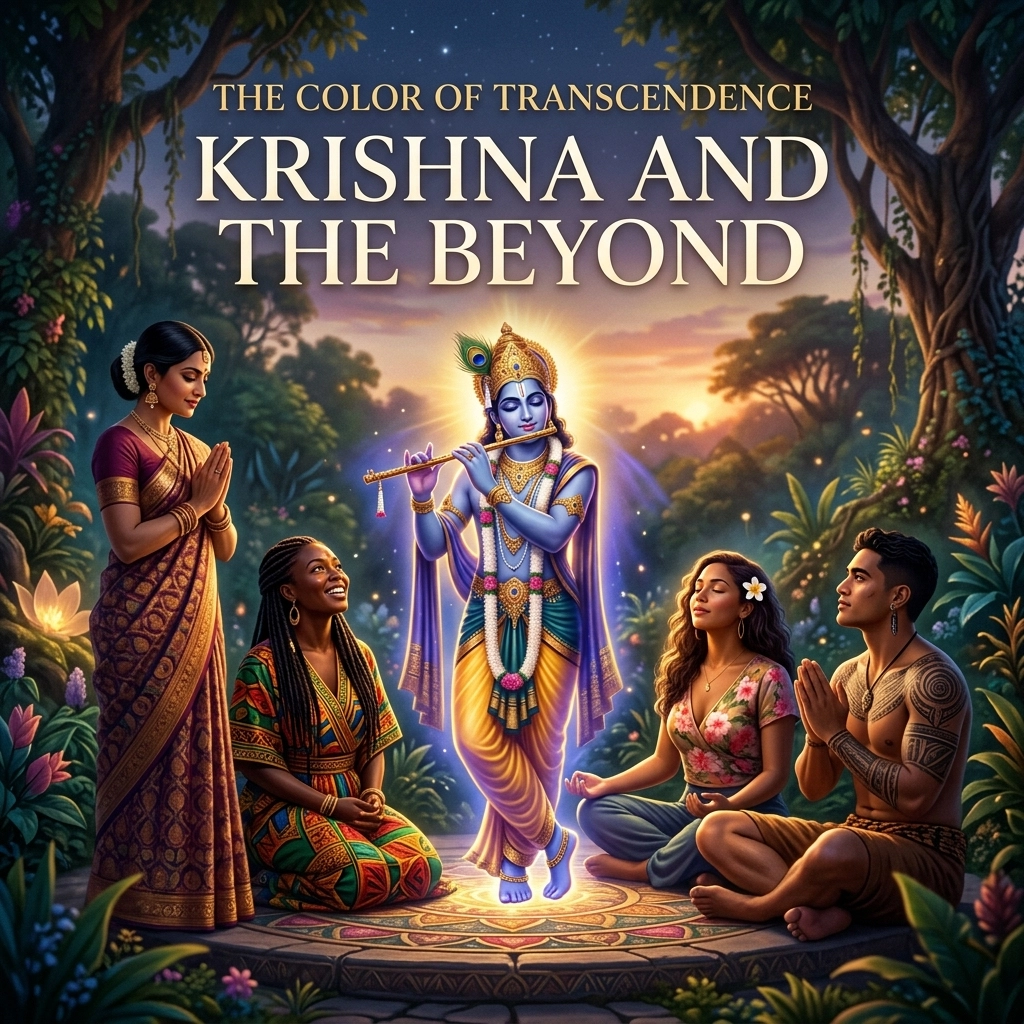
To look upon the form of Krishna is to gaze into the heart of the cosmos. For centuries, seekers have tried to pin down the essence of this "Purnavatara": the complete descent of divinity. In the sacred atmosphere of Rishikesh, through the wisdom shared by Vanamali Devi, we find a perspective that moves beyond mere mythology. We find a technology of consciousness.
When we speak of Krishna, we often speak of a blue-skinned deity. But as we dive deeper into authentic tantra and the metaphysical roots of Indian spirituality, we discover that Krishna represents a frequency that the human eye can barely perceive. This is the frequency of transcendence.
The Mystery of the Purple Ray
In the material world, we understand colors through the prism of the three gunas (modes of nature). We see the yellow of the earth and the blue of the sky. Yet, Krishna is often described as having the hue of a monsoon cloud: a deep, shimmering blue-black that verges on purple.
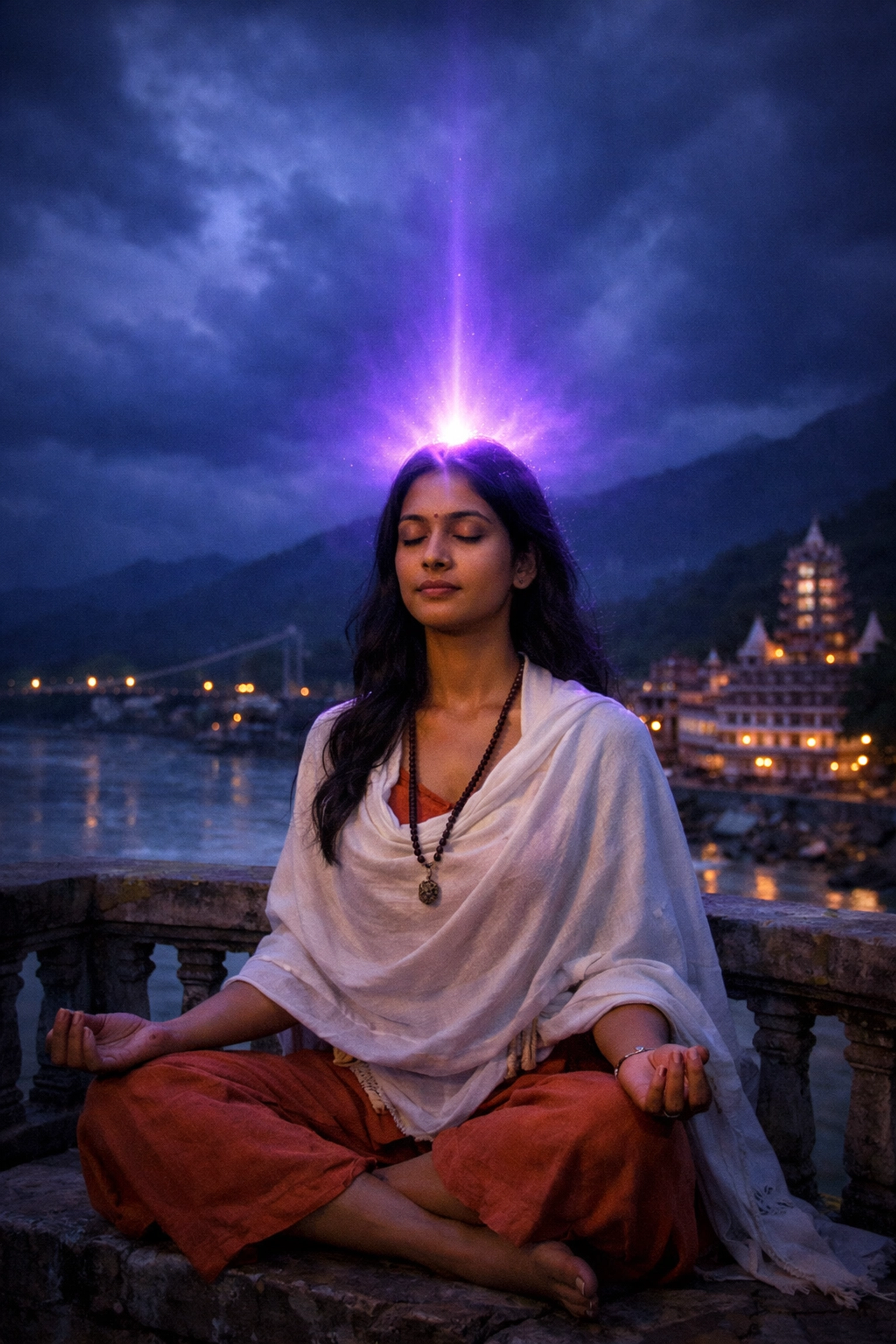
Purple is the color of the crown chakra, the point where the individual soul merges with the infinite. In the spectrum of light, violet or purple sits at the very edge of human visibility. Beyond it lies the ultraviolet, the unseen. This is the "Color of Transcendence." While the yellow of the earth represents our grounded, material existence, the deep purple-blue of Krishna represents the bridge to the absolute.
Krishna is not merely an inhabitant of the blue sky; he is the "beyond" that gives the sky its depth. When a practitioner engages in sacred embodiment through meditation on this form, they are not just looking at a picture. They are tuning their internal frequency to the "purple ray": the vibration that exists where the material world ends and the spiritual world begins.
The Origin of the Guruvayur Temple: A Rescue from the Depths
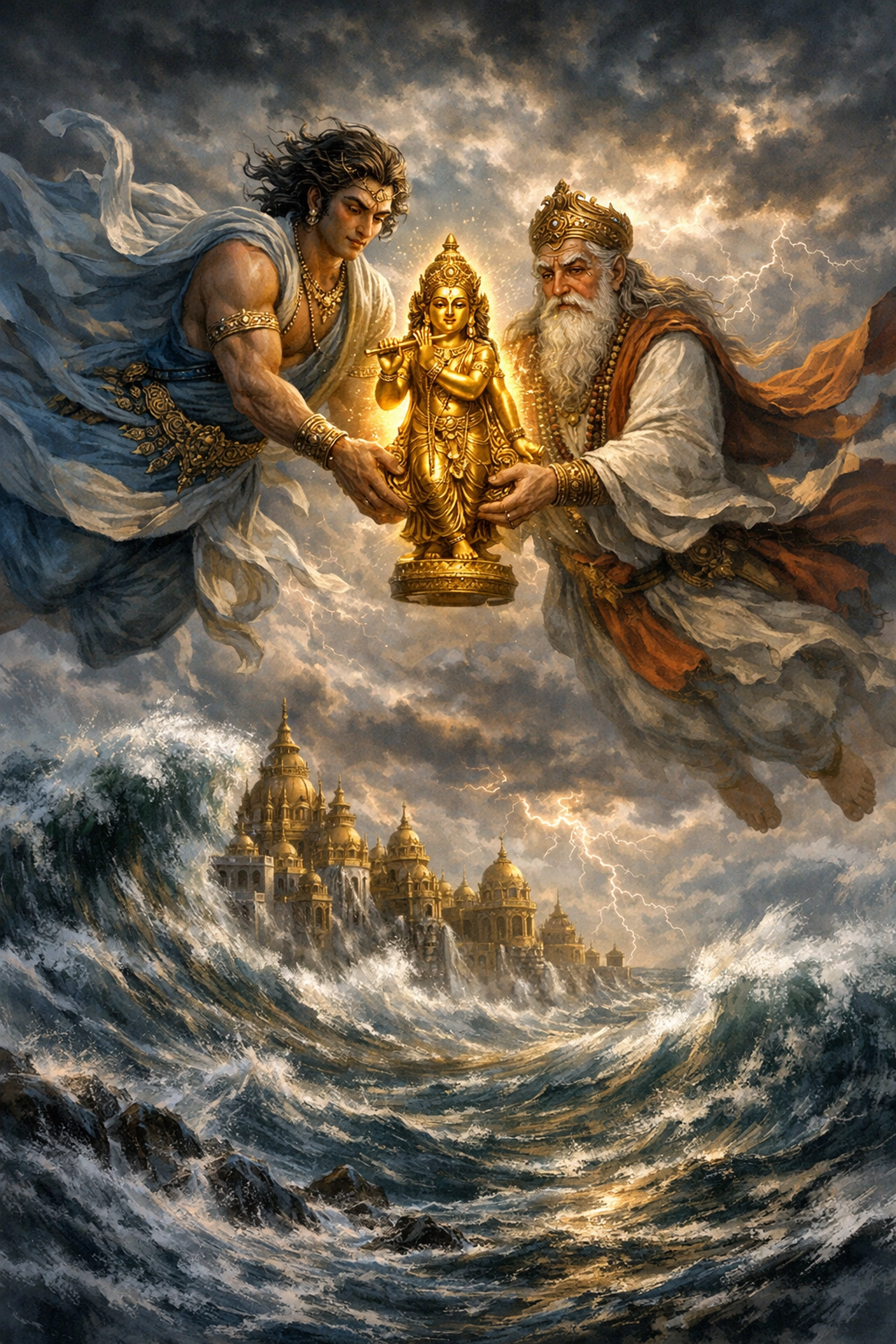
The story of the Guruvayur temple in Kerala is not just a local legend; it is a vital chapter in the preservation of divine energy on Earth. As the city of Dwarka was being reclaimed by the sea at the end of Krishna’s earthly stay, a specific Murti: an idol worshipped by Krishna’s own parents and by Krishna himself: remained.
This was no ordinary statue. It was a concentrated vessel of "Suddha Sattva," or pure goodness. Krishna instructed his devotee Uddhava to ensure this image was saved, for it would be the primary source of solace for humanity during the coming Age of Kali.
As the waves rose to swallow Dwarka, Vayu (the god of wind) and Brihaspati (the Guru of the gods) descended. Together, they rescued the image from the churning ocean. They traveled across the subcontinent, searching for the perfect place to install this power. Eventually, they settled in Guruvayur, creating a spiritual epicenter that remains one of the most powerful vortexes of Krishna-consciousness in the world today.
This story illustrates a core principle of authentic tantra: the divine does not leave the world entirely. Through specific objects, lineages, and places like Rishikesh, the frequency of the "beyond" remains accessible to us, even when the physical form of the Avatar has retreated.
Time and Space: The Great Mental Constructs
One of the most profound insights shared by Vanamali Devi is the nature of time and space as mental projections. In our daily lives, we are slaves to the clock and the map. We believe we are moving through a linear progression of seconds and a fixed geography of miles.
However, the path of the rishis teaches us otherwise. Krishna, as the Lord of Time (Kala), exists in the eternal present. We experience a hint of this every night in deep, dreamless sleep. In that state, where is your name? Where is your age? Where is the city you live in? Time and space dissolve because the mind: the organ that creates these constructs: has gone silent.
Meditation is the art of entering that "deep sleep" state while remaining fully awake. When we dissolve the mental constructs of "then" and "now," "here" and "there," we encounter the Krishna-consciousness. This is why the presence of Krishna feels as vibrant today as it did five thousand years ago. In the realm of transcendence, five thousand years is less than a heartbeat.
The Living Presence of Sages
A common question for the modern seeker is whether an image can truly hold power. Can a photograph of a sage like Ramana Maharshi or a statue in a temple actually transmit grace?
The answer lies in the nature of consciousness. A sage who has realized the self is no longer an individual; they are a window. Just as a window allows the sun to enter a room, the image of a realized being allows the "purple ray" of transcendence to enter the viewer's field.
Ramana Maharshi often said that his physical presence was not necessary for the transmission of silence. His gaze, even captured in a simple black-and-white photograph, remains an active force. This is because the sage has transcended the body. When we look at their image with devotion, we are not engaging in "idol worship" in the way it is often misunderstood. We are engaging in a resonance practice. We are aligning our distorted energy with their perfect, undistorted frequency.
Hanuman: The Giver of Vak
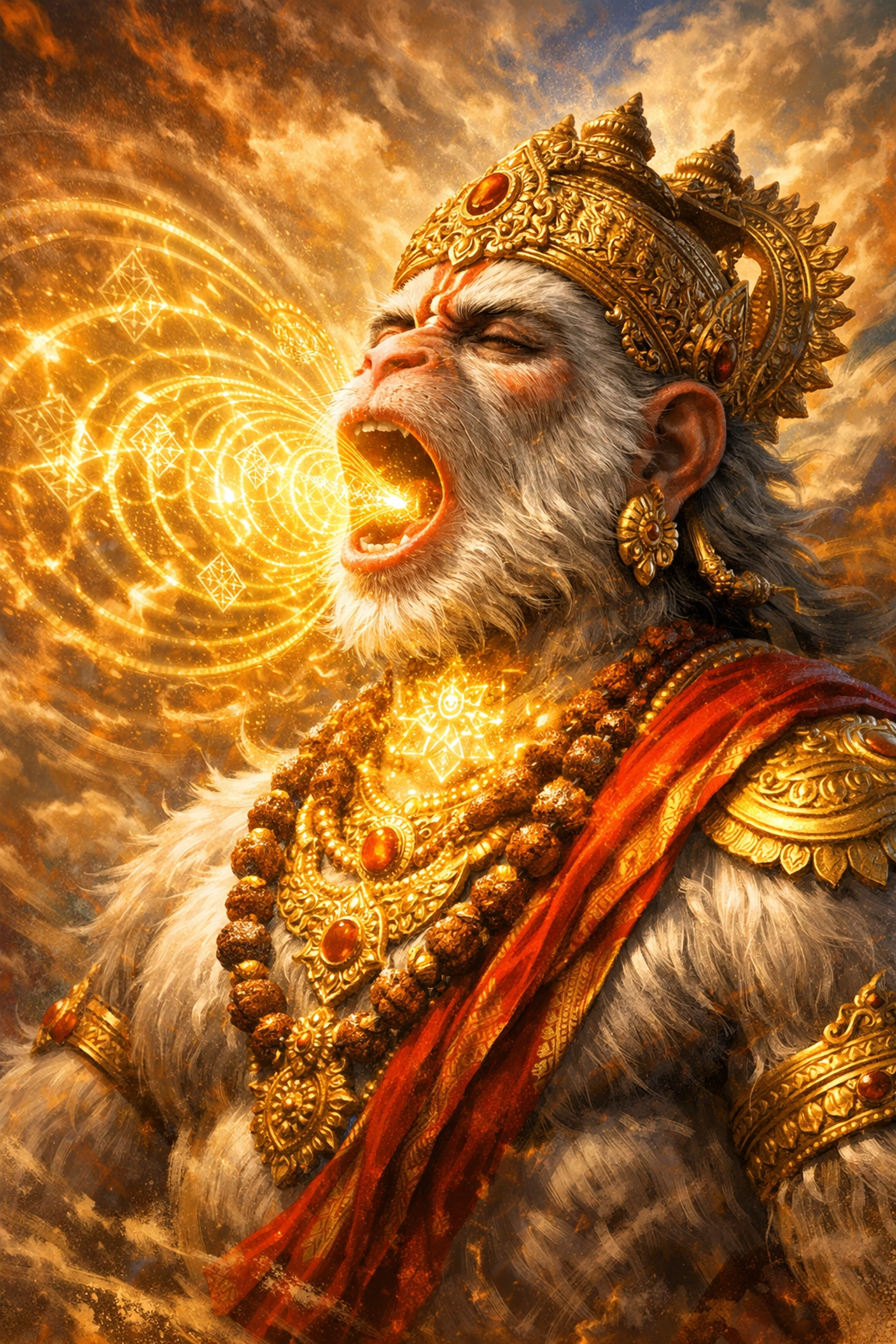
In our journey toward Krishna, we inevitably encounter Hanuman. While often simplified as a "monkey god" of strength, the tantric perspective reveals Hanuman as a master of Vak: the power of speech and divine expression.
Hanuman is the "Son of the Wind" (Vayu), and wind is the medium of sound. It is Hanuman who gives us the ability to speak the truth, to chant the divine names, and to express the inexpressible. He is the bridge between the heart’s devotion and the throat’s expression.
Without the grace of Hanuman, our spiritual insights remain trapped as vague feelings. Hanuman provides the "Vak" to articulate divine truth in the world. He is the ultimate example of sacred embodiment: every cell of his body vibrates with the name of Rama (Krishna’s predecessor), yet he is also the master of grammar, logic, and music. He teaches us that transcendence does not mean we stop communicating; it means our communication becomes a vehicle for the divine.

Authentic Tantra vs. Surface Mythology
At Tantric Journey, we focus on moving past the surface-level stories to the underlying "spiritual hardware." Authentic tantra is the science of using the body, the breath, and the mind to access the transcendental states described by sages like Vanamali Devi.
Krishna is not just a character in a book; he is the consciousness that allows the book to be read. He is the witness of your thoughts, the silence between your breaths, and the purple light at the edge of your vision.
To live a life of sacred embodiment is to recognize that the "Beyond" is not somewhere else. It is the very fabric of our existence, currently obscured by the noise of our mental constructs. By focusing on the color of transcendence and the wisdom of the masters, we begin to thin the veil.
We invite you to stop viewing these concepts as "religion" and start viewing them as an invitation to experience the reality of your own infinite nature. Whether through the study of the scriptures in Rishikesh or the silent contemplation of a sage’s image, the path to the beyond is always open.
If you are ready to move beyond the mental constructs of time and space and explore the depths of authentic tantra, we invite you to explore our resources and join our community.
Learn more about our approach to sacred embodiment and spiritual growth here: https://tantricjourney.org/about