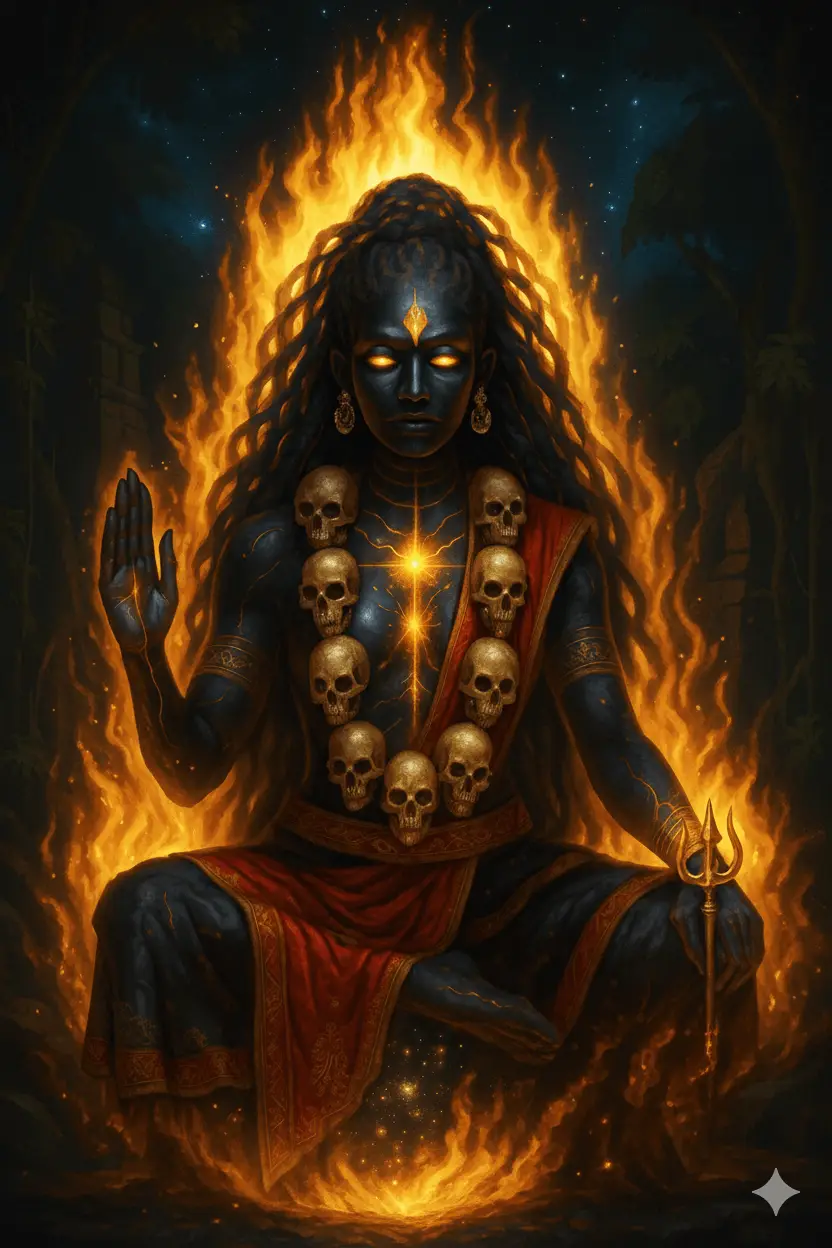


When we speak of divine supremacy in Hindu tradition, few forms command the awe and reverence that Mahaganapati inspires. Known as the supreme manifestation of Lord Ganesha, Mahaganapati stands as the ultimate embodiment of cosmic consciousness: a deity who transcends the ordinary boundaries of worship to become the very essence of universal creation itself.
The Supreme Form of Divine Consciousness
Mahaganapati isn't just another form of the beloved elephant-headed deity we know as Ganesha. He represents the pinnacle of divine evolution, the supreme form that encompasses all gods within his being. This magnificent deity is the patron of the Maha-ganapatya sect, one of the six chief schools of Ganapatya worship, where devotees recognize him not merely as a remover of obstacles, but as the great Creator himself.
What sets Mahaganapati apart is his eternal nature. According to ancient Hindu philosophy, this supreme form existed before the universe came into being and will continue to exist long after its dissolution during the cosmic cycle of pralaya. This timeless quality makes him the ultimate source and destination of all existence: a concept that resonates deeply with those on a tantric journey seeking unity with the divine.
The Majestic Appearance of Universal Power
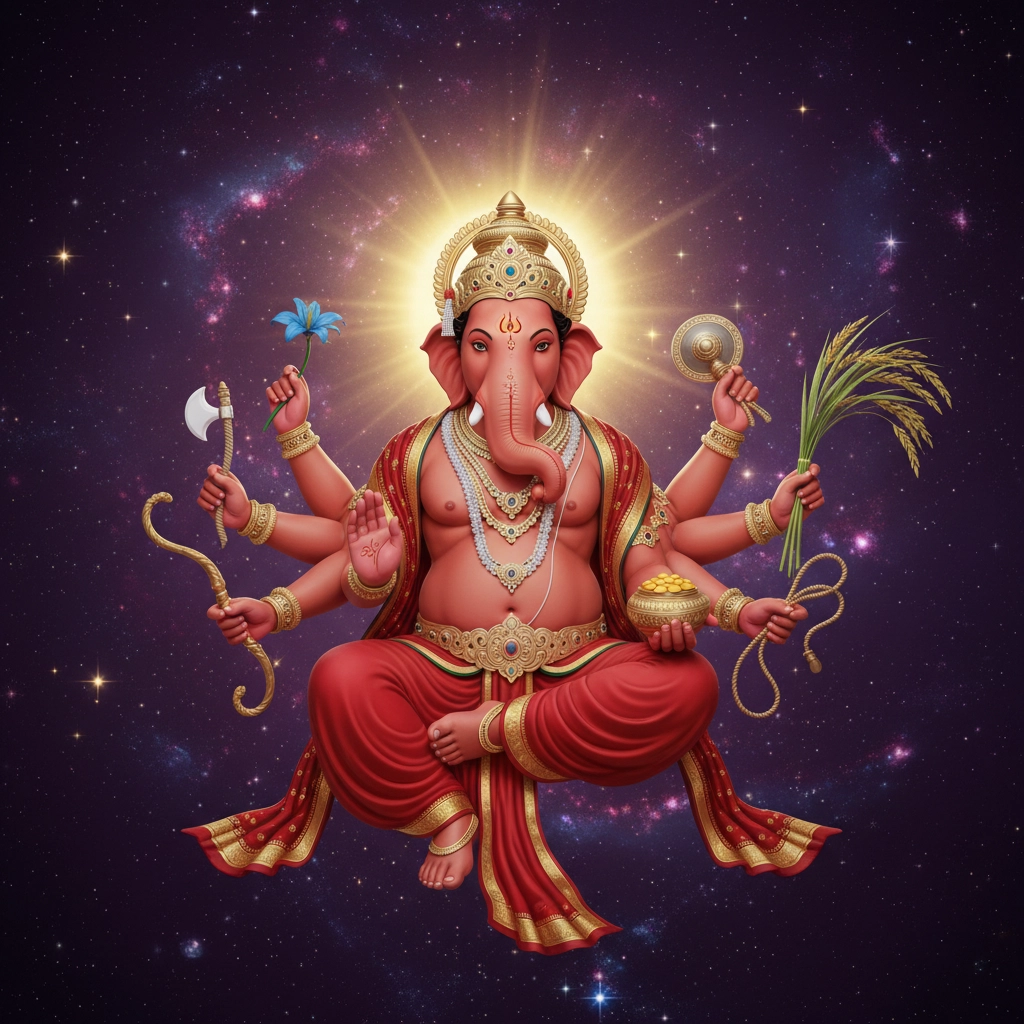
The visual representation of Mahaganapati is nothing short of breathtaking. Unlike the familiar four-armed Ganesha we commonly see, Mahaganapati blazes with divine presence through his striking red complexion and three powerful eyes that see past, present, and future simultaneously. His ten arms stretch outward like cosmic rays, each holding objects that represent different aspects of universal consciousness and spiritual attainment.
These sacred objects aren't mere symbols: they're keys to understanding the depth of Mahaganapati's power. In his hands, he holds his own tusk, representing the ultimate self-sacrifice for the greater good. The pomegranate speaks to fertility and the creative force, while the blue lily embodies divine beauty that transcends the material world. The lotus represents purity emerging from the mud of worldly existence, and the sugarcane bow symbolizes the mind's ability to overcome desires and attachments.
His discus represents the eternal, cyclical nature of the universe, while the noose reminds us of the bonds of attachment that we must transcend. The mace symbolizes divine strength and authority, the pot of gems represents spiritual treasures, and the paddy sprig speaks to abundance and prosperity that flows from spiritual realization.
The Balance of Divine Energies
One of the most profound aspects of Mahaganapati is his representation alongside his divine consorts, Siddhi (Success) and Riddhi (Prosperity). This isn't just decorative symbolism: it represents the fundamental tantric principle of the union between masculine and feminine energies. In tantric philosophy, true spiritual power emerges from the balance and integration of these complementary forces.
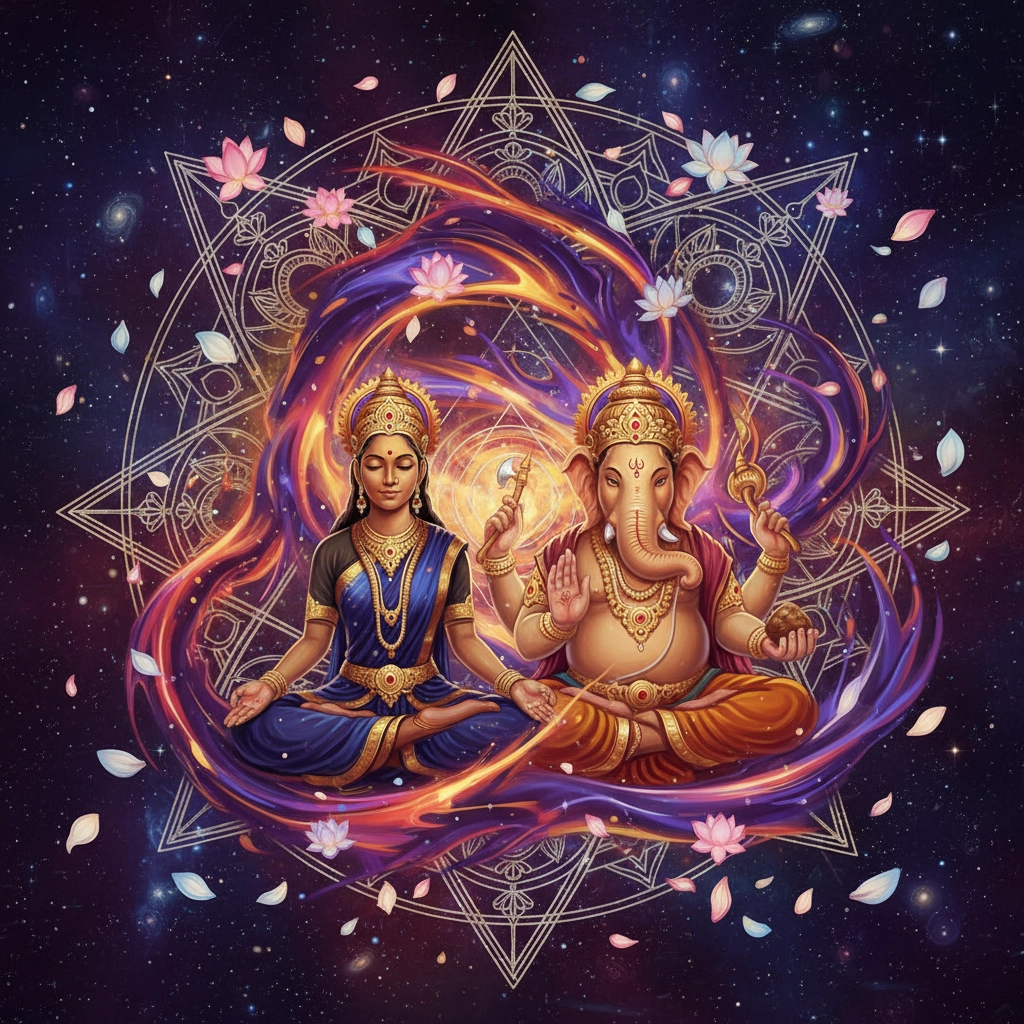
When Mahaganapati is depicted with Siddhi Lakshmi seated upon his lap, we're witnessing the visual representation of cosmic harmony. This union embodies the tantric teaching that enlightenment comes not from rejecting the material world, but from integrating all aspects of existence into a unified whole. For practitioners on a tantric journey, this represents the ultimate goal: the marriage of consciousness and energy, Shiva and Shakti, that creates the foundation for spiritual transformation.
The Cosmic Role of the Supreme Remover
While all forms of Ganesha are known for removing obstacles, Mahaganapati's role extends far beyond this traditional function. As the supreme form, he doesn't merely remove barriers: he transforms them into stepping stones for spiritual evolution. His three eyes see through the illusions that create obstacles in the first place, offering his devotees not just solutions to problems, but the wisdom to transcend the very conditions that create difficulties.
This transformation happens on multiple levels. On the material plane, Mahaganapati grants success in worldly endeavors, educational pursuits, and career goals. But his true power lies in his ability to remove the ultimate obstacle: the illusion of separation from the divine. For tantric practitioners, this makes him an invaluable ally in the journey toward self-realization.
The Leader of All Divine Hosts
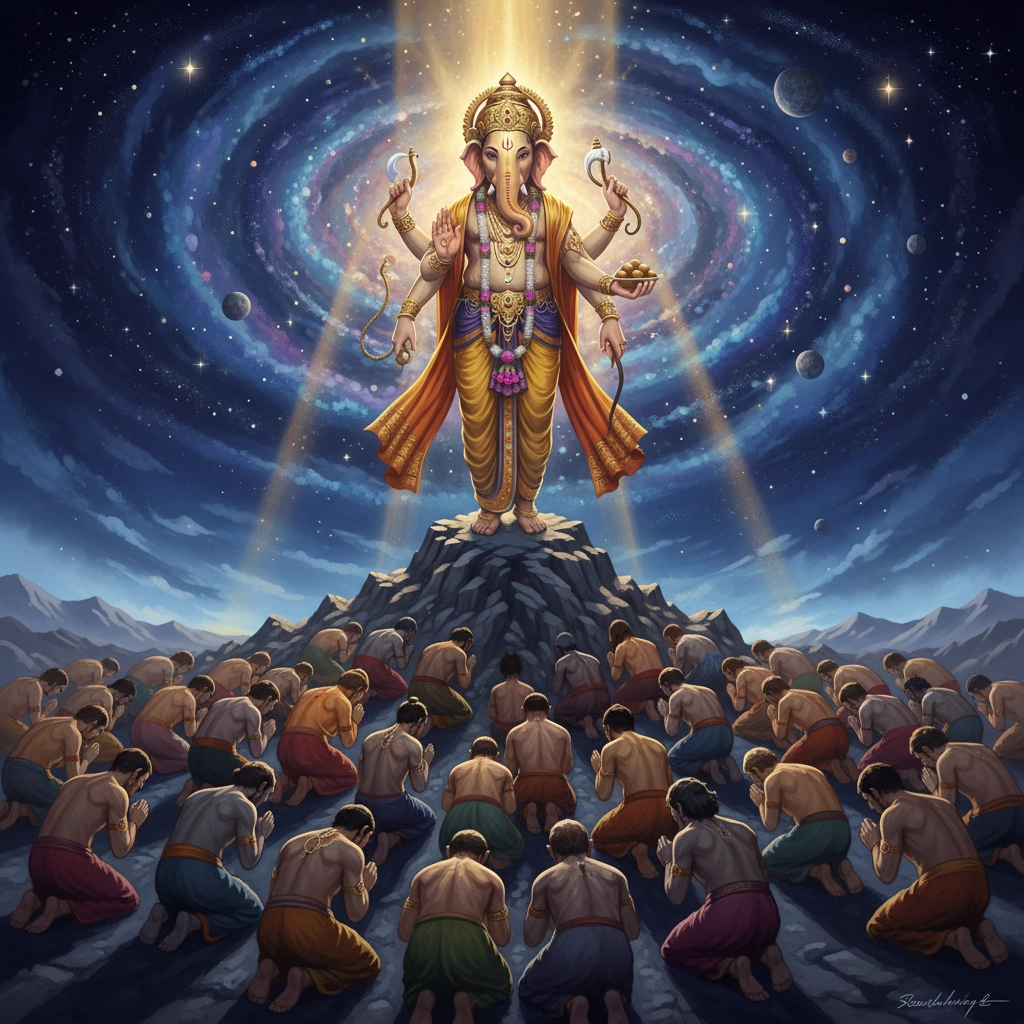
The name "Mahaganapati" itself reveals his supreme status: he is the great leader of the Ganas, the divine attendants who serve the cosmic order. But his leadership extends beyond managing celestial beings. He leads by example, showing how consciousness can embody both transcendent wisdom and compassionate action in the world.
This leadership quality makes Mahaganapati particularly relevant for modern spiritual seekers. In a world filled with competing spiritual paths and conflicting teachings, Mahaganapati represents the unity that underlies all authentic spiritual traditions. He embodies the tantric principle that all paths ultimately lead to the same source when followed with genuine dedication and understanding.
Worship and Spiritual Practice
The worship of Mahaganapati follows the traditional Hindu custom of honoring Ganesha first in any spiritual undertaking. However, approaching Mahaganapati requires a shift in consciousness from asking for help with specific problems to surrendering to the supreme intelligence that orchestrates all existence.
Traditional worship involves offering red flowers to honor his red complexion, sweets to acknowledge the sweetness of divine love, and prayers that recognize his supreme authority over all cosmic functions. But the deepest worship of Mahaganapati happens through the cultivation of the qualities he embodies: wisdom that sees unity in diversity, compassion that extends to all beings, and power that serves rather than dominates.
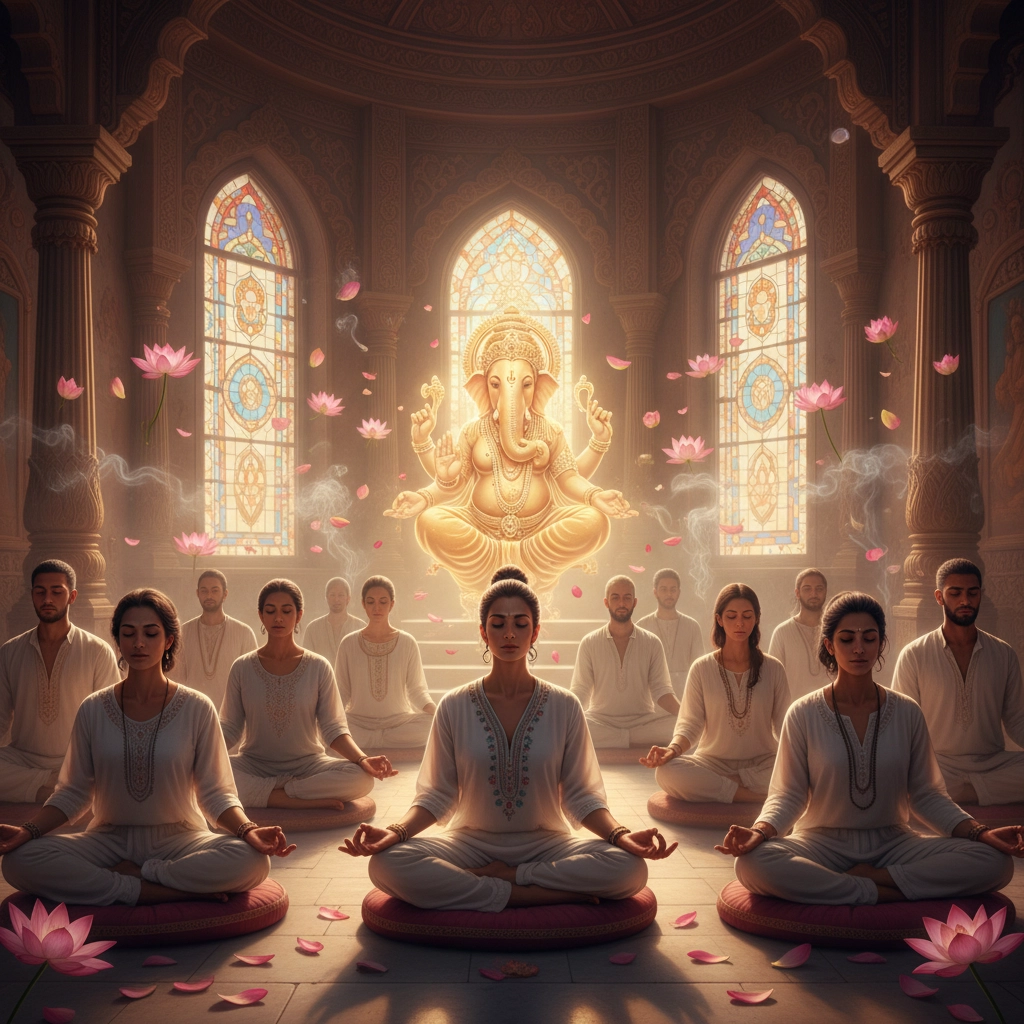
For those practicing tantra, meditation on Mahaganapati can be particularly transformative. Visualizing his ten-armed form helps expand consciousness beyond ordinary limitations, while contemplating his eternal nature supports the recognition of one's own immortal essence. The practice of seeing Mahaganapati in all beings and situations cultivates the tantric vision of divinity pervading every aspect of existence.
The Tantric Significance
In tantric philosophy, Mahaganapati represents the culmination of spiritual development: the state where individual consciousness recognizes itself as universal consciousness. His form as the embodiment of all gods reflects the tantric teaching that all deities are aspects of one divine reality experienced through different qualities and functions.
This understanding transforms the relationship with Mahaganapati from external worship to internal recognition. Rather than praying to a distant deity, practitioners learn to identify with the supreme consciousness that Mahaganapati represents. This identification doesn't inflate the ego: it dissolves it into the vastness of cosmic awareness.
Living the Mahaganapati Principle
Understanding Mahaganapati intellectually is just the beginning. The real spiritual work involves embodying his qualities in daily life. This means approaching challenges with the wisdom that sees opportunities for growth, treating all beings with the respect due to manifestations of the divine, and using whatever power or influence we have in service of the greater good.
The supreme nature of Mahaganapati reminds us that spiritual realization isn't separate from worldly engagement. Like this mighty deity who encompasses all aspects of existence, true spiritual maturity involves bringing enlightened consciousness into every area of life: relationships, work, creative expression, and service to others.
The Eternal Invitation
Mahaganapati extends an eternal invitation to all seekers: the invitation to recognize and embody our own supreme nature. His ten arms reach out not just to offer blessings, but to embrace us into the recognition that we too are expressions of the same divine consciousness that he represents.
For those walking the tantric path, Mahaganapati serves as both destination and companion. He shows us what we're capable of becoming while supporting our journey toward that realization. His eternal presence reminds us that the supreme consciousness we seek is not somewhere else: it's the very awareness through which we seek.
In the end, Mahaganapati teaches us that the question "Who is Mahaganapati?" inevitably leads to the deeper question "Who am I?" And in that inquiry lies the heart of all spiritual transformation: the recognition that the seeker and the supreme are ultimately one.

