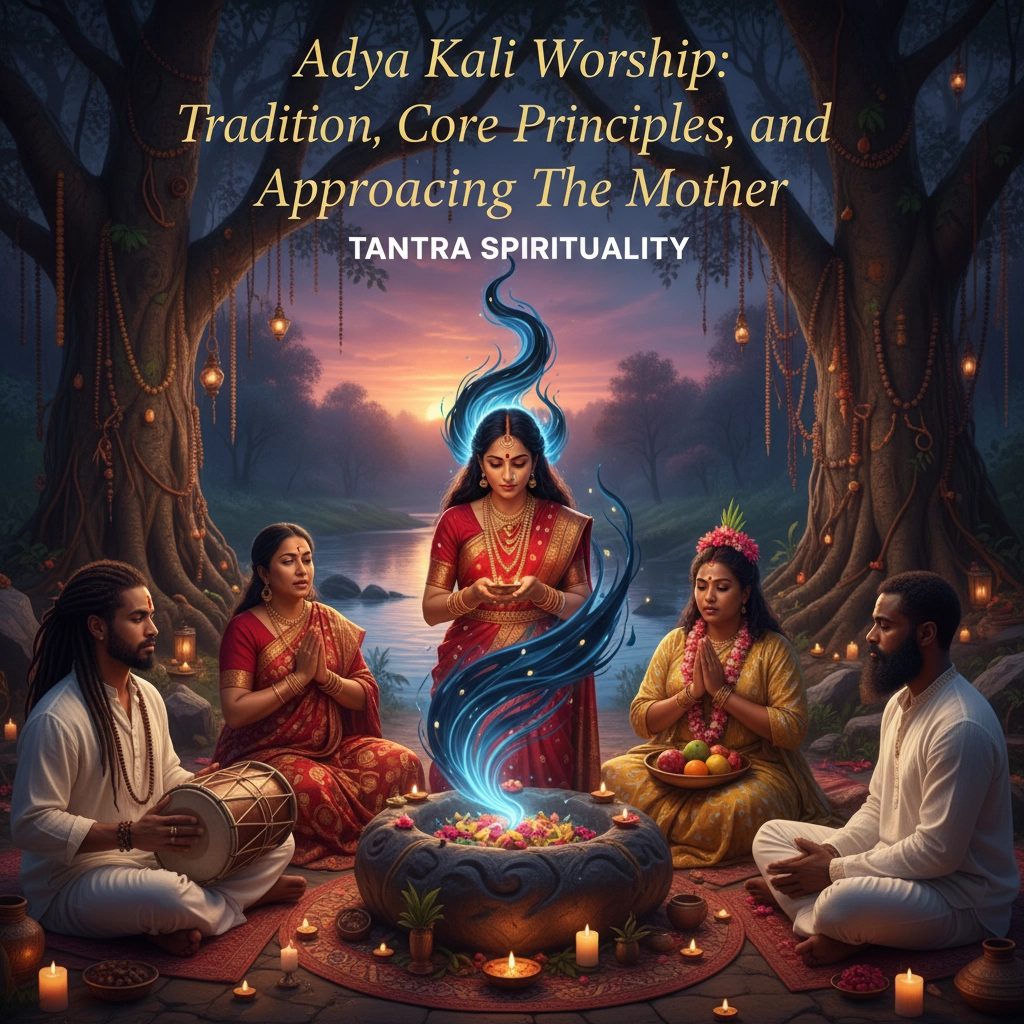
The goddess doesn't always choose marble temples or gold-plated shrines. Sometimes, she picks a patch of earth in rural Bengal, a farmer's dream, and hearts ready to receive her without ceremony. This is the story of how Kali came home to a village in Birbhum, West Bengal, not through grand ritual, but through the quiet faith of ordinary people.
The Vision That Started Everything

Decades ago, a humble farmer in Birbhum had a dream. Not the kind of dream you forget by morning, but one that burns itself into your soul and refuses to leave. In his vision, he saw her, Kali Ma, dark as the fertile earth, fierce as the storms that bring life to the fields. She stood before him, not demanding temples or elaborate worship, but asking for something simpler: a place to rest among her people.
The farmer woke knowing his life had changed. But dreams and divine visions don't pay for stone or sculptors. For years, the image stayed with him, a constant presence in his daily work. He tended his fields, raised his family, and carried the secret of what Kali had shown him.
This is how the goddess works, not through overnight miracles, but through the slow cultivation of faith. Like seeds planted in monsoon earth, some divine callings take their time to sprout.
When Faith Finds Form
The turning point came when the farmer's vision began attracting others. Word spread quietly through the village, the way sacred news always does, whispered between women at the well, shared among men walking to market, passed from grandmother to grandchild.
Soon, a small group of devotees had formed around this simple man and his extraordinary dream. They decided it was time to give the goddess her physical form.
Finding the right stone became its own spiritual journey. Black stone, the kind that seems to hold shadows and light simultaneously, wasn't easy to source. But when they found it, everyone knew. The stone itself seemed to pulse with potential, waiting for skilled hands to reveal what already lived within.
The sculptor they commissioned understood something crucial about this project. This wasn't just another commission for a temple committee with deep pockets. This murti would be born from genuine devotion, shaped by hands guided by something beyond technique.
The Lightening of the Goddess

As the sculptor worked, something remarkable happened. The original design for the Kali murti proved too heavy for transport to the village. The practical problem became a spiritual teaching: sometimes the divine must lighten itself to reach us where we are.
The solution wasn't to build stronger transportation or hire more workers. Instead, the sculptor modified the design, making the goddess form more portable while maintaining her essential power. Every reduction in weight was done with prayer, every change approved through meditation and dreams.
This wasn't compromise, it was adaptation. Kali was teaching her people that divine presence doesn't depend on massive monuments or immovable installations. She could be just as powerful in a lighter form, carried by loving hands to her chosen home.
The completed murti was stunning in its simplicity. Dark stone carved with precision but not ostentation. Her expression carried both ferocity and compassion, her posture both strength and grace. She looked exactly like what she was: a living goddess ready to dwell among her people.
The Journey Home
Transportation day brought its own miracles. The route from sculptor to village should have been straightforward, but rural Bengal has its own challenges, narrow roads, monsoon damage, bridges that might not support heavy loads.
Every obstacle that appeared seemed to dissolve before the convoy carrying the murti. A damaged bridge was repaired just days before they needed to cross it. Road construction that should have blocked their path was mysteriously delayed. Weather that threatened to complicate transport cleared at exactly the right moments.
The devotees traveling with the goddess reported a palpable sense of protection during the journey. Not the dramatic intervention of lightning and thunder, but the quieter miracle of everything falling into place exactly when needed.
Local villagers who had never heard of this farmer's vision found themselves drawn to help. Offers came from unexpected sources, a truck owner who reduced his fees, laborers who volunteered their time, even government officials who expedited necessary permits without being asked.
Installation Without Institution

When the murti arrived in Birbhum, there was no grand temple waiting. No marble mandap, no rows of marigold garlands, no brahmin priests chanting complex Sanskrit mantras. What awaited was something rarer in our modern spiritual landscape: pure, unmediated devotion.
The installation ceremony stripped away everything except what mattered most. The goddess was placed on simple earth, with only the guru's yantra beneath her feet to sanctify the space. No elaborate architecture, no golden ornaments, just Kali in her essential form, surrounded by people whose hearts were completely open.
The abhishekam that followed used elements anyone could provide: water from the village well, milk from local cows, flowers picked from nearby gardens. Each offering carried the energy of the giver, unfiltered by institutional requirements or prescribed rituals.
Watching this installation, you could see something beautiful happening. The goddess wasn't being confined within temple walls or mediated through priestly hierarchies. She was taking her place among the people as a living presence, accessible to anyone with sincere devotion.
The Living Essence Returns
What makes this story significant isn't the successful transportation of a stone sculpture. It's what the entire process represents: the return of tatwa, the living spiritual essence, to grassroots devotion.
In our time, authentic spiritual connection often gets buried under layers of institution and ceremony. Temples become businesses, rituals become performances, and the living goddess becomes trapped in marble and gold. But here in Birbhum, something different was happening.
The farmer's original vision was being fulfilled not through grand construction but through genuine community. The goddess was coming home not to a building but to a collection of hearts that recognized her presence.
Every person who participated in this installation, from the sculptor who lightened her form to the truck driver who transported her safely, from the farmer who first dreamed her to the villagers who welcomed her, became part of her embodiment in the world.
Why This Matters Today

This story from Birbhum offers something our spiritual seeking desperately needs: proof that the sacred doesn't require institutional approval to manifest. The goddess doesn't need our permission, our buildings, or our elaborate ceremonies to be present in the world.
What she needs is exactly what this village provided: genuine recognition, simple devotion, and hearts willing to receive her without conditions.
In a world where authentic spiritual experience often feels commodified or out of reach, this installation demonstrates that the divine still chooses to manifest through ordinary people living extraordinary faith. The goddess comes not to those with the most resources, but to those with the most receptive hearts.
The farmer's decades-old vision becoming reality reminds us that divine timing operates on its own schedule. What appears delayed might simply be gathering the right circumstances, the right people, the right moment for perfect manifestation.
Today, that Kali murti continues to serve her village community, receiving offerings and prayers without fanfare or commercial interference. She stands as living proof that the goddess returns not to stone temples, but to the living devotion of ordinary people who recognize her presence and welcome her home.
This is how the divine works in our time, not through grand gestures or institutional approval, but through the quiet persistence of sincere hearts willing to say yes when the goddess calls.