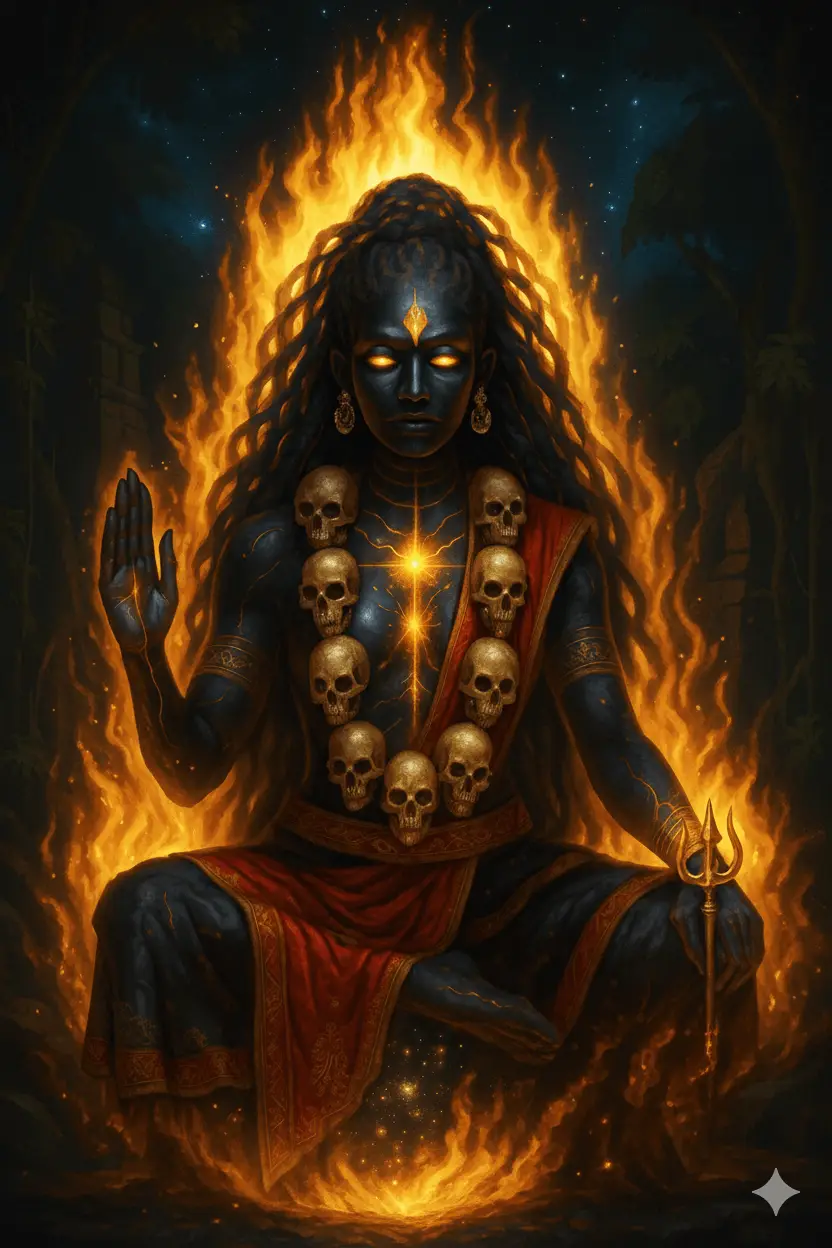


That colorful infographic showing seven perfectly aligned rainbow chakras? It's missing about 90% of the story.
The subtle body isn't a feel-good metaphor or a trendy wellness aesthetic. In traditional yogic and tantric systems, it's a sophisticated energetic anatomy that exists alongside your physical form, functioning as the interface between your mind, body, and consciousness. Think of it less like a spiritual Instagram filter and more like an intricate energetic infrastructure that ancient practitioners spent lifetimes mapping.
What the Subtle Body Actually Is
The subtle body consists of thousands of energy channels called nadis: Buddhist sources cite 72,000 of them: that transport vital energy (prana or lung) throughout your system. These channels converge at specific junction points, which are the chakras. The most important pathway is the central channel (sushumna nadi), running from the base of your spine to the crown of your head, flanked by two other major channels that spiral around it.
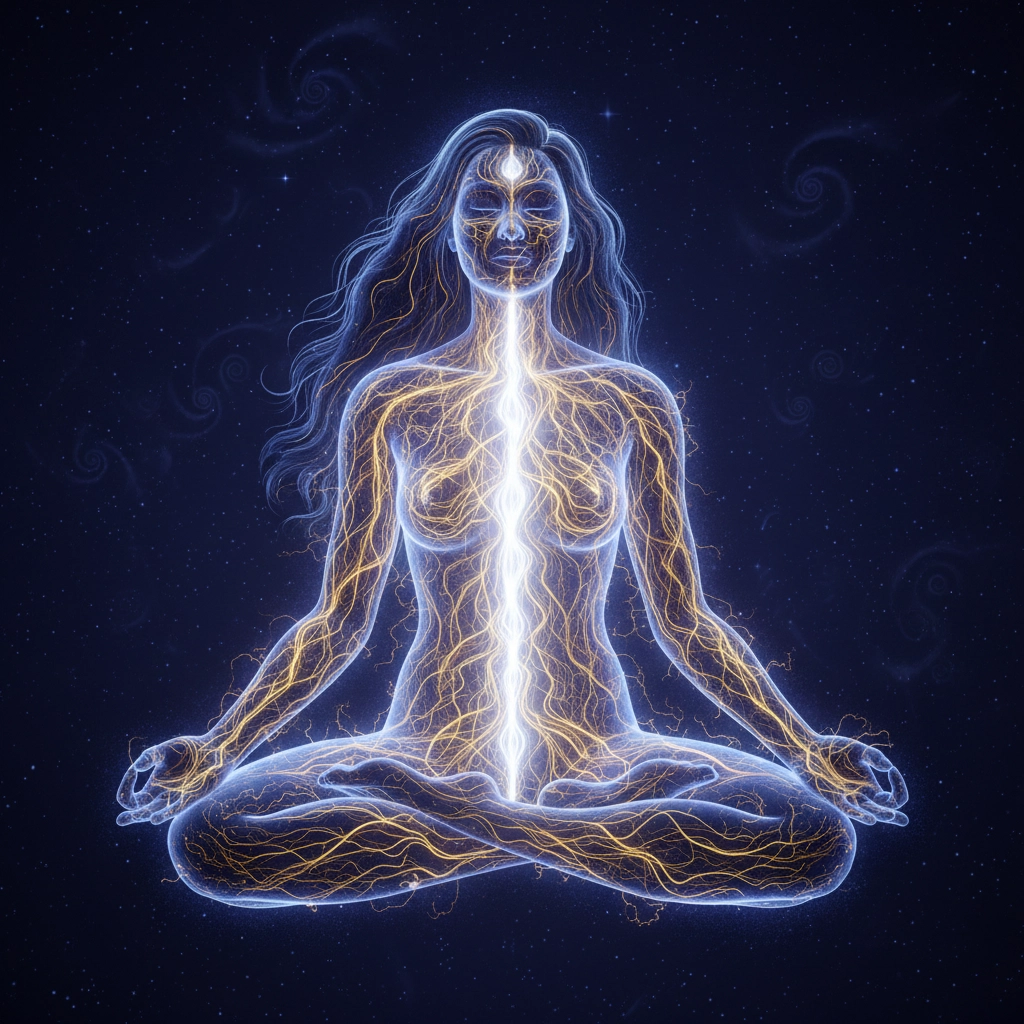
This isn't floating around in some mystical dimension. The subtle body corresponds to specific nerve ganglia and endocrine glands in your physical anatomy. Researchers have even tracked correlations between these energy centers and measurable brain activity using EEG and gas-discharge imaging.
Here's what makes up your subtle body according to traditional sources:
• 72,000 nadis (energy channels) throughout your system
• Central channel (sushumna) as the main energetic highway
• Side channels (ida and pingala) that spiral around the central channel
• Junction points where multiple channels converge (chakras)
• Energetic knots that regulate energy flow
• Vital winds (pranas) that move through these channels
The Chakra Reality Check: Numbers Don't Lie
Here's what Instagram won't tell you: different traditions describe completely different numbers of chakras.
• Buddhist tantras from the 8th century: 4 main chakras with varying petal counts: 64 petals at the sexual organ, 8 at the heart, 16 at the throat, and 32 at the crown
• Kalachakra tantra: 6 chakras
• Hindu systems: Commonly work with 7 because they're "the easiest to feel"
• Complete yogic traditions: Actually recognize 114 chakras total, including secondary points in your hands, feet, and the back of your head
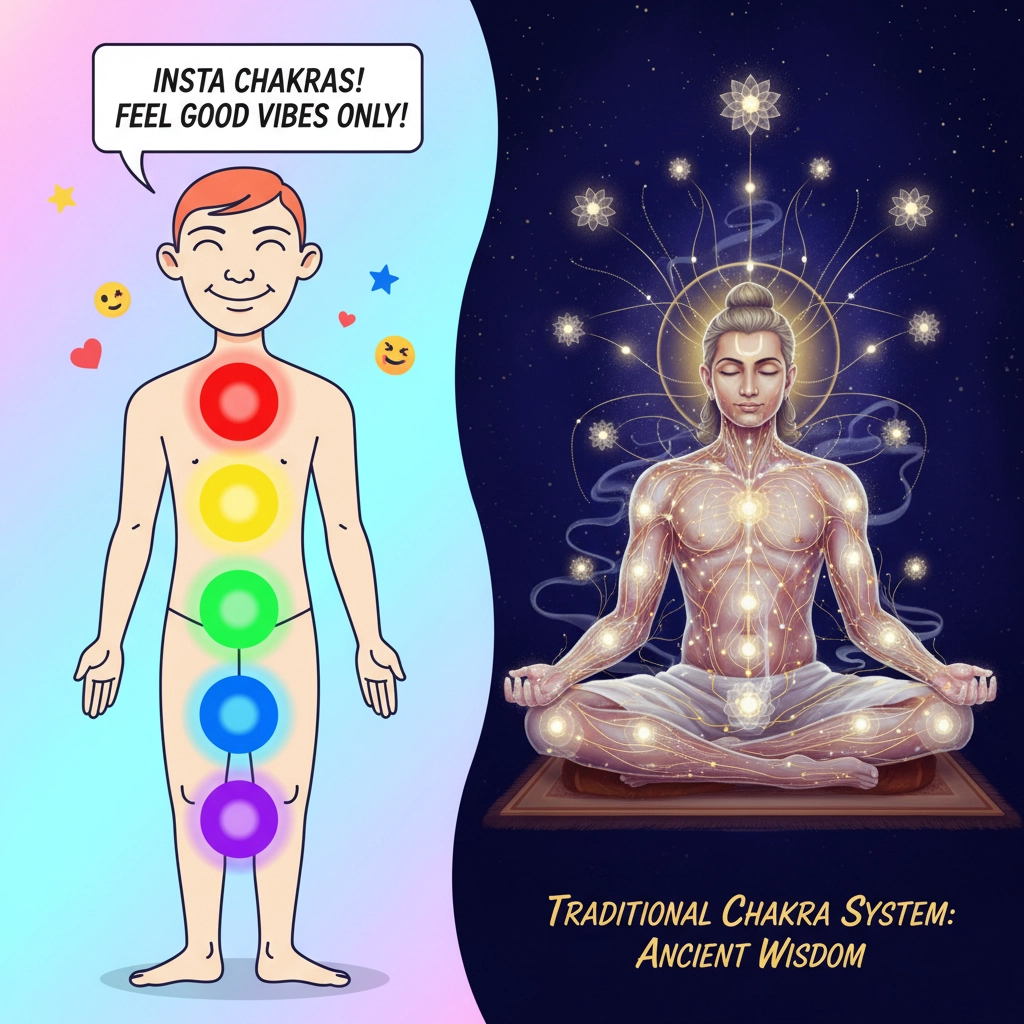
The seven-chakra system that dominates social media is essentially the "beginner's version": useful for getting started, but nowhere near the complete picture.
What Chakras Really Do (Hint: It's Not Just Pretty Colors)
Chakras aren't just colorful spinning wheels: they're sophisticated energy transducers where multiple nadis intersect. In Buddhist Tantra, the central channel is described as being "squeezed by two channels that encircle it at each chakra and thrice at the heart chakra," creating complex energetic knots that influence how life force moves through your system.
Real chakra functions include:
• Regulating energy flow between subtle and physical bodies
• Processing emotional and mental patterns
• Maintaining energetic balance in specific body regions
• Acting as interfaces for consciousness work
• Supporting meditation and breathwork practices
Think of them less like light bulbs that need to be "opened" and more like sophisticated control centers managing the flow of your life force.
The Instagram Myths That Keep You Stuck
Myth #1: "Just visualize rainbow colors and you're good"
Traditional practice involves specific mantras, visualizations, breath patterns, and physical postures developed over centuries. Color visualization is maybe 5% of actual chakra work.
Myth #2: "Blocked chakras cause all your problems"
The subtle body is way more complex than simple blockages. Traditional texts describe intricate patterns of wind disturbances, knot formations, and channel imbalances that require nuanced approaches.
Myth #3: "Everyone's chakras work the same way"
Your subtle body anatomy is as individual as your fingerprints. Some people naturally feel energy more in certain centers, and different body types respond to different practices.
Myth #4: "You can fix everything with crystals and essential oils"
While these tools can support practice, traditional subtle body work relies primarily on breath regulation, meditation, mantra recitation, and specific physical exercises.
What Traditional Lineages Actually Teach
Authentic subtle body work involves understanding the three main energy channels:
• Sushumna (central channel): Runs from base of spine to crown
• Ida (left channel): Associated with cooling, lunar energy
• Pingala (right channel): Associated with heating, solar energy
The goal isn't to "balance your chakras" but to direct energy into the central channel through specific practices like:
• Pranayama (breath regulation techniques)
• Bandhas (energetic locks)
• Mudras (hand positions and body seals)
• Mantra recitation with proper pronunciation
• Visualization practices following traditional protocols
The Science Behind Ancient Maps
Modern research is catching up to what yogic traditions mapped thousands of years ago. Studies using biofield photography, EEG monitoring, and thermography show measurable changes in the body's electromagnetic field during meditation and breathwork.
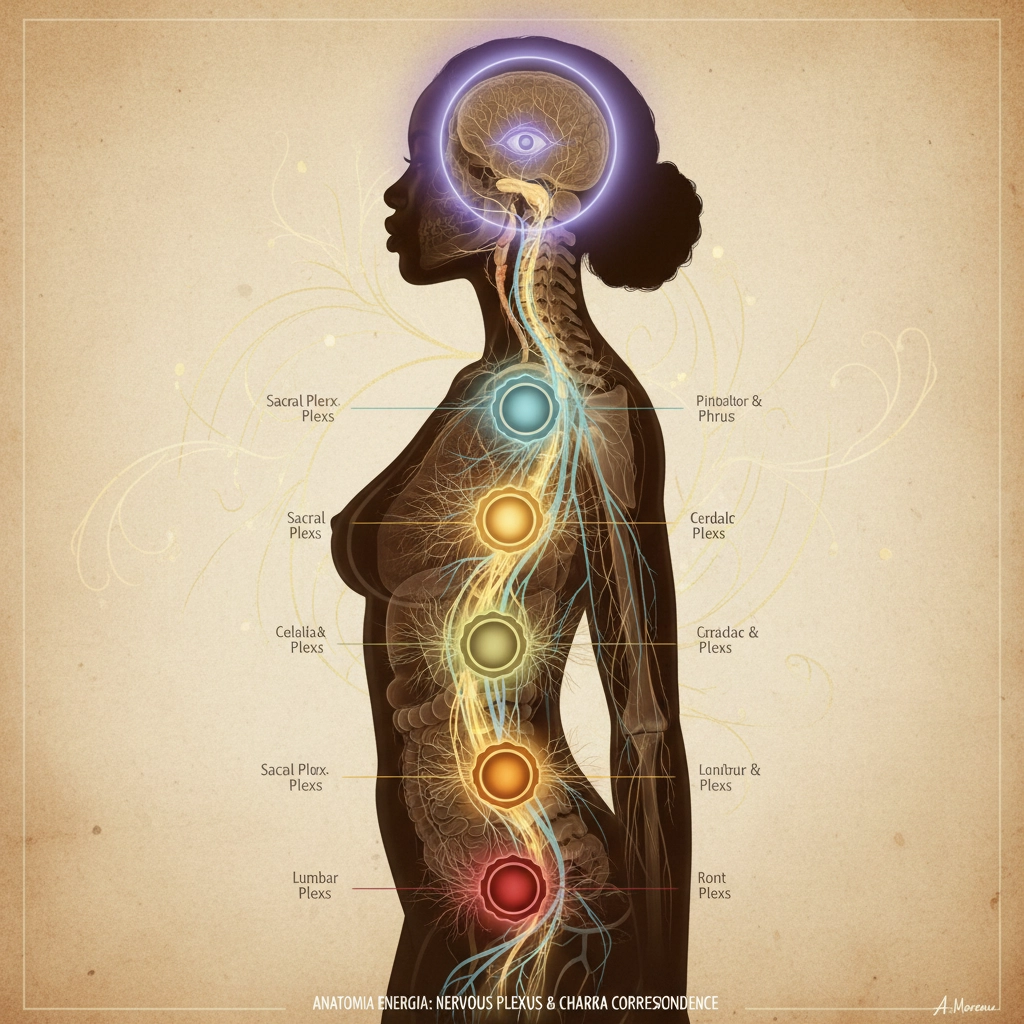
The correspondence between chakras and physical anatomy isn't coincidental:
• Root chakra correlates with the pelvic nerve plexus
• Sacral chakra connects to the hypogastric plexus
• Solar plexus matches the celiac plexus
• Heart chakra corresponds to the cardiac plexus
• Throat chakra aligns with the pharyngeal plexus
• Third eye relates to the cavernous plexus
• Crown chakra connects to the cerebral cortex
How to Actually Work With Your Subtle Body
If you want to go beyond Instagram spirituality, here's where to start:
Begin with breath awareness
• Learn basic pranayama techniques
• Practice feeling energy movement in your body
• Develop sensitivity to subtle sensations
Study traditional sources
• Read texts like the Hatha Yoga Pradipika or Shiva Samhita
• Find teachers trained in authentic lineages
• Understand the philosophical context, not just techniques
Practice consistently
• Daily meditation builds subtle body sensitivity
• Regular breathwork develops channel awareness
• Patient observation reveals your unique patterns
Stay humble about the complexity
• Accept that this is lifetime study, not weekend workshop material
• Question oversimplified explanations
• Seek guidance from experienced practitioners
Beyond the Rainbow: Embracing Authentic Practice
The subtle body isn't a New Age invention: it's a sophisticated system developed by practitioners who dedicated their lives to mapping inner reality. While Instagram's colorful chakra charts might inspire initial interest, real transformation happens when you engage with the actual depth of these teachings.
Your subtle body is far more complex, nuanced, and personally unique than any social media post can capture. The ancient practitioners who developed these systems knew this, which is why traditional training takes years, not minutes.
Ready to move beyond the surface-level chakra talk? Start with your breath, find authentic guidance, and prepare for a journey that's infinitely more rewarding than anything you'll find in your feed.
The subtle body has been waiting for you long before Instagram existed: and it'll be there long after the next spiritual trend fades away.

