


There's something happening in tantra communities that we need to talk about. It's subtle, often well-intentioned, but it's keeping people stuck in patterns that actual tantric work is designed to transform. It's called spiritual bypassing, and it's probably more common than you think.
What exactly is spiritual bypassing?
Psychologist John Welwood coined this term back in the 80s to describe how people use spiritual ideas and practices to avoid dealing with their real emotional issues, psychological wounds, and unfinished developmental work. Basically, it's using spirituality as a sophisticated form of avoidance.
In tantra communities, this shows up when practitioners use concepts like "everything is divine" or "we are all one" to sidestep the uncomfortable work of actually feeling their feelings, addressing their trauma, or taking responsibility for their behavior.

How it plays out in tantra circles
The "love and light" trap
You know those people who respond to every conflict or difficult emotion with something like "just send them love" or "it's all perfect divine play"? That's bypassing. While these concepts contain truth, they become problematic when used to shut down authentic emotional processing.
In tantra communities, I see this constantly. Someone expresses anger about a boundary violation, and instead of addressing the actual issue, the community responds with spiritual platitudes about forgiveness and seeing the divine in everyone.
Sacred sexuality as escape
This one's tricky because tantric sexual practices are legitimate and powerful. But they become bypassing when people use them to avoid deeper intimacy issues, relationship patterns, or trauma. The focus becomes about having transcendent sexual experiences rather than using those experiences to reveal and heal what needs attention.
I've worked with couples who could have amazing tantric sessions but couldn't have a real conversation about their feelings. They were using the practices to maintain connection while avoiding the vulnerable work of authentic intimacy.
The premature forgiveness pattern
Tantra teaches us about seeing the divine in everyone, which is beautiful. But this gets distorted when people rush to forgiveness without actually processing hurt, anger, or establishing healthy boundaries.
Someone violates your boundaries? "I forgive them because we're all one." Your partner cheats? "It's just helping me work through my jealousy and attachments." This isn't wisdom, it's bypassing the real work that needs to happen for genuine healing and transformation.

The identity game
Another common pattern is when "being tantric" becomes an identity that covers up feelings of inadequacy or unworthiness. People develop a spiritual persona, the conscious lover, the awakened practitioner, the evolved being, that protects them from confronting their actual psychological experience.
This creates a split where someone can talk beautifully about unity consciousness while treating their partner poorly, or speak eloquently about embodiment while being completely disconnected from their authentic emotions.
Why this is problematic
Spiritual bypassing doesn't just stunt personal growth, it creates communities that aren't actually safe for real transformation. When difficult emotions aren't welcome, when conflicts get spiritualized away instead of resolved, when trauma responses get dismissed as "unconsciousness," people can't do the real work that tantric practice is designed to support.
It also perpetuates spiritual hierarchies where people who express "lower" emotions like anger, jealousy, or sadness are seen as less evolved than those who maintain a constant state of love and acceptance. This is the opposite of tantric principles, which honor all of existence as sacred.
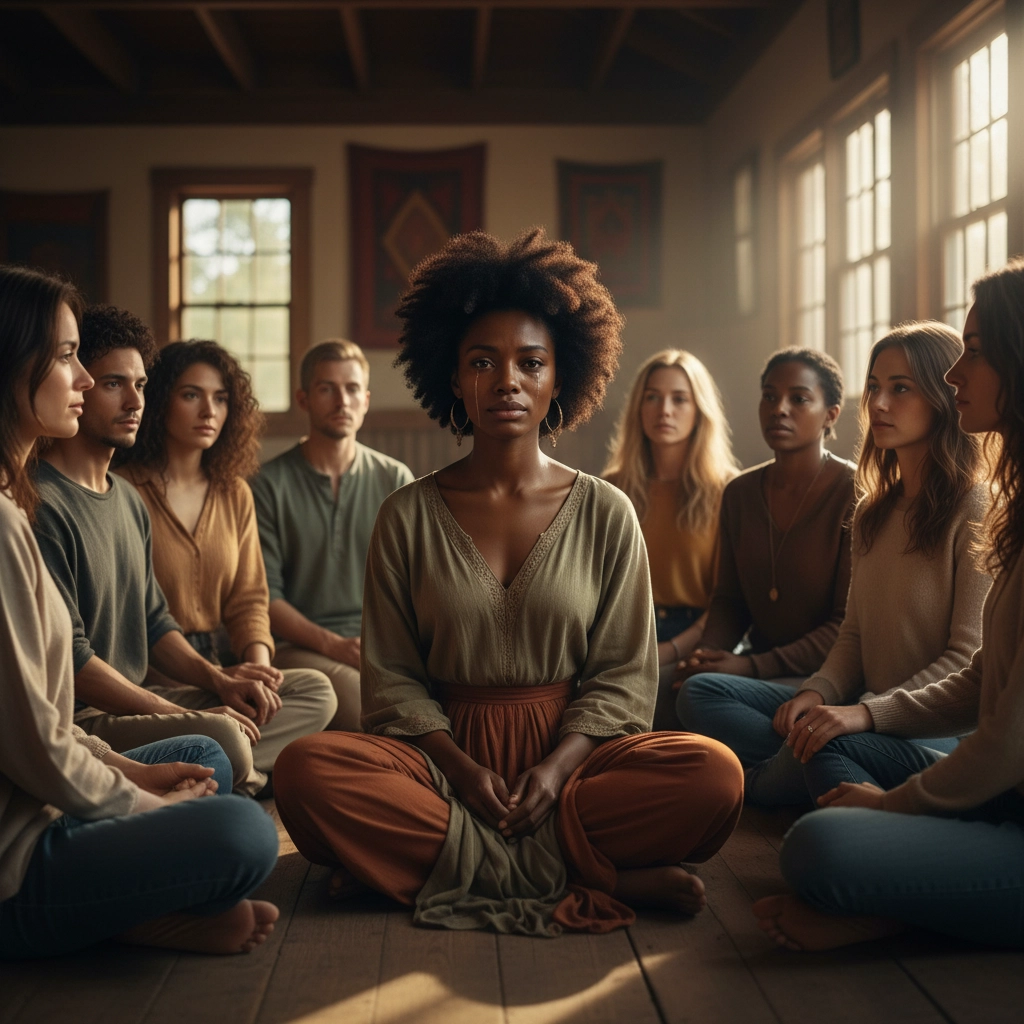
What genuine tantric work looks like
Real tantric practice isn't about transcending your human experience, it's about embracing it so fully that transformation happens naturally. Here's what I mean:
Emotional authenticity first
Before you can work with energy, you have to be willing to feel your actual feelings. This means getting angry when boundaries are crossed, feeling sad when there's loss, experiencing fear when safety is threatened. These aren't obstacles to transcendence, they're the raw material for it.
Integration over transcendence
Instead of trying to rise above your psychological patterns, tantric work invites you to bring awareness into them. Your triggers become teachers. Your shadows become gateways. Your relationship conflicts become opportunities for deeper intimacy.
Boundaries as sacred practice
Genuine tantra requires fierce discernment about what serves your growth and what doesn't. This means saying no to experiences, relationships, or communities that aren't aligned with your wellbeing. It means addressing harmful behavior directly instead of spiritualizing it away.
Holding both realities
You can recognize the absolute truth that everything is consciousness while also honoring the relative reality that in this human experience, actions have consequences, boundaries matter, and emotional processing is necessary for health.
How to spot and avoid the bypass
Notice the spiritual vocabulary
Pay attention to how spiritual concepts are being used. Are they opening up space for deeper inquiry and authentic expression, or are they being used to shut down uncomfortable feelings and conversations?
Check for emotional range
Healthy tantric communities welcome the full spectrum of human experience. If you're in a group where only "positive" emotions are acceptable, or where expressing anger, sadness, or fear is seen as unconscious, that's a red flag.

Look for integration
Does the community support people in doing actual psychological work alongside spiritual practice? Are there resources for trauma healing, therapy, or other forms of emotional processing? Or is everything supposed to be resolved through tantric practices alone?
Assess the leadership
Are the teachers and leaders modeling emotional authenticity and appropriate boundaries? Or are they using their spiritual authority to avoid accountability for their behavior?
Moving beyond the bypass
If you recognize these patterns in yourself or your community, don't despair. Awareness is the first step toward change. Here's how to begin shifting:
Start with self-honesty
What emotions or experiences have you been trying to transcend instead of integrate? What aspects of your psychology have you been spiritualizing away instead of addressing directly?
Embrace therapeutic support
Good therapy isn't the enemy of spiritual practice: it's a complement to it. Many of us need professional support to work through trauma, childhood wounds, and psychological patterns that spiritual practice alone can't resolve.
Practice discernment
Learn to distinguish between authentic spiritual insight and spiritual bypassing. Does this practice/teaching invite you into greater self-awareness and authentic expression, or does it encourage you to suppress and transcend?
The invitation here isn't to abandon tantric practice or become skeptical of spiritual wisdom. It's to engage with these teachings in a more authentic, embodied way. When we're willing to embrace our full human experience: including the uncomfortable parts: tantric practice becomes a vehicle for genuine transformation instead of sophisticated avoidance.
Real tantra meets you where you are, not where you think you should be. And sometimes where you are is messy, triggered, confused, or in pain. That's not a problem to fix; it's the perfect place to begin.

