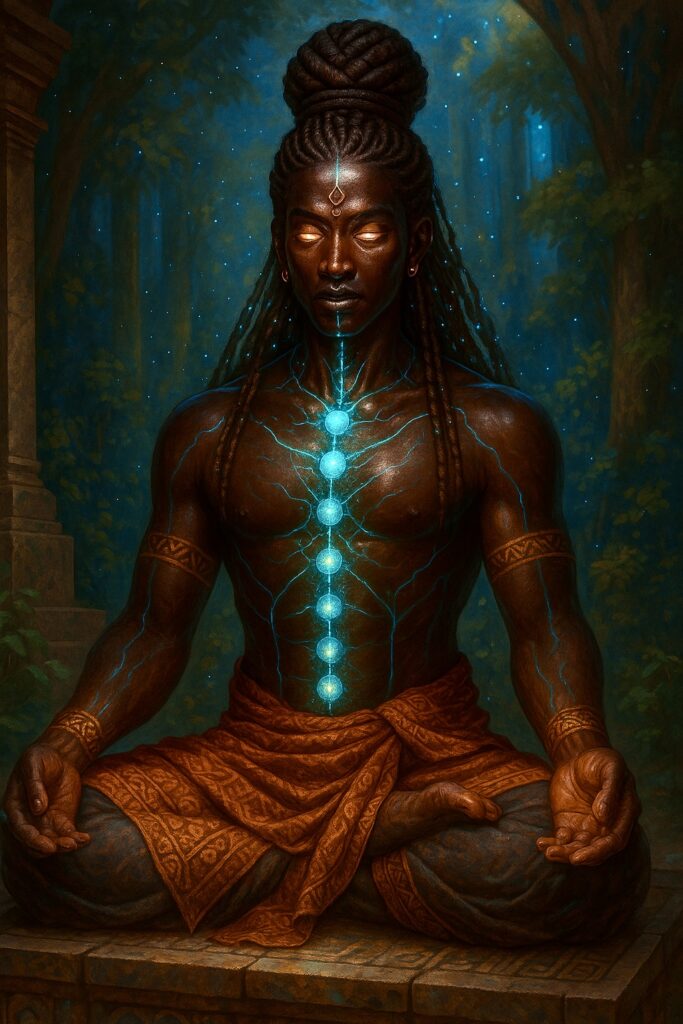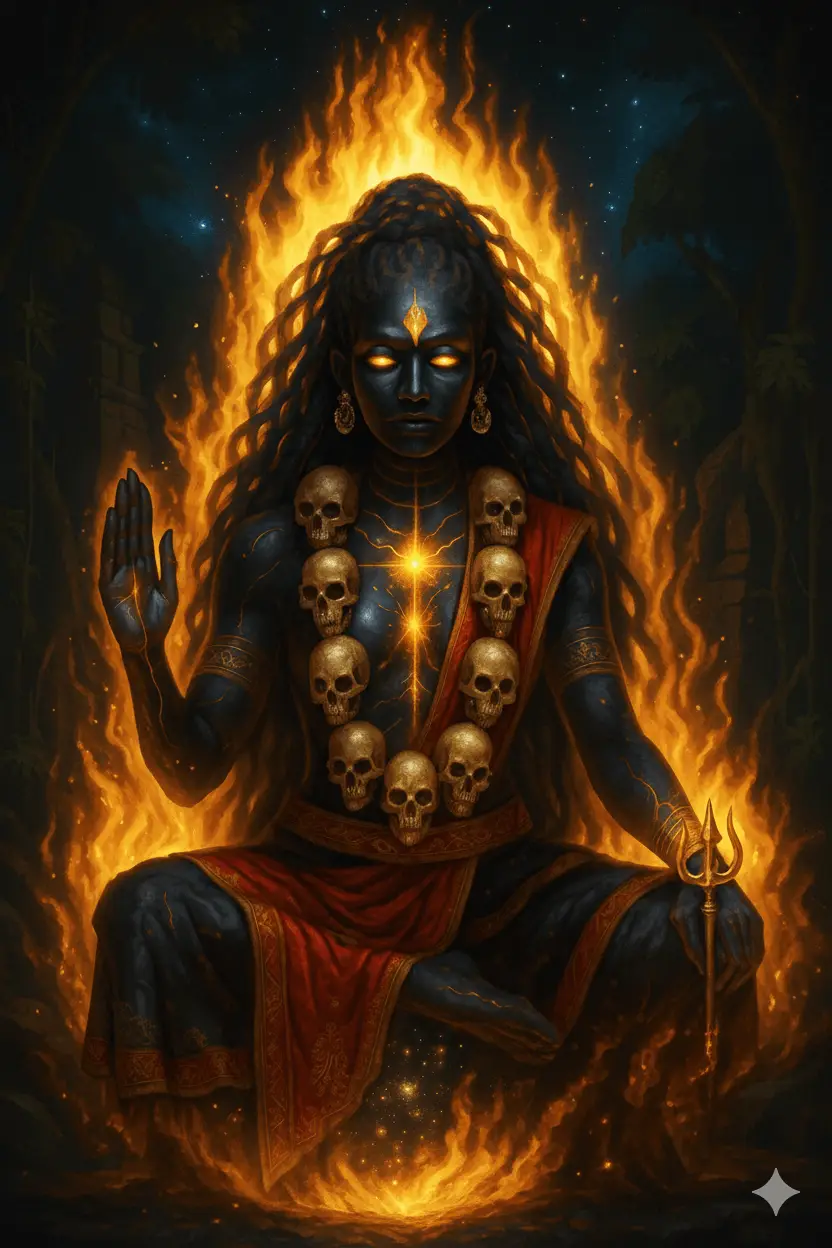


Mundane astrology reads the heavens as conditions affecting peoples, governments, institutions, and regions. It does not claim that a transit forces one inevitable outcome. It describes weather: pressure in the atmosphere, the areas likely to become heated, and the qualities required to move through the period without being ruled by fear. In that register, this quarter signifies suddenness, sharp events, loss, disruption to institutions, strain on those who govern, agitation among the public, fire and accident, and matters arising at borders and edges.
The coming three-month interval carries a demanding configuration. Mars leaves its debilitated position and enters Leo, where Ketu is already present. Jupiter begins this window exalted in Cancer and then moves into Leo after the end of October. Saturn continues through Pisces. In the traditional method used here, whenever Mars and Ketu conjoin, their sign is read as though it were Scorpio. This brings the fire signs (Aries, Leo, and Sagittarius) under pressure, along with Scorpio and Capricorn, the signs connected with Mars’s debilitation and exaltation.
A dispositor is the planet that rules the sign where another planet is placed. When Jupiter enters Leo, the Sun becomes Jupiter’s dispositor because the Sun rules Leo. But the Sun is debilitated in Libra across this same stretch. The greater benefic therefore enters a sign whose ruler has fallen, and is left without a capable dispositor at precisely the point where its protection is most needed.
This is the central difficulty of the period. Jupiter begins exalted, then leaves that strength and enters Leo while its dispositor is fallen. Its power to protect, expand, teach, and preserve is withheld just as the malefic pressure intensifies. In the language of Jyotish, this is stambhana applied to Jupiter: the force of Jupiter is obstructed or held still.

The timing of the pressure
The alternative conditions that might have softened the period run out as autumn closes. The window opens in the wake of a pair of eclipses that have fallen within a fortnight of one another in the late part of the preceding month. The traditional rule is that when two eclipses occur so close together, the fortnight that follows is not a settling time but an accelerating one: matters already set in motion begin to move faster. Eclipses in this sense are read as markers rather than causes. No single transit acts alone, and a configuration falls heavily only where it is reflected in the chart of a nation or region.
After the end of October, Jupiter leaves its exaltation and enters Leo. As the greater benefic leaves a water sign and moves into the sign of the Sun, benefic protection thins at the same moment that a malefic configuration is building. The Sun, ruler of Leo, is debilitated in Libra across this same stretch, so Jupiter’s support is obstructed just where steadiness is most required. Around the middle of November, Mars enters Leo and joins Ketu. The Sun also moves from Libra into Scorpio in this same seasonal turn. After that transition, the configuration becomes noticeably tighter.
The Leo conjunction forms the first chapter: heat, authority, pride, collective identity, and public confrontation. Around the fifth of December, Rahu and Ketu change signs. This is the pivot of the period. A nodal shift of this kind redirects the current the whole window has been building toward, and what accelerates from that point carries a different character from what preceded it. The later movement of Mars and Ketu into Cancer, in the Ashlesha nakshatra during the winter months, opens a distinct chapter with a different emotional and social texture. Ashlesha is associated with binding forces, concealed tensions, entanglement, and the need to distinguish wisdom from manipulation.
The period should therefore be read in stages rather than as one undifferentiated forecast. It also unfolds against a larger background marker: the approach of Saturn toward Rohini, known in the tradition as Rohini Shakata Bhedana, a condition that recurs roughly once in thirty years and is read less at the level of personal circumstance than at the level of peoples, nations, and collective conditions. Under such a sky, change is measured on a wider scale than the individual.
The houses touched by Mars and Ketu
The affliction moves through several important mundane significations.
In the twelfth house, Mars and Ketu signify expenditure, hidden pressure, loss, withdrawal, and matters arising at the edges or borders of a political body.
In the third house, the emphasis falls on neighbours, short movements, communication, courage, and friction with adjacent nations. This is a traditional indication of strained relations between neighbouring powers and increased sensitivity around borders.
In the fourth house, the focus turns toward the public, the home ground, the emotional condition of the people, domestic stability, and the general feeling of calm or disturbance within a nation.
In the seventh house, the conjunction affects agreements, partnerships, negotiations, open adversaries, and the conditions through which one power meets another.
Finally, Mars’s exaltation in Capricorn gives the configuration a ninth-house implication: dharma, teachers, law, religious life, institutions of faith, and the moral principles by which authority claims legitimacy.
These indications do not describe one guaranteed event. They do, however, describe the kind of period this is: one marked by sudden turns, sharp events, hidden loss, border pressure, civil friction, strain upon institutions, public agitation, fire, accident, and disruption in the ordinary settlement of things. The traditional reading does not soften this. It names a quarter in which what seemed stable can be disturbed very quickly, and in which steadiness is required precisely because the atmosphere is not mild.
Jupiter held in place
When Jupiter is stambhita, the tradition reads both economic expansion and the advantages already accruing to a nation as temporarily stalled. Here that obstruction becomes sharp because Jupiter leaves exaltation and enters Leo, the sign of the Sun, while the Sun is debilitated. Growth becomes harder to sustain. Inflationary pressure may increase. Institutions may struggle to convert previous gains into present security.
This is not a period in which the greater benefic freely protects or enlarges what it touches. More exactly, protection is withheld rather than destroyed, expansion is checked rather than nourished, and advantages that had been accruing do not ripen in their usual way. What had been gathering strength can be held in suspension. What seemed ready to consolidate may fail to do so. The blessing does not vanish, but it does not flow.
As Jupiter changes sign at the end of October, a traditional reading of rising heat and rising aggression follows wherever these transits fall. Benefic cover thins just as the harsher pattern intensifies. This combination is what makes the window sharp.
The tradition also reads such a condition as one in which settled expectations can suddenly fall away. Positions of prominence and authority may be disrupted. What appeared established may meet an abrupt ending. This is a reading about the condition of the period, not a permission to name any individual or assert the death of any person.
The teaching also preserves a specific counsel concerning marriage. Where Jupiter is the seventh lord, the lord of the Upapada Lagna, or the twelfth lord, the period is traditionally regarded as unsuitable for marriage. Within this astrological logic, no remedy is said to remove the obstruction in this window, because Jupiter’s dispositor is fallen. The counsel belongs to the reading of the period and should not be confused with an absolute decree over every person’s life.
Money, banks, and financial strain
The financial reading of this period is not mild. When Jupiter is held, advantages stop ripening, gains become harder to secure, and what had seemed to be building toward stability can stall. In mundane terms, this is a quarter of financial turbulence, pressure upon confidence, and strain within systems that ordinarily present themselves as settled and trustworthy.
The eighth house is central here. In mundane astrology it governs other people’s money, hidden matters, debt, and the deeper currents of financial vulnerability. When its lord is drawn into a configuration involving Mars, Ketu, and Scorpio, the traditional reading is that irregularities, fraud, concealed losses, misconduct, misappropriation, and money going under are more likely to surface around the banking field. This does not mean everyone loses. It means the system comes under strain and scrutiny and cannot be taken on trust in the way it usually is.
The eighth house also bears upon inflation. In this period, the traditional reading gives weight to rising prices and sharper pressure upon ordinary household costs. Fuel and household gas may bite harder. The energy field rises in burden. The automobile field comes under real strain. What had been manageable in daily expenditure can begin to feel heavier, and what seemed affordable may demand more caution than before.
Jupiter stambhita reinforces this reading. The greater benefic is not freely enlarging or protecting. The advantages a household, institution, or nation had been accruing may stall rather than mature. Economic gains do not disappear in one stroke, but they may cease to strengthen. Confidence can weaken. Resources may need to be guarded rather than extended.
The same period is also read as one in which currency itself comes under revision, and in which the movement toward a cashless and fully recorded economy accelerates. The traditional counsel therefore remains what it has long been under financially strained transits: a household keeps a reserve it can reach, and those who imagine the monetary order cannot change are often the ones caught unprepared when it does.
For that reason, the traditional counsel of this period is practical and restrained. Spend with care. If a purchase can wait a few months and is not urgent, let it wait. Keep what one has rather than pressing toward expansion. Maintain a household cash reserve. Keep a proportion of wealth liquid and close at hand. Do not treat the banking system as unconditionally safe during a period the transits read as strained. The traditional counsel of keeping a cash reserve at home belongs to this reading as a precaution and a discipline, not as a call to empty accounts or abandon ordinary financial life.
This same atmosphere also supports the earlier counsel concerning marriage. For those whose Jupiter is the seventh lord, the lord of the Upapada Lagna, or the twelfth lord, the period is traditionally read as unsuitable for marriage, because the greater benefic is obstructed and its dispositor weakened.
The Sun enters Scorpio
The Sun’s movement from Libra into Scorpio brings authority into a difficult field. The Sun in Libra is debilitated, and its passage into Scorpio places the government, officials, and those carrying public responsibility under strain.
Policies may meet resistance. Authority may be questioned from within its own structure. Decisions may become reactive rather than settled, particularly when the Sun joins the wider pressure of Mars, Ketu, and a Jupiter whose support has already been obstructed by sign change and fallen dispositor.
When the Sun enters Scorpio alongside this configuration, the sharpest edge of the quarter is felt. The traditional reading points toward volatility, sudden turns, pressure on institutions, strain on those who govern, disruption in positions of authority, and the possibility that matters long managed in quiet now break into the open.
The fourth-house lord also moves into the sixth house and becomes debilitated there. The sixth house concerns enemies, disease, debt, and conflict. In mundane terms, this can describe an agitated public mood, harsh collective feeling, and difficulty in governing that mood. Public expression may become forceful. Those in authority may face a choice between force and accommodation, and the tradition warns that attempts to control an inflamed public through force do not easily restore peace. When the fourth is struck in this way, the home ground is not calm. The people become restless. The emotional field of the nation heats up. What was simmering can become visible.
The movements of such a period are also read as spontaneous rather than organised. They arise from a shared consciousness and a shared grievance rather than from any one party, leader, or declared centre. For that reason they do not easily subside through negotiation with visible figures, nor are they resolved by suppressing a face or a voice. Once such movements begin, they gather force from the grievance itself. In the traditional reading, governments that meet this condition chiefly with force worsen it rather than settle it.

Breath, fire, and movement
Jupiter’s shift out of Cancer, together with the Mars-Ketu pressure and the wider condition of the season, is traditionally associated with respiratory strain. In regions where the cold season brings haze or stagnant air, the symbolism may become more visible through difficulty in the atmosphere and heightened concern around breathing.
This reading should not be treated as a medical prediction. Its practical spiritual teaching is to work consciously with prana vayu through disciplined pranayama. Breath becomes a field of attention, restraint, and reverence. The air itself should be treated as something to protect.
Mars and Ketu are also traditional markers of sudden violence, attack, fire, and accidents. In a responsible mundane reading, this is not a prediction of a specific act, group, place, or target. It is, however, a direct indication of a period in which suddenness carries force: sharp events, civil unrest, volatility, heat, haste, accidents, and breakdowns in collective restraint.
The debilitation of Mars’s dispositor raises traditional caution around fire, heat, sudden accidents, and incidents connected with movement. It also supports the reading that things thought settled may end abruptly, that hidden strain may break the surface, and that institutions already under pressure may suffer further disruption. The movement of the Sun into Ardra, read together with the direction-wheel drawn from that ingress, adds a traditional indication of heightened seismic and climatic disturbance, especially toward the north and north-east of the region under consideration and toward mountainous and border terrain. This is a reading of directional signification, not a prediction about any named place. Jupiter’s crossing out of a water sign is also traditionally associated with seasonal and climatic irregularity. The correct response is neither panic nor denial. It is composure, attention, and disciplined conduct.
The regions under consideration
This astrological frame is India-centred. For the United States, Europe, and Latin America, the same transits are considered without inventing a national ascendant or fabricating a national chart. The reader must map the transits against the relevant regional chart if a more exact mundane judgment is required.
For India, the pressure falls on matters represented by the twelfth, third, fourth, seventh, and ninth houses: expenditure, borders, neighbouring relations, public mood, agreements, religious institutions, and the standing of teachers. An afflicted fourth house suggests agitation among the people and a disturbed sense of domestic stability. The twelfth indicates hidden costs and pressure at the margins. The ninth brings scrutiny to dharma, religious life, and those who claim spiritual authority.
For the United States, the ascendant the source ascribes here is Leo, which places it directly under this affliction. That makes the fire-sign pressure especially important. In traditional terms, authority, national identity, leadership structures, public confidence, and the capacity of institutions to maintain order all come under strain. The fourth-house indications point toward agitation in the public mood and disturbance in the home ground. The twelfth brings expenditure, hidden loss, and matters arising at the edges. The ninth places dharma, institutions of faith, and the standing of teachers under pressure. With Jupiter stambhita, the eleventh and second show gains, revenues, and economic confidence meeting obstruction rather than nourishment. With Mars and Ketu active, civil friction and sharp public reactions become more likely. This is a hard reading for governance and collective steadiness, not a fixed political outcome.
For Europe, the same method of reading the transits points strongly toward borders, migration, institutions, and collective mood. The twelfth-house significations give weight to hidden expenditure, losses that are not fully seen at first, and intensified matters at the edges. The fourth shows unrest in the home ground and public feeling that can become unsettled and reactive. The ninth brings pressure upon institutions of faith, inherited principles, the standing of teachers, and the moral claims by which authority justifies itself. With Jupiter paralysed, the second and eleventh indicate pressure upon economy, gains, and confidence in continuity. The Mars-and-Ketu combination gives volatility, sharper factional feeling, and civil friction. In regions already under tension, especially around the Middle East, this configuration increases heat and instability. It does not justify naming nations, naming conflicts, or predicting war. It signifies a harsher atmosphere around borders, institutions, negotiations, and public feeling.
For Latin America, these readings follow the method applied to the transits rather than a source’s forecast, and no national chart or ascendant is being invented. Even so, the houses under affliction are clear enough in their general indications. The eleventh and second show economic pressure, obstruction to gains, stalled expansion, and difficulty converting effort into lasting security when Jupiter is held. The fourth points to the public mood, domestic agitation, and unrest in the home ground. The twelfth brings expenditure, hidden loss, and pressure at the margins. The ninth places institutions of faith, teachers, and the moral standing of authority under scrutiny. The Mars-and-Ketu pattern adds volatility, civic friction, and the possibility that social tensions sharpen quickly. For the region, the reading gives weight to pressure on civic order, strain on institutions, and a public atmosphere that may become more heated than settled.
Across regions already carrying political or social tension, this configuration increases heat. The reading is one of sharper rhetoric, difficult negotiations, pressure at borders, institutional strain, public agitation, and the disruption of what had seemed settled. It does not establish a prediction of war between named nations.
The unmasking of false teachers
Saturn in Pisces continues a process of purification within religious and astrological fields. The tradition reads this as a period in which teachers who have relied upon appearance rather than substance may be exposed.
Disputes among spiritual authorities, revelations of concealed conduct, the exposure of false astrologers, and the removal of false masks belong to this symbolism. The purpose is not gossip and not scandal. It is purification of the field through discernment.
A teacher is not established by robes, titles, eloquence, or public reverence. The test is conduct, discipline, humility, and fidelity to the tradition being represented. When Saturn examines Pisces, what is insubstantial begins to dissolve.

Remedial practice
The remedies for such a period are forms of discipline rather than promises of escape.
The mantras preserved in this teaching are for Mars and for Rahu:
Om Raam Raave Namah
They may be used as devotional practice while moving through ordinary life, with attention and steadiness.
Worship of Hanuman is a traditional remedy for afflicted Mars. Hanuman represents strength governed by devotion, power restrained by service, and courage that does not become aggression.
Pranayama supports the work with breath and gives the mind a measured rhythm. It also belongs to the practical discipline of this period because the respiratory matter and the agitation of the mind meet in the breath. Restraint in speech is equally important. Mars and Ketu can make words sharp, hurried, and destructive. Silence, when appropriate, becomes a form of protection.
Traditional counsel also names restraint in spending, preservation of what one already holds rather than expansion, charitable giving, the maintaining of a household cash reserve during a financially strained period, and steadiness of mind. These are disciplines of containment during a period in which expansion may be less fruitful than preservation.
Recitation of the Vishnu Sahasranama is also a principal remedy for a period of this kind. It steadies the mind, restores proportion, and places the person again under remembrance rather than agitation. Hanuman worship remains alongside it, not apart from it.
The deepest remedy is not an object, purchase, or ritual performed mechanically. It is the refusal to let a difficult configuration dictate one’s character. In such a period, steadiness of mind is itself the remedy, because the danger lies not only in the configuration but in the reaction it provokes.
The fire quarter describes weather. It does not decide what a person, community, or government does. What is asked of the seeker is attention: to the breath, to speech, to movement, to what one holds, and to whom one listens.
The masks that come off in such periods come off for a reason. The pressure that builds is what reveals what a person, an institution, or a society actually is.
The longer reading of the tradition is not only one of contraction but of transition. Such periods are understood as the early part of a larger clearing, in which what is finished is pressed toward completion so that what still has life can endure. Corrections come from time to time. A person’s part is not to predict the final outcome but to be steady through the correction.
Only two things change a person’s destiny: prayer and good work. Astrology is not magic, and no astrologer performs miracles. A configuration like this does not ask for fear. It asks for a strengthened mind. The one who has come into this life with a sound body is already fortunate, and everything further is earned. In such years, those who keep learning and adapting come through well, and those who refuse both are left behind.
For further writings: https://tantricjourney.org