

Most people spend their entire lives trying to build something. We build reputations, we build families, we build wealth, and we build a spiritual identity. But there comes a point in the cycle of time where building is no longer the priority. There comes a moment when the most compassionate thing the universe can do is take it all back.
This isn't about being mean or punishing. It is about the ledger. We walk through the world picking up energetic debts: promises we didn't keep, resentment we’ve nursed for decades, and the heavy, inherited weight of our ancestors. We are walking around with a suitcase full of unpaid bills, wondering why we feel so exhausted.
Enter Samhara Bhairava. He is the eighth and final of the Ashta Bhairavas, the guardian of the final gate. If the other forms of Bhairava are there to help you navigate the world, Samhara Bhairava is there to help you leave it: not necessarily in the physical sense, but in the sense of dissolving the illusions that keep you bound to the wheel. He is the one who squares off the debt once and for all.
Dissolution vs. Destruction: The Grace of Samhara
We often use the word "destruction" when we talk about the wilder forms of the divine. We think of things being smashed, broken, or violently torn apart. But the word Samhara carries a much different weight. Samhara is "dissolution." It is the graceful folding back of reality into its source.
Think of a dancer who has finished a performance. They don't smash the stage; they simply walk off, and the curtain falls. Think of a piece of salt dissolving in the ocean. It isn't being destroyed; it is returning to a state of union where its individual boundaries no longer matter.
Samhara Bhairava represents this specific energy. When we reach the end of a cycle, we don't need a sledgehammer; we need a solvent. We need an energy that can look at our complex web of karma and simply say, "The play is over." He provides the exit strategy for the soul that has grown tired of its own stories.

The Iconography of the End
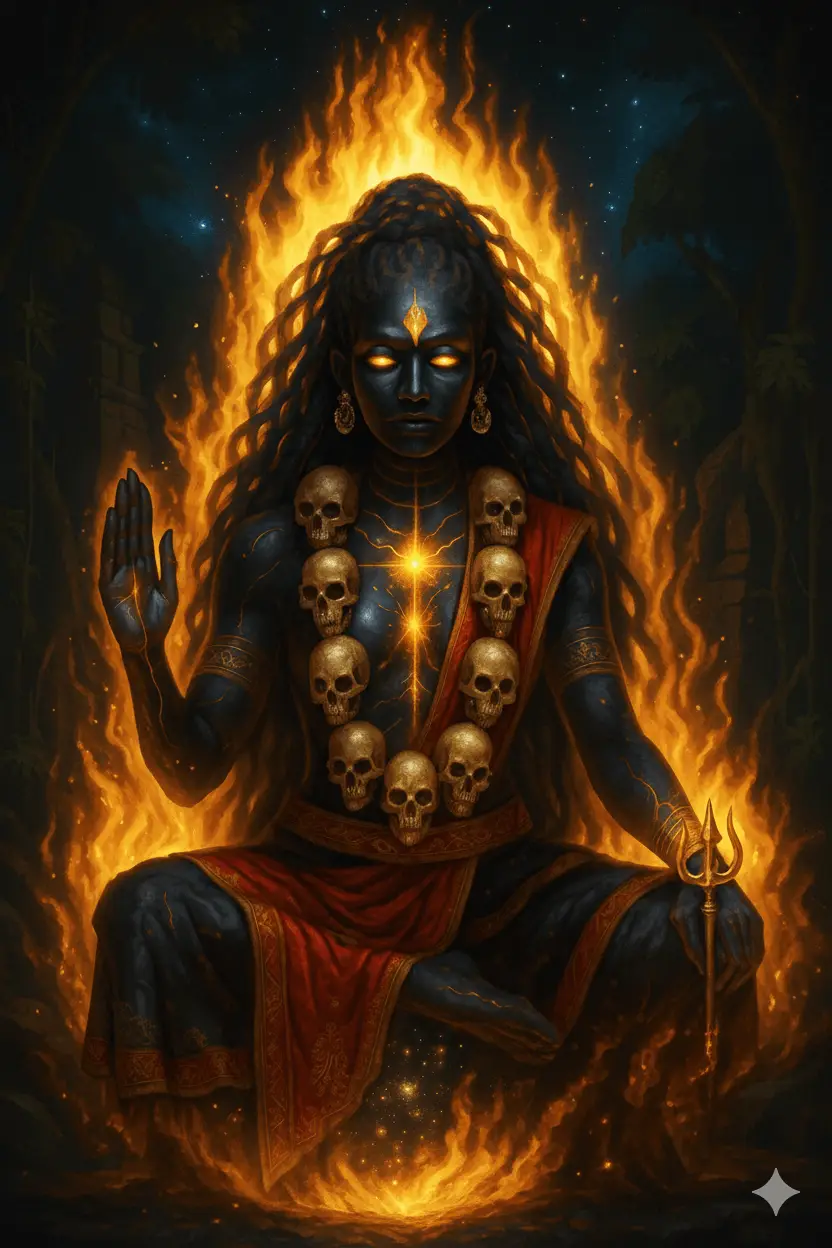
To look at Samhara Bhairava is to look at the silence after a storm. He is often depicted with skin the color of obsidian: a deep, reflective black that suggests the void from which all things emerge and to which they must return. He is covered in the ash of the cremation ground, a reminder that the physical body is a temporary loan, not a permanent possession.
He is Dashabhuja, the ten-armed one. Each of those ten arms holds a weapon or a symbolic object, often fashioned from gold. These golden weapons represent the highest form of discernment. They aren't meant to cause pain; they are meant to sever the specific cords of attachment that we cannot undo ourselves.
He carries the power to destroy the internal "ripples" that keep our minds in a state of constant agitation. Revenge, deep-seated anger, and the paralyzing fear of loss: these are the things he clears. He stands as a towering figure of stillness, draped in the remnants of what used to be, showing us that there is beauty in what remains when everything unnecessary is stripped away.
The Debt Collector: Squaring the Pitru Karma
We like to think our karma is our own. We think if we "do the work," we clear our path. But ancient wisdom suggests that we are carrying more than just our own baggage. We carry the Pitru Karma: the ancestral debt. These are the patterns, the traumas, and the unfulfilled desires of those who came before us, woven into our very marrow.
Samhara Bhairava is the ultimate debt collector. He doesn’t come for your money; he comes for the energetic entanglements that keep your lineage stuck. Other practices might scratch the surface, giving you a temporary sense of peace, but they often leave the deep, subconscious roots intact.
When you sit with the energy of Samhara Bhairava, you are asking for the ledger to be cleared. You are asking to stop being the "trustee" of your family’s unresolved pain. He squares the final debts so that you can move forward without looking over your shoulder. It is an uncompromising process. It requires a level of honesty that most people find terrifying because it means admitting that many of the things we identify with: our "personality," our "heritage": are actually just debts we’ve been paying on behalf of people we never even met.

The Threshold of Realization
There is a major difference between external ritual and internal realization. For a long time, a practitioner might engage with the divine through symbols, offerings, and mantras: seeking something "out there." This is the realm of the first seven Bhairavas. They guide us through the complexities of life, protection, and prosperity.
But Samhara Bhairava stands at the threshold. He is the border guard between the world of many things and the world of the One. He is the stage before Advaita (non-duality).
To cross his threshold, you have to leave the ritual behind. You have to move from the act of "worshipping" the fire to becoming the fire. He represents the moment when the seeker realizes that the one being worshipped and the one worshipping are the same. He "finishes" the work by dissolving the distance between the two.
This is why he is often called the Last Gatekeeper. He isn't there to keep you out; he is there to make sure you aren't carrying any "stuff" into the room of pure consciousness. If you are still holding onto a shred of ego, a single unpaid debt of resentment, he will not let you through. He is the final check, the absolute filter.

The Samhara Mudra: Closing the Loop
In the ritual context of the traditions that honor him, there is a physical and energetic movement known as the Samhara Mudra. While many mudras are about opening up or inviting energy in, the Samhara Mudra is about the withdrawal of prana. It is the closing of the loop.
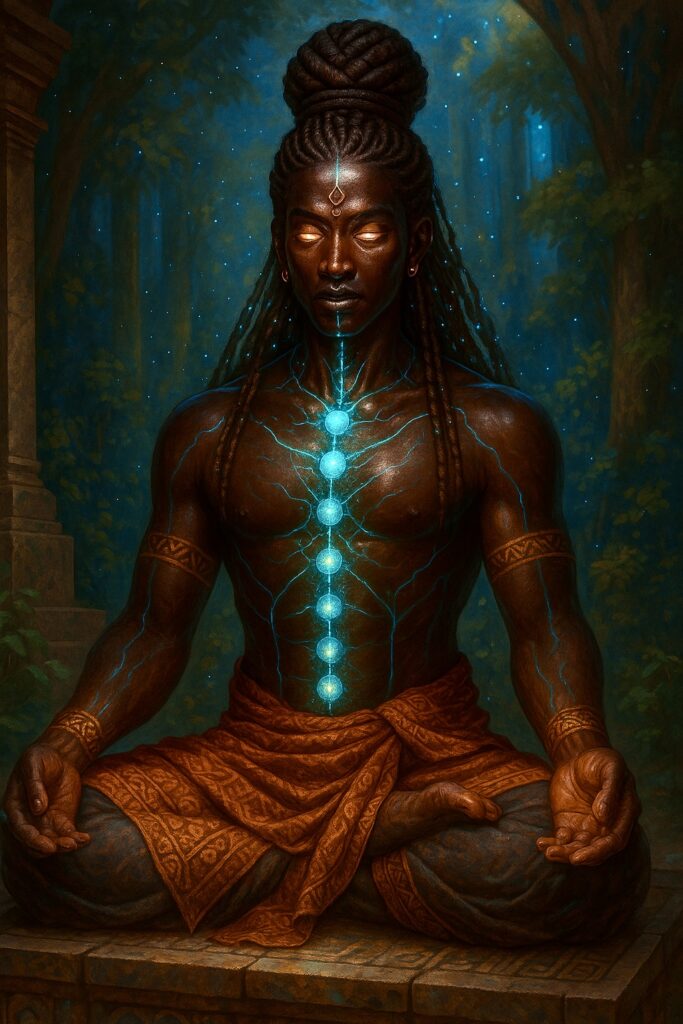
Imagine the energy that you normally project outward into the world: into your phone, your job, your worries, and your relationships. The Samhara Mudra represents the conscious pulling back of that energy into the central channel. It is a gesture of total self-containment.
When we practice this withdrawal, we are mimicking the cosmic process of dissolution. We are telling the universe that, for this moment, we don't need anything from the outside. We are reclaiming our power from the thousands of places we’ve scattered it. This is how the debt is truly settled: by realizing that we were the source of the currency all along.
The Silence After the Storm
Working with Samhara Bhairava is not for the faint of heart. It is for the person who has tried everything else and realized that "more" is not the answer. It is for the one who realizes that their life is cluttered with spiritual bric-a-brac and ancestral ghosts.
The result of his "destruction" isn't a mess; it's a profound, resonant silence. It’s the feeling of walking out of a heavy, humid room into a crisp, cold night. The weight is gone. The debt is settled. The screen is blank, and for the first time, you are free to not be anyone at all.
This is the gift of the tenth arm, the gold weapon, and the obsidian skin. It is the grace of the end. When Samhara Bhairava finishes his work, there is nothing left to defend, nothing left to pay for, and nowhere left to go. You are simply here.

If you feel the weight of old cycles and are ready to stop carrying the debts of the past, we are here to walk that path with you.
For more information on our upcoming intensives and deep-dive sessions, reach out to us here: https://tantricjourney.org/contact