

We live in strange times, don't we? One minute you're scrolling through social media for some inspiration, and the next you're bombarded with everything from genuine spiritual guidance to what can only be described as tantric theater. The lines between sacred practice and sensational performance have never been blurrier, especially when it comes to tantra.
If you've ever wondered whether what you're seeing online represents authentic tantric practice or something else entirely, you're not alone. The digital age has created a perfect storm where intimate spiritual practices, personal boundaries, and the hunger for viral content collide in ways that would make ancient tantric masters scratch their heads in bewilderment.
The Sacred Gets Lost in Translation
Let's start with what tantric practice actually is, because somewhere between Instagram posts and clickbait articles, the essence often gets completely lost. Authentic tantric practice is fundamentally about presence, awareness, and the sacred union of opposing energies within ourselves. It's a contemplative tradition that uses breath, visualization, sound, and body awareness to expand consciousness.
Think of it like the difference between a profound prayer in a cathedral and a flashy performance on stage. Both might involve similar elements, music, movement, even intense emotion, but the intention, context, and energy are worlds apart.
Traditional tantra includes practices like mantra recitation, sacred visualization, structured breathing exercises, and yes, sometimes sexual union: but always within a framework of spiritual discipline, proper instruction, and clear intention. It's never been about performance or external validation.

When Sacred Practice Meets Social Media
Here's where things get tricky. Social media rewards sharing, vulnerability, and often sensationalism. The algorithm doesn't distinguish between someone sharing their authentic spiritual journey and someone performing tantric-adjacent content for likes and follows. Both get lumped together in our feeds, creating a confusing landscape where genuine seekers struggle to separate wheat from chaff.
The problem isn't that people are sharing their spiritual experiences: that can be beautiful and inspiring. The issue arises when the sacred becomes commodified, when intimate practices are performed rather than practiced, and when the container of traditional teaching is abandoned in favor of viral appeal.
Consider this: would you share your most private prayer with thousands of strangers? Would you perform your most intimate healing ritual for an audience? The fact that we even have to ask these questions shows how much our relationship with the sacred has shifted.
Ritual vs. Performance: Spotting the Difference
So how do you tell the difference between authentic tantric sharing and what we might call "tantric theater"? The distinction often lies in energy, intention, and context.
Authentic ritual happens within a container. There's usually preparation, intention-setting, and integration afterward. The focus is internal transformation, not external reaction. When someone shares about their practice, they typically discuss the process, the challenges, the growth: not just the peak moments or the aesthetically pleasing parts.
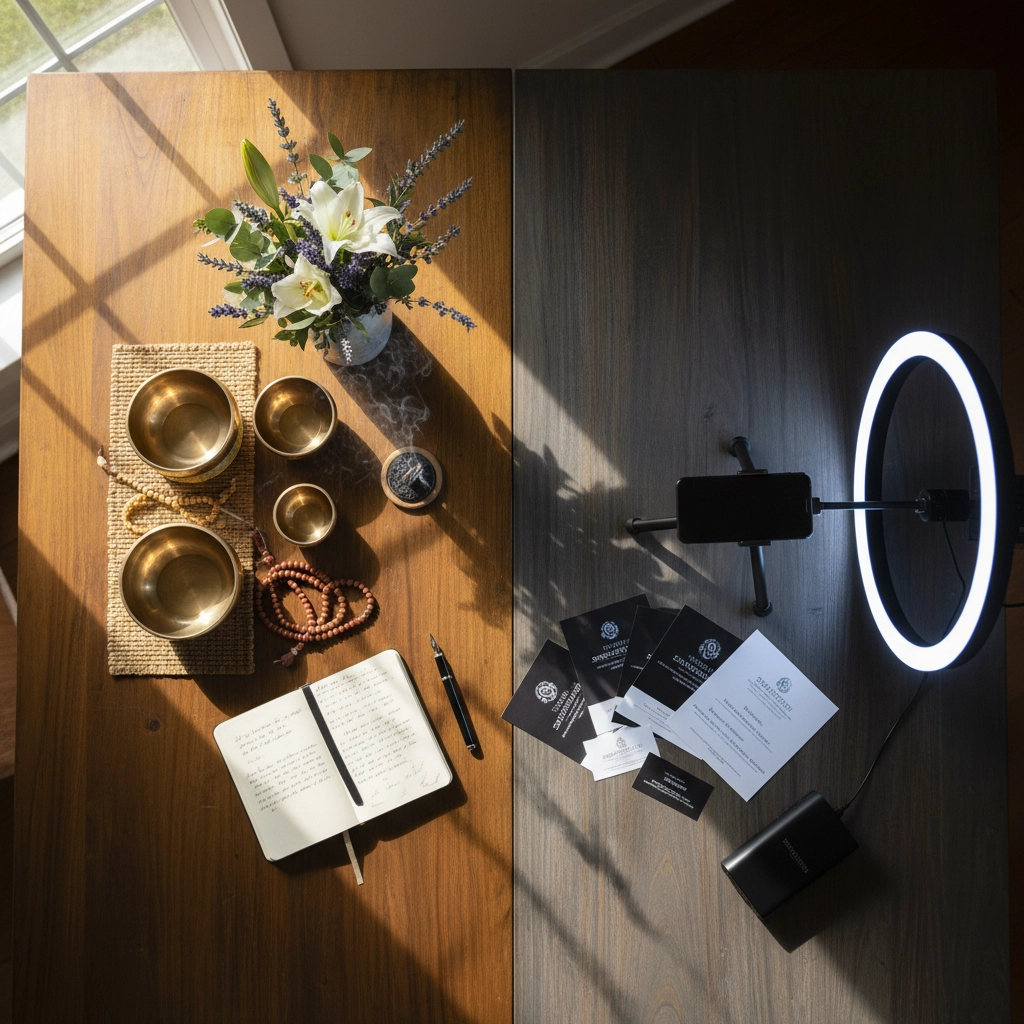
Performance, on the other hand, tends to focus on the externals: how things look, sound, or appear to others. The energy feels directed outward rather than inward. There's often an emphasis on the dramatic, the visually striking, or the shock value rather than the transformative aspects.
This doesn't make performers inherently bad people. Many are genuinely trying to help or share what they've learned. But when the sacred becomes entertainment, something essential gets lost in translation.

A Framework for Discernment
Developing your own internal compass for navigating this landscape is crucial. Here's a gentle framework to help you discern what serves your spiritual growth and what might be leading you astray:
Ask yourself: What is the container? Authentic tantric practice almost always happens within some kind of structured container: whether that's a committed relationship, a formal training, or a sacred space. Be wary of practices that seem to exist in a vacuum without context or boundaries.
Notice the energy. How does consuming this content make you feel? Inspired to deepen your own practice, or aroused in a way that feels disconnected from spiritual growth? Authentic tantric content usually leaves you feeling more centered and curious about your own inner work.
Look for integration. Real tantric practice is messy, challenging, and requires integration. If someone only shares the blissful highlights without mentioning the difficult work of integration, they might be skipping essential parts of the process.
Consider the teacher's background. What training do they have? Who were their teachers? How long have they been practicing? This isn't about spiritual elitism, but about ensuring you're learning from someone who has done their own deep work.
The Consent and Privacy Conversation
One of the most concerning aspects of tantric oversharing is how it affects consent and privacy: not just for the person sharing, but for anyone involved in their practice.
If you're in a relationship, sharing intimate details about your tantric practice without your partner's explicit consent is a boundary violation, regardless of how spiritual it might seem. The sacred nature of the practice doesn't override basic respect for privacy.
Similarly, if you're a teacher or practitioner sharing about your work, consider how your sharing affects your students or clients. Are you maintaining appropriate boundaries? Are you sharing from a place of service or from a need for validation?
When Oversharing Becomes Spiritual Bypassing
Sometimes what looks like tantric sharing is actually spiritual bypassing: using spiritual concepts to avoid dealing with psychological or emotional issues. This is particularly common in our oversharing age, where vulnerability can become a performance rather than genuine healing.
Ask yourself: Am I sharing this experience because it genuinely serves others, or because I'm seeking validation, attention, or avoiding some deeper work? Am I using tantric concepts to justify behavior that might not actually be that conscious or integrated?
There's nothing wrong with seeking support or community: that's human and healthy. But there's a difference between vulnerable sharing within appropriate containers and broadcasting intimate experiences to anyone with an internet connection.
Creating Healing Containers
If you've been affected by the confusion between authentic tantra and tantric theater, know that healing is possible. The first step is often developing better boundaries around what you consume and share.
Consider creating sacred containers for your own practice: spaces and relationships where the focus is internal transformation rather than external validation. This might mean finding a qualified teacher, joining a practice group with clear boundaries, or simply creating more privacy around your intimate spiritual work.
Remember, the most profound tantric experiences often happen in silence, in solitude, or within deeply intimate relationships: not in front of cameras or audiences.
Moving Forward with Wisdom
The digital age isn't going anywhere, and neither is the human impulse to share and connect. But we can become more discerning consumers and creators of spiritual content.
If you're a practitioner, consider how your sharing serves the larger community. Are you contributing to the confusion or helping to clarify what authentic practice looks like? If you're a seeker, trust your inner wisdom about what feels truly nourishing versus what might just be spiritual fast food.

The sacred has always existed alongside the profane, and tantric practice has always required careful discernment. In our age of oversharing, that discernment becomes even more crucial. But with awareness, boundaries, and a commitment to authentic practice, we can navigate these waters while preserving what's most precious about this ancient path.
The question isn't whether tantric practice belongs in the digital age: it's how we can honor its essence while adapting to modern realities. And that, like all good tantric practice, requires presence, awareness, and a willingness to do the deeper work that cameras can't capture.
Your spiritual journey deserves the same care and respect you'd give any sacred practice. In a world of endless oversharing, sometimes the most radical act is knowing when to keep something sacred, private, and purely your own.