
There is a moment in the heat of a Kerala summer when the air stops moving and the earth itself seems to hold its breath. This is the time of the Kodungallur Bharani. If you are looking for a gentle, sanitized spirituality: the kind that fits neatly into a weekend retreat: turn back now. This is not for the faint-hearted. This is the realm of Bhadrakali, the fierce Mother, and the path of the Vira (the hero).
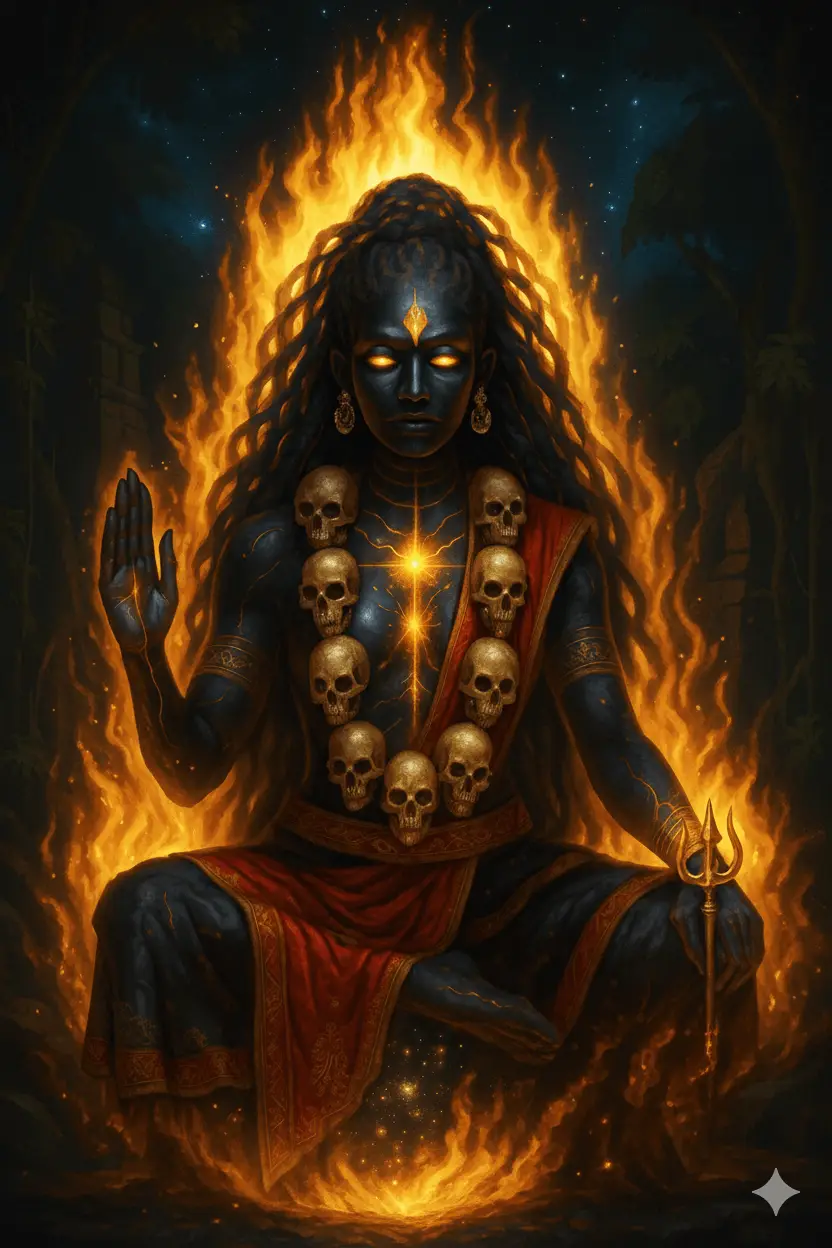
At the Sree Kurumba Bhagavathy Temple, the divine is not a distant concept. It is a volcano. It is a fire that consumes the ego, the social persona, and the carefully constructed lies we tell ourselves about who we are. To stand at the gates of Kodungallur during the Bharani festival is to witness the "Body as Sacred Ground" in its most raw, uncompromising form.
The Guardian: Vatuka Bhairava
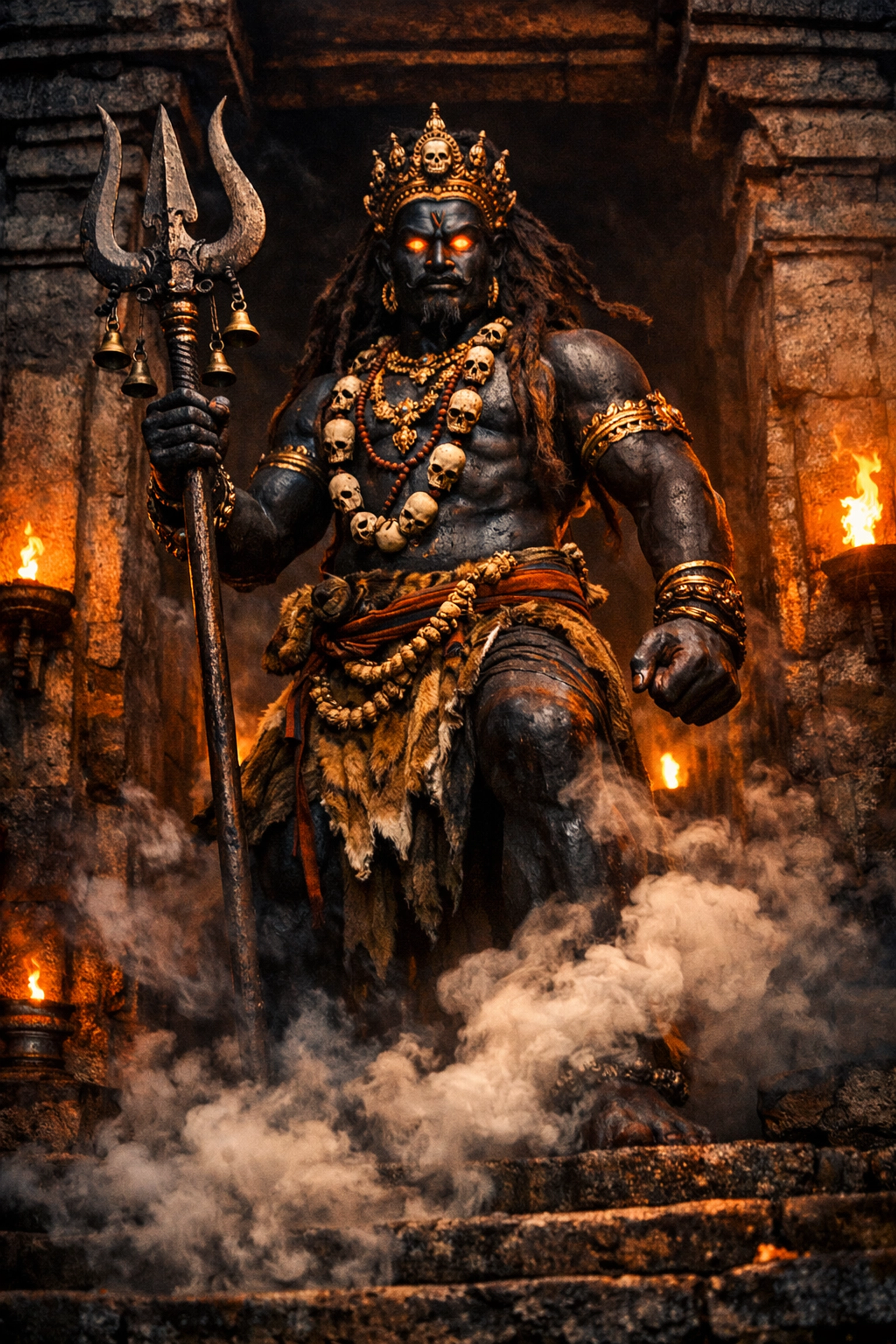
Before you can even approach the Mother, you must deal with the gatekeeper. Standing twelve feet tall, Kshetrapala (the guardian of the field) is an aspect of Vatuka Bhairava. He is the sentinel who decides who is ready to enter the fire and who is merely a tourist of the soul.
In the tradition of Tantra, you do not simply barge into the presence of the Goddess. You ask permission. You acknowledge the boundary between the mundane and the explosive. Asking Kshetrapala for entry is an act of humility. It is a recognition that you are about to step into a space where the rules of the world no longer apply. The guardian stands there to remind us that the path of the Vira requires courage. If you cannot look the 12-foot Bhairava in the eye, you are not ready for the Mother.
The Sea of Red: The Oracles of Kali
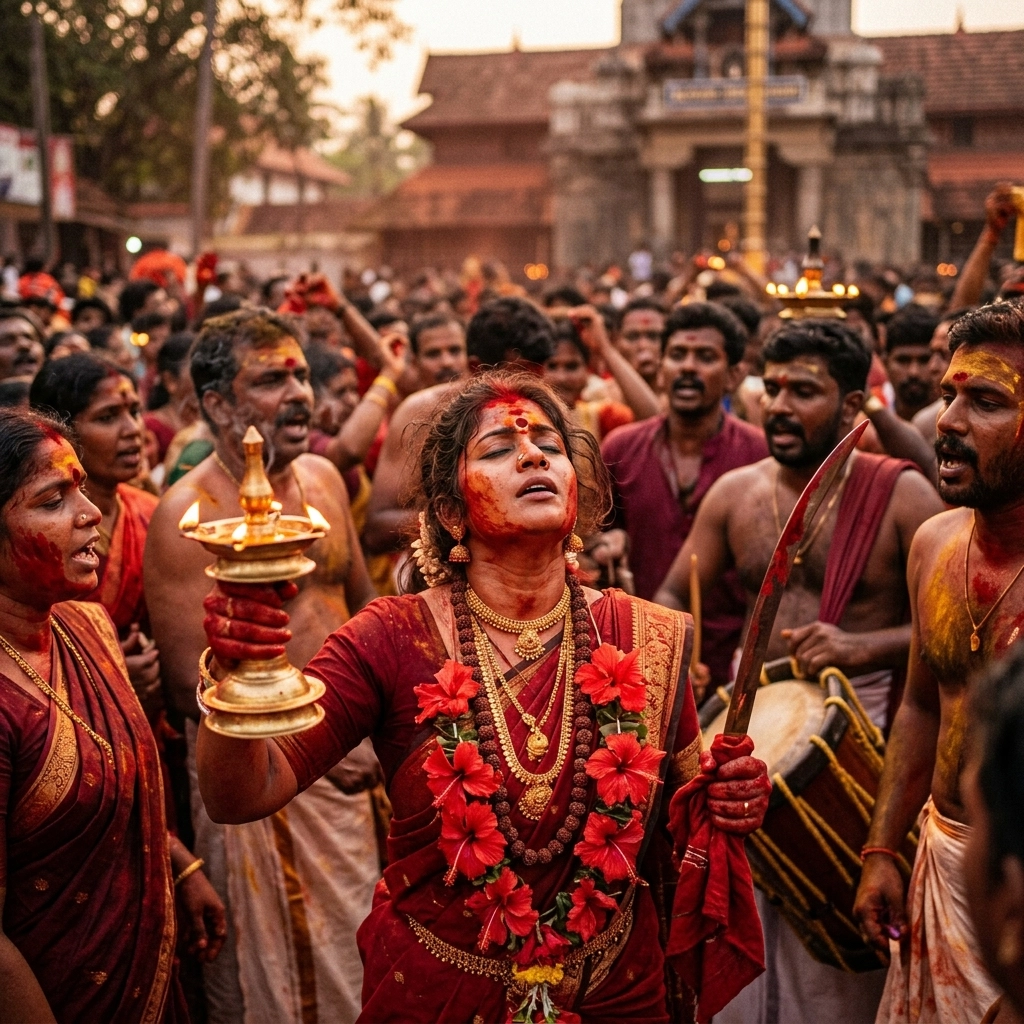
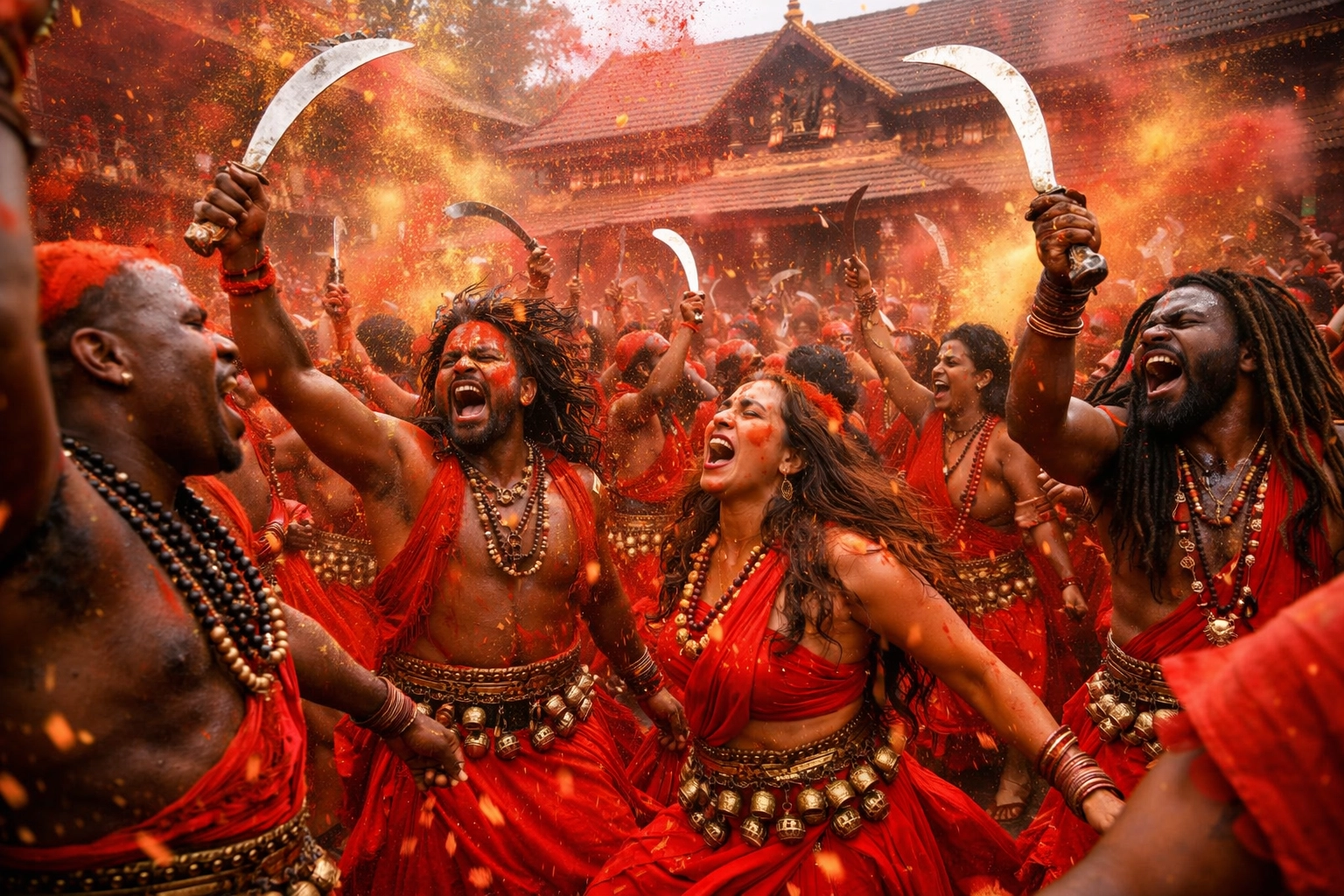
The most striking sight at Kodungallur Bharani is the Velichappadu, the oracles. Dressed in vibrant red robes, adorned with heavy waistbelts of bells, and carrying curved ritual swords, they represent the living presence of the Goddess.
This is where the concept of the "Body as Sacred Ground" becomes literal. As the drums reach a fever pitch, the oracles enter a deep trance. They are no longer men and women; they are vessels for the volcano of Bhadrakali’s energy. In an act that defies modern logic, they strike their foreheads with their swords. Blood flows, mixing with the turmeric and sandalwood paste on their faces.
For the Vira, this blood is not a sign of pain, but a sign of opening. It is the shedding of the individual self to allow the divine current to flow through. They dance in a sea of red, a collective movement of ecstatic surrender. This is the heart of Tantra: using the physical form as the ultimate laboratory for spiritual realization. When the body is offered so completely, the boundary between the human and the divine dissolves.
The Songs of the Profane: Breaking the Shell
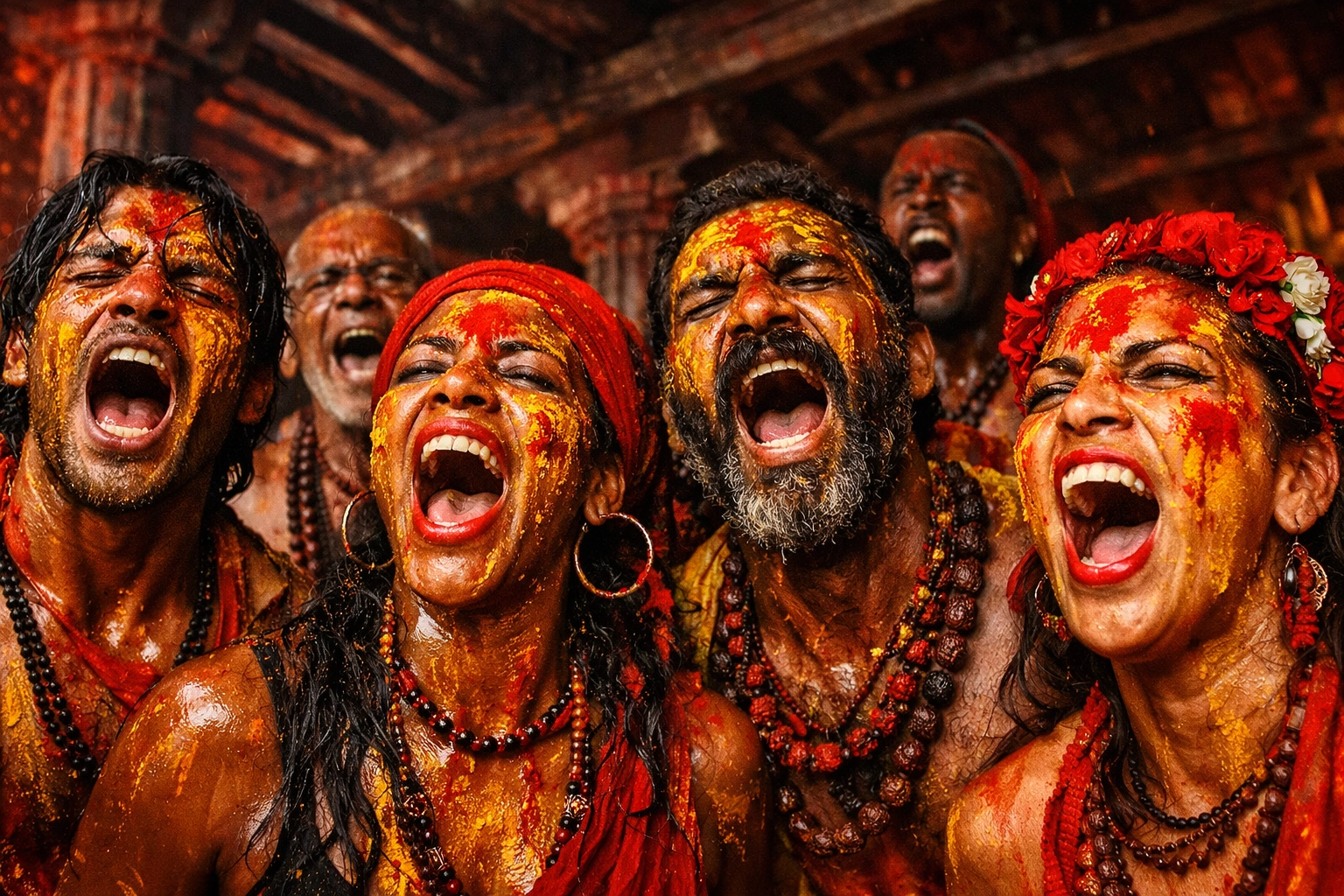
Perhaps the most misunderstood aspect of this festival is the Bharani Pattu: the "abusive songs." During the festival, devotees sing explicit, often profane, songs directed at the Goddess. To the uninitiated, this seems like blasphemy. To the practitioner, it is a radical technology of the soul.
We spend our lives building "social shells." We are polite, we are "spiritual," we are controlled. But deep inside, there is raw emotion, anger, lust, and chaos. By singing these songs, the devotees hurl their unfiltered selves at the Mother. It is an offering of the shadow.
The Mother doesn't want your "best behavior"; she wants you. All of you. These songs break the ego’s grip. When you scream the "unmentionable" at the Divine, the mask of the persona shatters. You are left naked, raw, and ready for transformation. It is a psychic venting that prevents the internal volcano from exploding in destructive ways, turning that same energy into a focused fire of devotion.
The Secret Chamber: Taming the Fury
The history of Kodungallur is intertwined with the great Adi Shankara. Legend tells us that the Goddess’s energy was once so fierce, so destructive, that it threatened to consume the world. She was the fire that could not be contained.
Shankara, the master of both Vedantic logic and Tantric practice, realized that this energy needed a focal point: a lens to direct the heat. He entered the Rahasyara, the secret chamber of the temple, and installed a Sri Chakra. This sacred geometry acted as a container, "locking" the Goddess's destructive fury and transforming it into a creative, nurturing power.
Even today, the presence in that secret chamber is the silent core of the temple. While the outside world is a whirlwind of blood and songs, the Rahasyara remains a place of absolute stillness. This is the balance of the Tantric path: the wild, ecstatic energy of the volcano on the outside, and the unwavering, silent center of the Sri Chakra on the inside.
From Blood to Cloth: The Symbolic Sacrifice
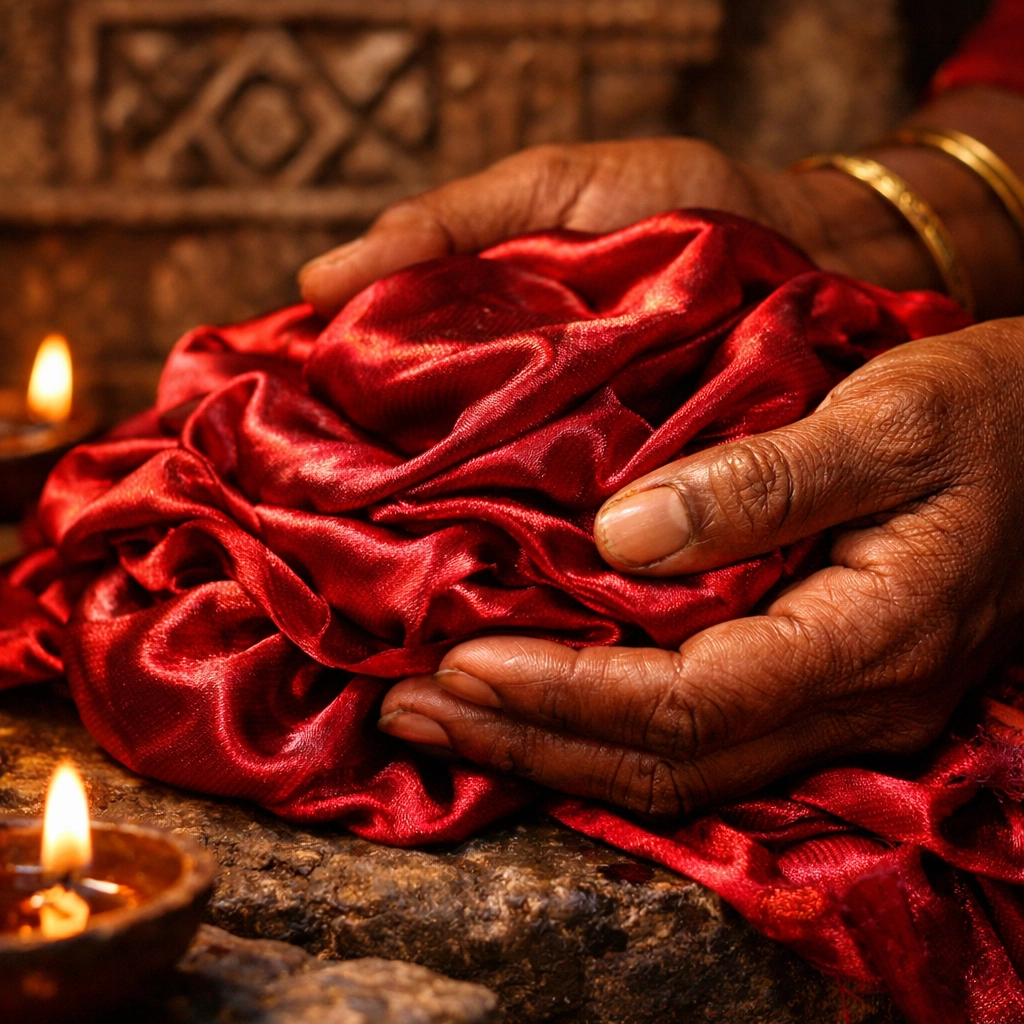
In centuries past, the temple was known for large-scale animal sacrifices. Thousands of roosters were offered to appease the Mother's hunger. Today, the practice has evolved. The physical shedding of animal blood has largely been replaced by the offering of red silk cloths and the symbolic "sacrifice" of roosters that are later released.
This transition marks a shift from the literal to the internal. The Vira understands that the real sacrifice is not an external creature, but the "animal" nature within: the petty jealousies, the attachments, and the fears. The red cloth is a symbol of our life force, our blood, and our passion, laid at the feet of the Divine. It is an acknowledgment that everything we are belongs to the fire.
Why the Vira Path is Not for Everyone
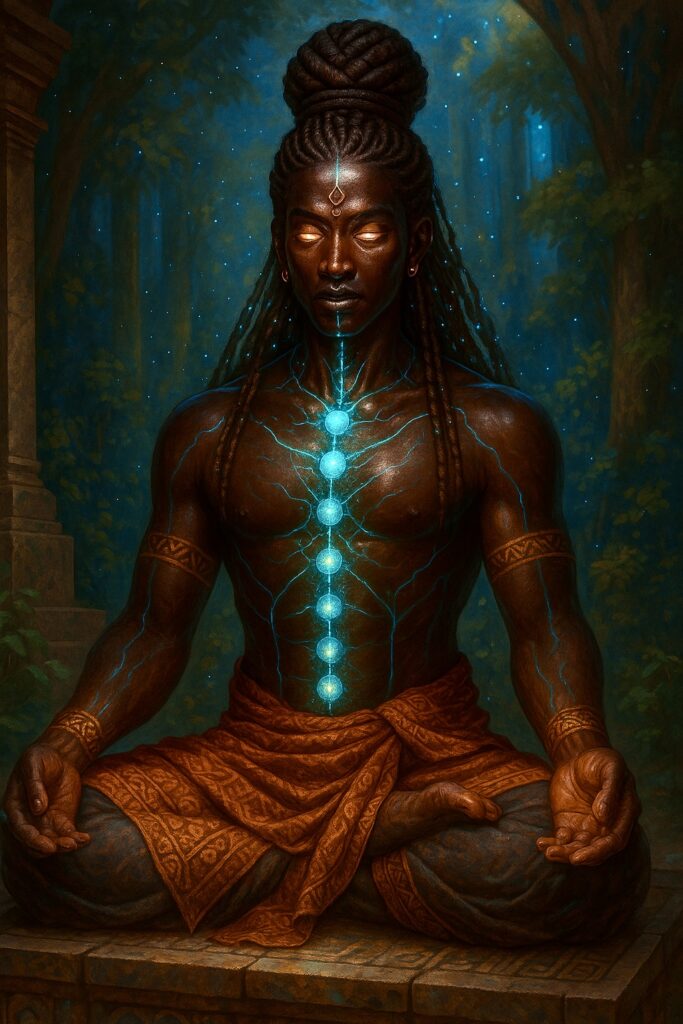
The Kodungallur Bharani is a reminder that authentic Tantra is not a "lifestyle choice." it is a total immersion. The "Body as Sacred Ground" means that you don't look for God in the clouds; you find the Divine in the heat of your own blood, the rhythm of your breath, and the intensity of your emotions.
Most people prefer a "safe" Goddess. They want a Mother who gives them what they want and makes them feel comfortable. But Bhadrakali is the Mother who gives you what you need, even if it means tearing down everything you think you are. She is the wild grace that demands your total presence.
The path of the Vira is for those who are tired of playing it safe. It is for those who are ready to sit in the "pocket" of their own karmic pain until it burns off. It is for those who understand that silence is only meaningful after you have sung the songs that break your heart open.
The Fire and the Silence
When the festival ends, the temple doors are closed for a week of purification. The "pollution" of the songs and the blood is washed away, and the temple returns to its silent, rhythmic worship. But for those who were there, the fire remains.
The wild grace of Kodungallur Bharani is not something you "observe." It is something that happens to you. It leaves you with a realization: the divine is not something to be understood with the mind, but to be felt in the marrow of your bones.
If you are ready to stop wandering and start the actual journey, you must be willing to face the volcano. You must be willing to let the Mother strip away the masks until only the truth remains.
Are you ready to treat your life, your body, and your breath as sacred ground? This is the work we do. This is the journey into the heart of the fire.
Are you ready to move beyond the surface and experience the depth of authentic Tantra?
Explore our upcoming immersions and start your Tantric Journey today.