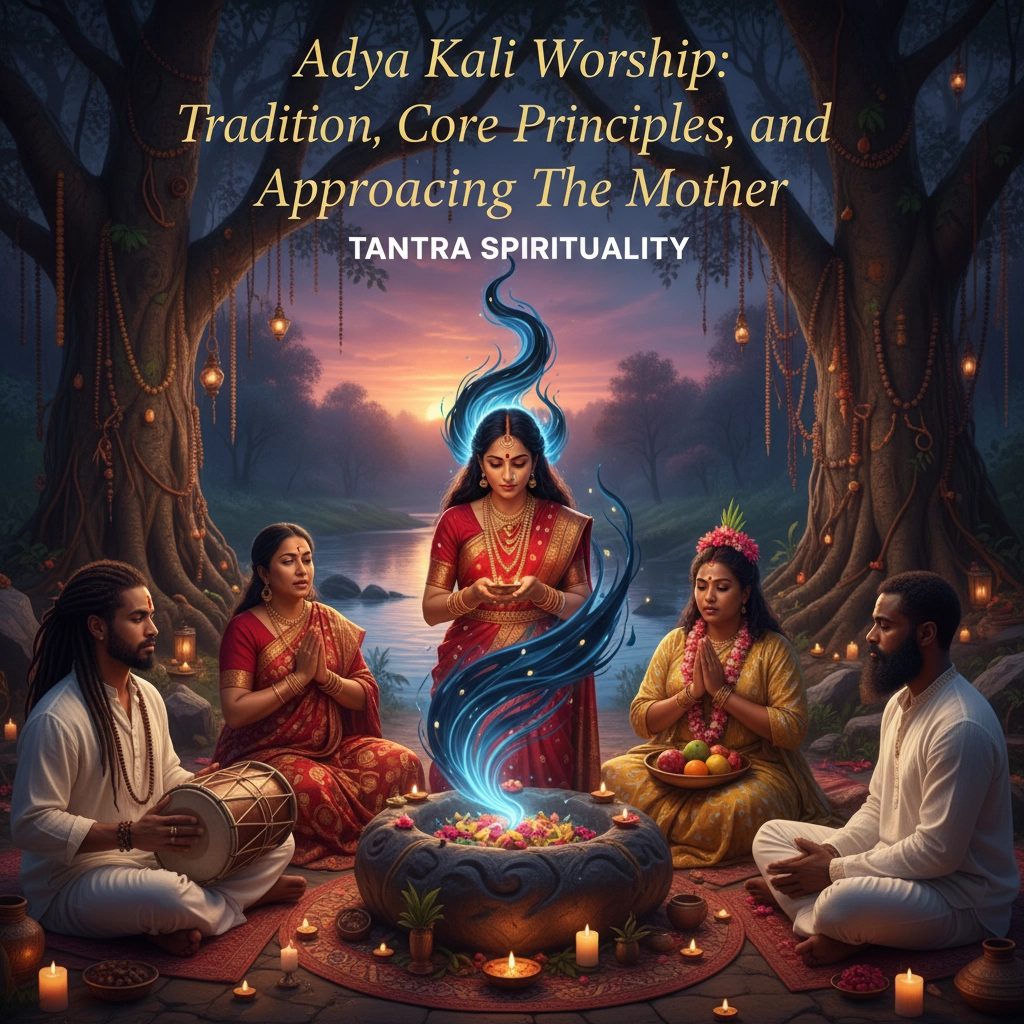
Every year, something extraordinary happens in the spiritual realm that most people completely miss. The cosmic Goddess enters her sacred menstrual cycle, and the entire universe is invited to pause, rest, and honor the deepest mysteries of feminine power. This is Ambubachi: not just a festival, but a profound spiritual teaching about how true tantra approaches the divine feminine.
If you've been caught up in the modern tantra scene with its endless workshops and performance-based spirituality, Ambubachi offers something radically different: the wisdom of non-doing, the power of stillness, and the revolutionary act of honoring every aspect of femininity: especially the parts society tells us to hide.
What Is Ambubachi Really About?
Ambubachi centers around the belief that Devi Kamakhya, the presiding goddess at the famous Kamakhya Temple in Assam, undergoes her annual menstruation. For three days, the temple doors close completely. No rituals, no worship, no disturbance. The Goddess rests.
But here's what makes this truly profound from a tantric perspective: this isn't just about one temple or one goddess. According to authentic Shakta tantra, this cosmic menstruation affects all Shakti Peeths: sacred sites where the divine feminine energy is particularly concentrated. The entire cosmic feminine principle enters a state of creative pause.

Think about what this means. In a world obsessed with constant productivity, achievement, and spiritual attainment, the highest divine feminine energy demonstrates the sacred necessity of rest. Not as weakness, but as the essential foundation for all creation.
The Guru's Teaching: Less Is More
My guru always emphasized a crucial point about Ambubachi that most spiritual seekers miss entirely: during this time, your practice should be minimal. This goes against every instinct we have in our goal-oriented spiritual culture.
No intense rituals. No asking for boons. No demanding spiritual experiences or material gains. Instead, enter a state of what the tradition calls tamas: not the negative laziness we might think of, but a conscious, reverent stillness.
This is the time to seek inner transformation, not external achievements. It's about birthing spiritual insights, not manifesting material desires. The Goddess is clearing her inner space, and we're invited to do the same.
Honoring Every Woman (And Every Expression of Femininity)
Here's where Ambubachi becomes revolutionary, especially for those of us walking the tantric path. This festival isn't just about honoring some idealized, sanitized version of the feminine. It's about recognizing the divine in every woman: and especially in the aspects of femininity that make society uncomfortable.
The real tantric teaching here is profound: the highest spiritual realization is to become like Shiva: completely accepting and supportive of the feminine principle in every aspect, not just the socially celebrated or "pleasant" ones.

What does this look like practically? During Ambubachi (and really, during any woman's menstrual cycle), offer what women actually crave during these times. Not what you think they should want, but what they're genuinely drawn to. Maybe it's specific foods, certain comforts, or simply space to be moody without judgment.
Refrain from demanding tasks or repair work in the home. Don't push for discussions or decisions. Create a holding space: what the tradition calls adhara: for whatever expression of femininity wants to emerge, even if it challenges your comfort zone.
The Deepest Tantric Realization
Most people think tantra is about techniques, positions, or achieving peak experiences. But the deepest tantric wisdom is actually about acceptance. Real Shaktas (devotees of the divine feminine) understand that we're called to give support to all expressions of femininity: including the ones labeled as "abnormal," "difficult," or "unacceptable" by mainstream society.
This isn't popular teaching because it requires us to move beyond our preferences and projections. It asks us to see divinity even in what we might call the "dark" or challenging aspects of womanhood. These aren't faults to be fixed: they're reflections of the cosmic play itself.

The speaker in our source material shares countless examples of how patience with women's pain, acceptance of their seeming contradictions, and understanding their need for space during difficult times becomes a gateway to profound spiritual insight. Not because women are projects to be managed, but because learning to hold space for the full spectrum of feminine expression teaches us to hold space for the full spectrum of life itself.
Beyond Performance Spirituality
One of the most important aspects of authentic Ambubachi observance is that it discourages performance. There's no seeking approval from spiritual groups, no showcasing your tantric knowledge, no competing for the most devoted practitioner award.
True insight during this time comes through silent acceptance, contemplation, and inner learning. The cosmic Goddess isn't performing her rest cycle for anyone's benefit: she's simply following the natural rhythm of creation and dissolution that governs all existence.
This stands in stark contrast to much of what passes for tantra in wellness circles today. Instead of trying to achieve something or prove something, Ambubachi invites us into the radical act of simply being present with what is, especially when what is involves mystery, darkness, or the unknown.
Practical Guidelines for the Cosmic Pause
So how do you actually honor Ambubachi in a way that aligns with authentic tantric wisdom? Here are some practical approaches:
Enter Conscious Stillness: Reduce your spiritual practices to the bare minimum. This isn't spiritual laziness: it's conscious non-interference with a cosmic process.
Support the Women in Your Life: Pay attention to what the women around you actually need during their cycles. Offer practical support without expecting anything in return.
Avoid Major Spiritual Work: Don't start new practices, make big spiritual decisions, or push for breakthroughs. This is a time for integration, not initiation.
Practice Acceptance: When challenging aspects of femininity arise (in yourself or others), practice holding space rather than trying to fix, change, or improve the situation.
Honor Rest: If you identify with feminine energy (regardless of your physical form), give yourself permission to truly rest without guilt or justification.
The Revolutionary Teaching
What makes Ambubachi truly revolutionary is how it completely inverts our typical relationship with achievement and spirituality. In a culture that constantly pushes us to do more, achieve more, and become more, the cosmic Goddess demonstrates that the highest spiritual state sometimes involves consciously doing less.
This isn't about being passive or checking out. It's about recognizing that creation itself requires cycles of activity and rest, manifestation and withdrawal, expression and silence. The Goddess's cosmic menstruation teaches us that these "rest" phases aren't preliminary to the real work: they are the real work.

For those walking an authentic tantric path, Ambubachi offers a profound correction to the performance-based spirituality that dominates so much of the contemporary scene. Instead of constantly striving for the next level, the next breakthrough, or the next technique, we're invited into the radical wisdom of honoring what is, especially when what is involves mystery, darkness, or the need for space.
Beyond the Festival: Living the Teaching
While Ambubachi happens annually, the wisdom it contains can transform how we approach spiritual practice year-round. Every month, women in your life experience their own version of this cosmic cycle. Every day offers opportunities to practice the Shiva-like acceptance that sees divinity in all expressions of life, not just the convenient or comfortable ones.
The real question Ambubachi poses isn't whether you observe the festival correctly, but whether you're willing to let it change how you relate to the feminine principle in all its forms. Are you ready to move beyond spiritual performance into authentic reverence? Can you find the courage to honor the sacred in what society calls profane?
This ancient festival offers us something our modern world desperately needs: permission to rest, to honor natural cycles, and to find the divine in the full spectrum of human experience. In a time when even spirituality has become another form of achievement, Ambubachi reminds us that sometimes the most profound practice is simply learning to be still.
The cosmic Goddess rests. Maybe it's time we learned to rest with her.