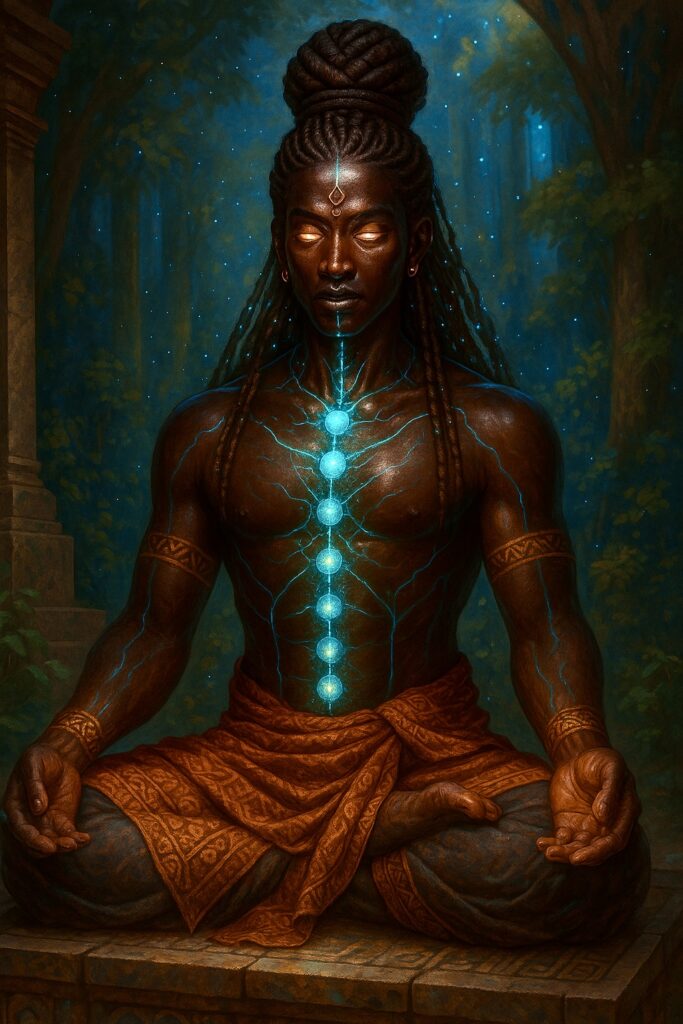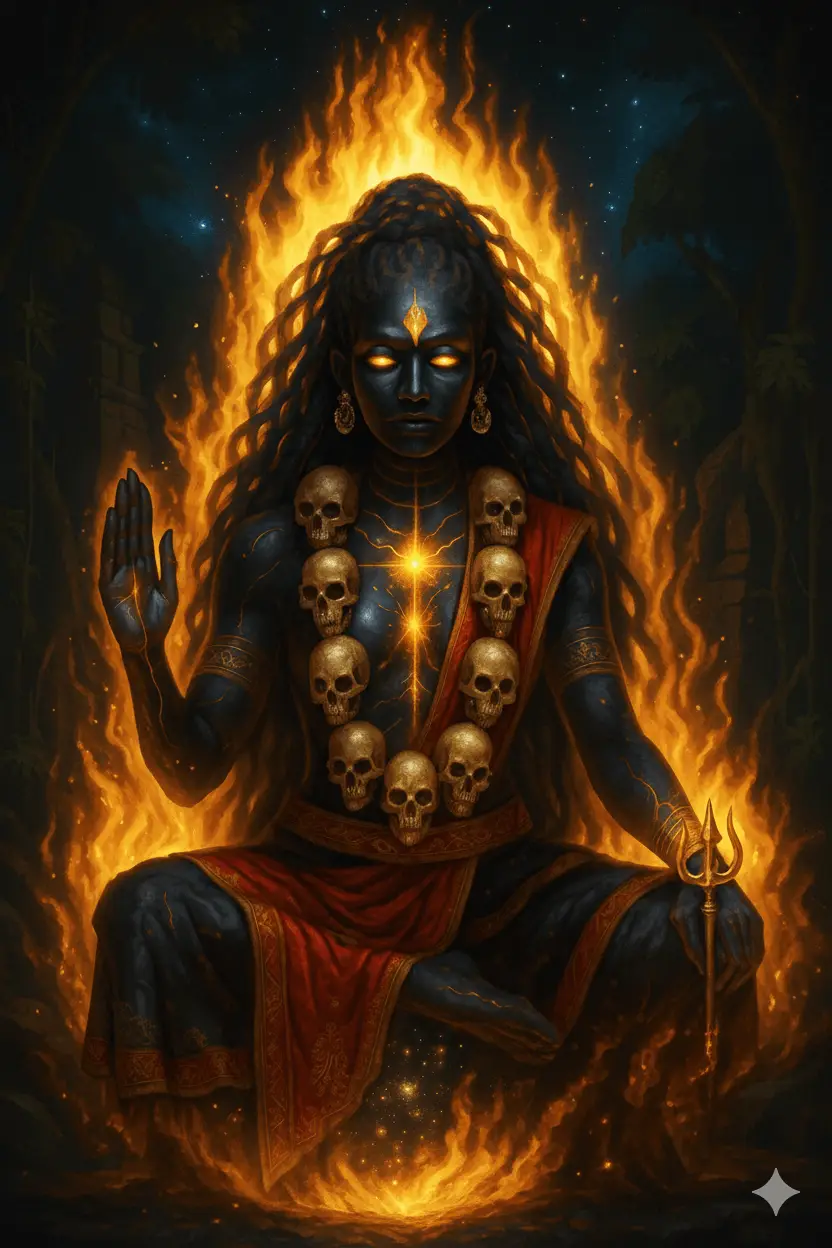


What happens when ancient wisdom traditions leave their homeland? When practitioners carry sacred teachings across oceans, through immigration offices, and into communities that may not understand their depth? This is the story of tantra in diaspora, a tale of resilience, adaptation, and the fierce determination to keep spiritual flames burning even when the cultural winds threaten to extinguish them.
For many of us exploring tantric practices today, we're actually engaging with teachings that have already traveled immense distances, both geographically and culturally. These practices didn't arrive in our hands unchanged, they've been shaped by the hands, hearts, and circumstances of countless practitioners who refused to let them disappear.
The Great Migration of Wisdom
Think of tantric traditions like heirloom seeds carried by travelers. When you transplant a seed from its native soil to a completely different climate, something profound happens. The plant might look different, adapt new characteristics, or find unexpected ways to flourish. But the essential life force, that core genetic wisdom, remains intact, waiting to sprout in new ground.
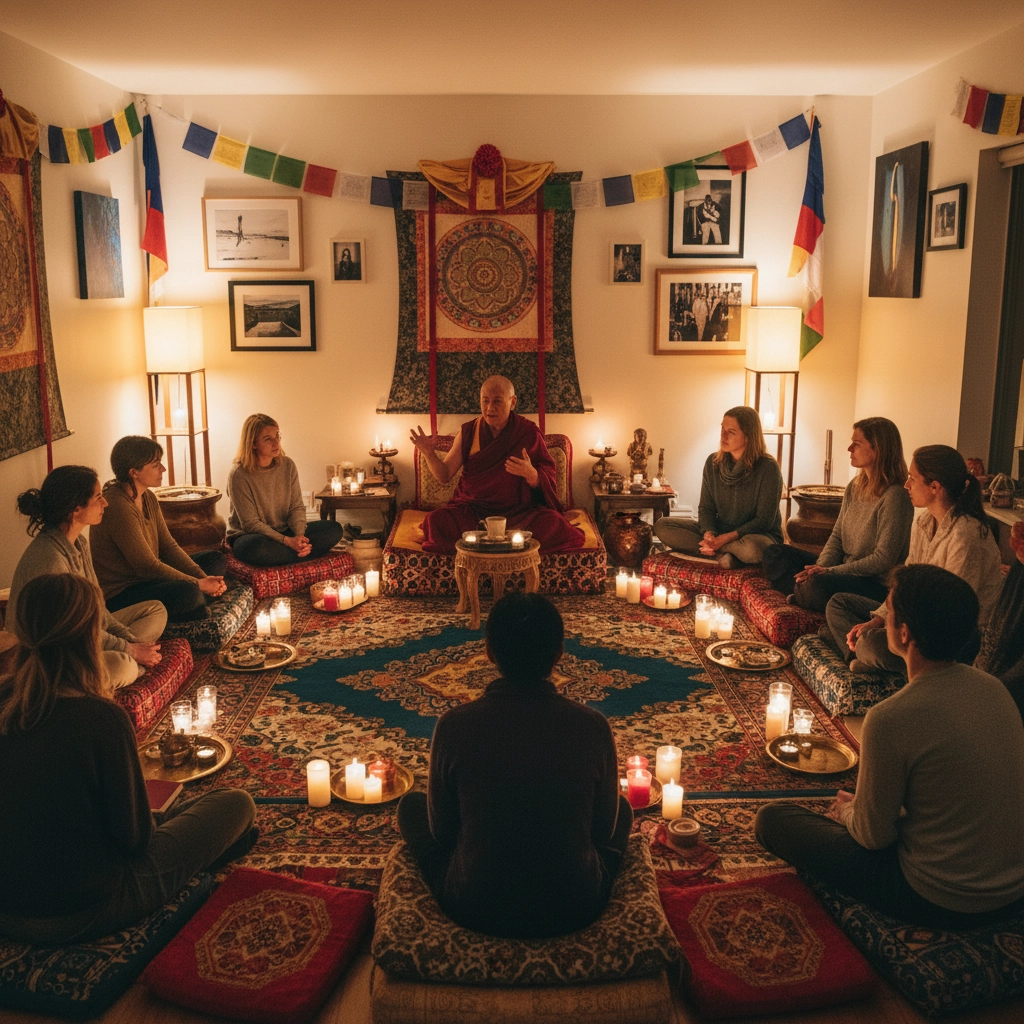
Since around the sixth century CE, tantric teachings have been making these kinds of journeys. But the most dramatic dispersal happened in the 20th century, particularly after 1950, when Tibetan Buddhist tantric traditions suddenly found themselves scattered across the globe. Lamas who had spent lifetimes in mountain monasteries suddenly became teachers in Western living rooms, translating not just language but entire worldviews.

This wasn't just about moving locations, it was about preserving something precious while everything familiar was disappearing. Imagine trying to maintain your family's most sacred recipes while living in a place where you can't find the right ingredients, where people don't understand why certain preparations matter, and where your children are growing up in completely different food cultures.
The Erosion Challenge
Cultural erasure doesn't happen all at once, it's more like water slowly wearing away stone. For diaspora tantric communities, this erosion shows up in subtle but significant ways.
Language becomes the first casualty. Sanskrit and Tibetan terms that carry layers of meaning get flattened into English approximations. When a Tibetan practitioner tries to explain the concept of "ngakpa", a married tantric practitioner, to Western students, how do you convey centuries of cultural understanding about the balance between householder life and spiritual realization?
Then there's the challenge of authority and lineage. Traditional tantric communities had clear structures, who could teach what, how transmission happened, what qualified someone as authentic. But when these communities scatter, those structures can fracture. Suddenly, you have practitioners operating "beyond the pale of traditional authority," as scholars put it, creating what some call "tantra-related casualties", situations where power gets misused or teachings get distorted without the cultural safeguards that once provided protection.
The most heartbreaking aspect might be watching the next generation drift away. Young people born in diaspora often choose secular education and mainstream careers over inheriting their families' spiritual vocations. It's understandable, they're navigating different pressures and opportunities than their parents faced. But each young person who chooses a different path represents a potential break in transmission that took centuries to develop.
When Sacred Becomes Commodity
Here's where things get particularly complex: Western interest in tantra. On one hand, this interest has provided economic support and new audiences for diaspora teachers. Tibetan lamas discovered they could share advanced teachings with non-celibate Western students, making these practices accessible in ways that traditional monastic settings never allowed.
But there's a shadow side to this enthusiasm. As one teacher put it, Western engagement with tantra often resembles "children picking up an exciting new toy" rather than approaching from deep respect and understanding. When tantric practices get packaged as weekend workshops or self-help techniques, something essential can be lost, the cultural context that gives these practices their full meaning and power.
Think of it like this: imagine someone took your grandmother's healing remedies, stripped away all the stories about when and why to use them, removed the songs and rituals that accompanied their preparation, and started selling them as generic wellness products. The medicine might still work, but something irreplaceable would be missing.
The Art of Cultural Translation
Despite these challenges, diaspora tantric communities have developed remarkable strategies for preservation. They're not just trying to maintain practices unchanged, they're learning to translate their essence into new forms that can survive and thrive.
Some communities create hybrid institutions that blend traditional authority structures with contemporary organizational methods. They establish teaching centers, publish texts in multiple languages, and develop training programs that can transmit essential knowledge while adapting to new cultural contexts.
The most successful approaches seem to involve what researchers call "creativity and contradiction", embracing the tension between preservation and adaptation rather than trying to resolve it. These communities live with the understanding that maintaining authenticity doesn't mean keeping everything exactly the same; it means keeping the heart alive while allowing the expression to evolve.
Take the example of Tibetan ngakpas teaching in Western contexts. They maintain their vows and traditional practices while learning to communicate with students who have completely different cultural references. They might use Western psychological language to explain states of consciousness, or incorporate contemporary insights about trauma and healing into ancient methodologies.
Stories of Resilience
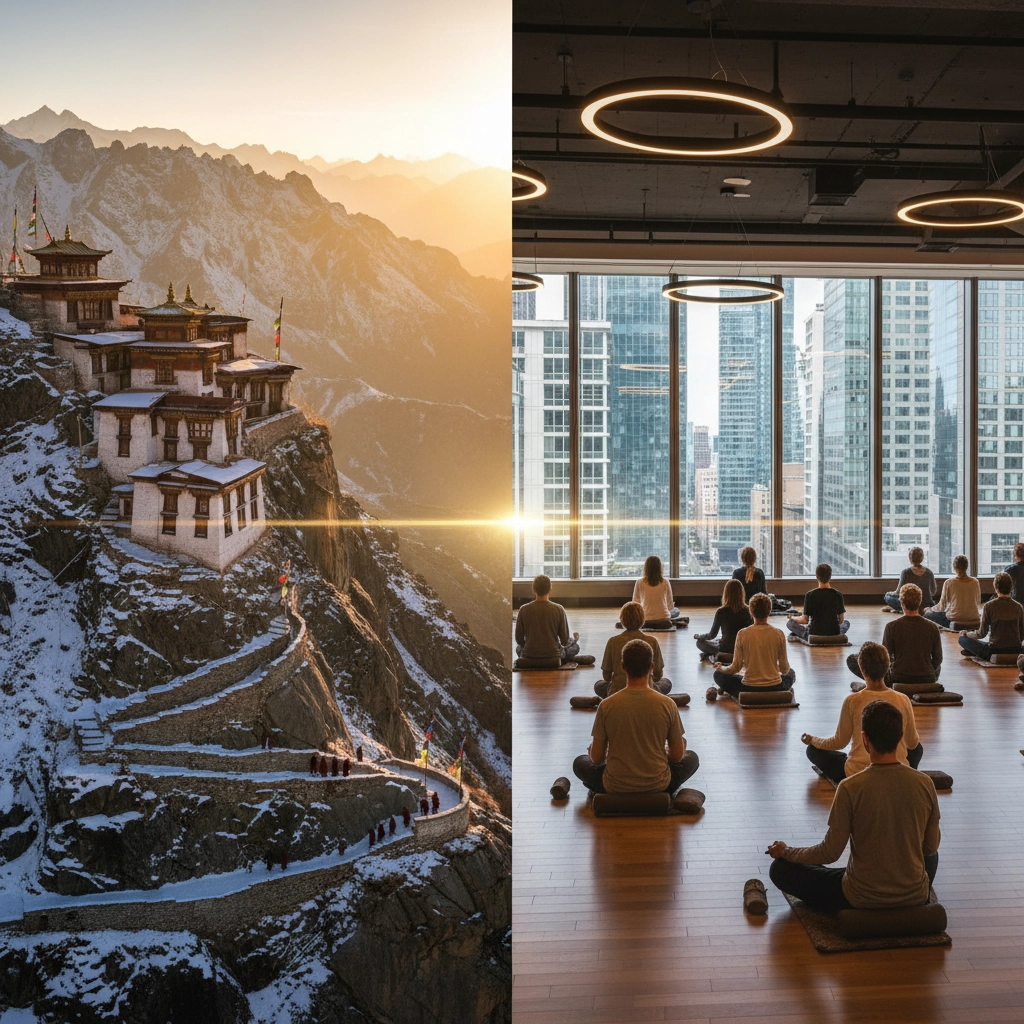
The most moving aspect of tantra in diaspora is witnessing how practitioners create community in the absence of traditional support systems. They form study groups in people's homes, organize retreats in rented community centers, and use technology to connect with teachers and fellow practitioners across continents.
There are Tibetan grandmothers teaching meditation to suburban American students via video calls. Indian practitioners maintaining tantric yoga lineages through adapted teacher training programs. Refugees who carry nothing but their knowledge, recreating entire spiritual communities from memory and determination.
These aren't just survival stories, they're innovation stories. Diaspora practitioners often develop deeper understanding of their traditions by being forced to explain them to outsiders. They discover which elements are truly essential and which are cultural expressions that can be adapted without losing authenticity.
The Authority Question
One of the thorniest issues facing tantric traditions in diaspora involves who gets to say what's authentic. Without centralized authority structures, different teachers and communities can develop very different interpretations of the same practices.
This fragmentation creates opportunities for both creativity and confusion. On the positive side, it allows practices to adapt to different cultural needs and expressions. But it also opens space for exploitation or dilution, where the name "tantra" gets attached to practices that bear little resemblance to traditional teachings.
The communities that seem to navigate this best are those that maintain strong connections to traditional sources while remaining open to necessary adaptations. They honor their lineages while recognizing that rigid adherence to forms that made sense in one cultural context might actually betray the spirit of the teachings in another.
Looking Forward with Wisdom

The story of tantra in diaspora is still being written. Current practitioners are essentially participating in a grand experiment: Can these ancient teachings maintain their transformative power while adapting to completely different cultural contexts?
The answer seems to be yes, but only with conscious effort, deep respect, and willingness to embrace complexity. The practitioners who succeed at this cultural translation are those who approach the tradition with what one teacher calls "respect and reverence" while remaining flexible about how that reverence gets expressed.
This might mean adapting traditional practices to address contemporary challenges like trauma recovery or gender inclusivity. It might involve creating new forms of community support that serve the same function as traditional extended families. It might require developing ethical guidelines that prevent exploitation while allowing authentic transmission.
What emerges from this process isn't a watered-down version of the original traditions: it's something that honors the essential wisdom while allowing it to take root in new soil. Like those heirloom seeds we discussed earlier, the resulting practices might look different from their ancestors, but they carry the same life force, the same potential for transformation and awakening.
The diaspora experience is teaching us something important about the nature of spiritual traditions themselves: they're living systems, not museum pieces. Their survival depends not on perfect preservation but on their ability to remain relevant and transformative for each new generation of practitioners.
For those of us learning from diaspora teachers today, we're inheriting this complex legacy: ancient wisdom filtered through the experiences of cultural transition, loss, adaptation, and renewal. We're called to approach these teachings with the same mixture of reverence and creativity that has allowed them to survive their journey to us.
The flame has been carried across great distances and through tremendous challenges. Now it's in our hands to tend it wisely, ensuring it continues to burn bright for those who will come after us. That's both the privilege and responsibility of being part of tantra's ongoing diaspora story.