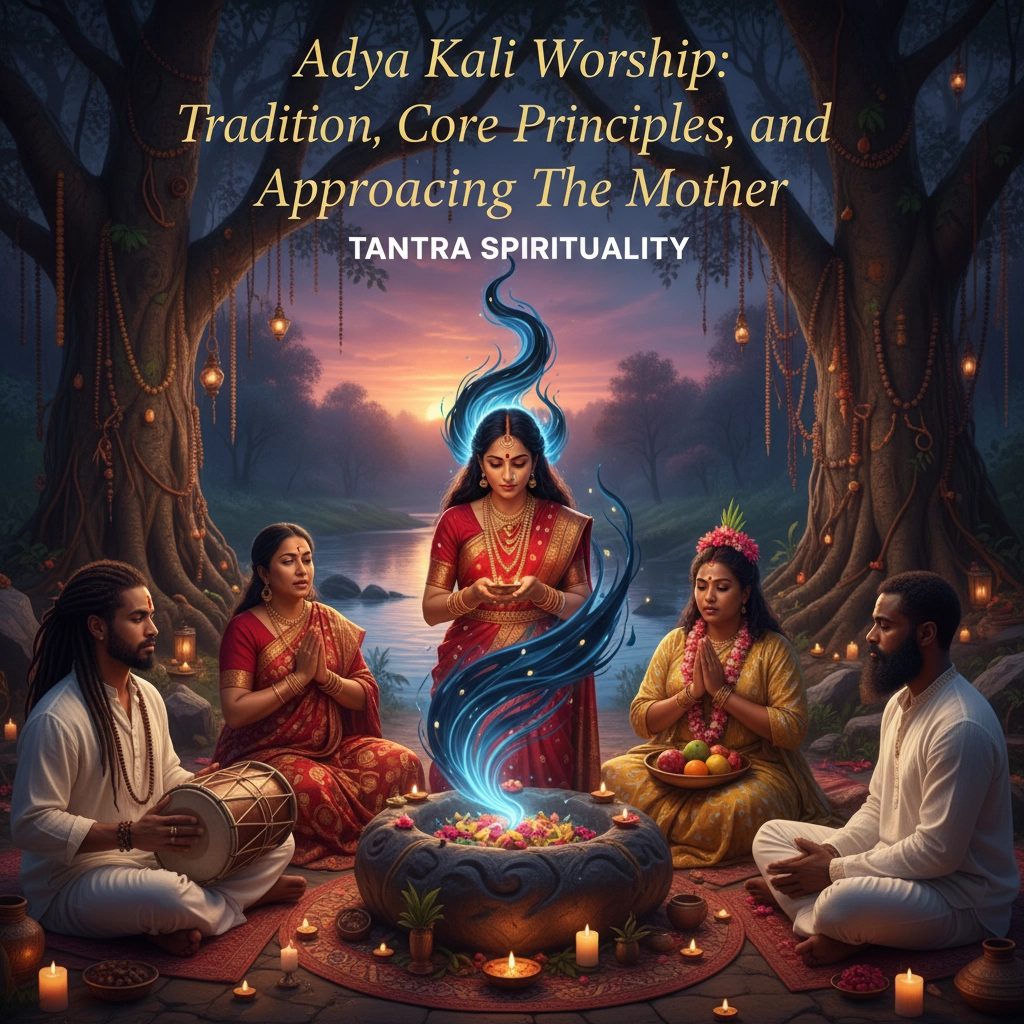
The sacred practice of chanting Kali's 1008 names opens doorways to divine transformation and spiritual liberation. Each name carries the power to dissolve darkness and illuminate the path toward truth.
The Sacred Tradition
The Kali Sahasranama represents one of Hinduism's most powerful devotional practices. These 1008 divine names, also known as Ashtottara Shatanamavali, encompass every aspect of the Divine Mother's infinite nature: from her fierce protective qualities to her boundless compassion.
Traditionally performed during Amavasya (new moon nights), this sacred chanting practice has been cherished by spiritual seekers for centuries. Each name serves as a direct invocation, creating a bridge between the devotee and the divine feminine energy that governs time, transformation, and ultimate reality.

The Divine Names
While the complete traditional list requires consultation with authentic Sanskrit texts, here are the sacred names of Kali Ma that form part of this ancient Sahasranama:
1. Smasanakalika – She who removes darkness from cremation grounds
2. Kali – The remover of darkness
3. Bhadrakali – The excellent remover of darkness
4. Kapalini – Bearer of skulls of impurity
5. Guhyakali – The hidden Kali
6. Mahakali – The great remover of darkness
7. Kurukulla – She who confronts duality
8. Kalika – The active cause of removing darkness
9. Kalaratri – The dark night of time
10. Kamada – Giver of all desires
11. Tara – The illuminator
12. Suddha – She who is purity
13. Jaya – She who is victory
14. Kamini – The beautiful, desirous one
15. Kamya – The desired one
16. Kasturi – Like sacred musk
17. Krishna – The dark-hued one
18. Kirtida – Giver of fame
19. Kundalini – The awakened serpent energy
20. Kancuki – Clad in protective armor

21. Karala – The fierce-jawed one
22. Kshipra – Quick to act in protection
23. Krodhini – She of righteous anger
24. Krita – The accomplished one
25. Kirti – Divine renown
26. Kumuda – She who brings joy
27. Kumarika – The eternal virgin goddess
28. Kamakshi – She of captivating eyes
29. Kalavati – Embodiment of time
30. Kanti – The radiant one
31. Karuna – Pure compassion
32. Kalpataru – The wish-fulfilling tree
33. Kalyani – The eternally auspicious
34. Kanya – The divine virgin
35. Krishnaveni – She of dark braided hair
36. Kirtivardini – Enhancer of spiritual fame
37. Ksemakari – Guardian of welfare
38. Kotara – Dweller in sacred caves
39. Kalpavalli – The divine creeper of time
40. Kankana – Adorned with sacred bracelets
41. Kirana – Divine ray of light
42. Karalavaktra – She of the terrible mouth that devours evil
43. Kamala – Pure as the lotus
44. Kalyana – Embodiment of grace
45. Karunasagara – Ocean of infinite compassion
46. Kirtimati – Possessed of divine glory
47. Kamalalocana – She of lotus eyes
48. Krishnamurti – Dark divine embodiment
49. Karunavati – Full of compassion
50. Kshiranda – She who abides in the milk ocean

51. Kritananda – Joyful in accomplished deeds
52. Kiranamayi – Full of divine rays
53. Kalya – She who is ever resourceful
54. Komala – Infinitely soft and gentle
55. Keshini – She of beautiful long hair
56. Kantimati – Possessed of divine beauty
57. Ksemavardhini – Giver of protection and prosperity
58. Kubjika – She who appears in curved form
59. Kanyakumari – The eternal divine maiden
60. Kanta – The supremely beloved
The traditional Sahasranama continues with names that celebrate every aspect of the Divine Mother's infinite manifestations – her role as creator, preserver, and transformer; her fierce protection of devotees; her gentle nurturing of spiritual seekers; and her ultimate nature as the source of all existence.
Spiritual Significance
Each name in the Sahasranama carries specific vibrational qualities that resonate with different aspects of consciousness. When chanted with devotion, these names create profound shifts in awareness, dissolving limitations and revealing the divine nature within.

The practice traditionally begins at sunset and continues through the night, with devotees maintaining focus on the Divine Mother's presence. Some practitioners chant the entire list in one sitting, while others divide it over several sessions, allowing each name to be fully absorbed and contemplated.
Traditional Practice Guidelines
The Sahasranama is most powerfully practiced during:
- Amavasya (new moon nights)
- Fridays dedicated to Divine Mother worship
- Navaratri celebrations
- Personal spiritual crises requiring divine intervention
Practitioners often prepare by:
- Purifying the space with incense and sacred flames
- Offering flowers, especially red hibiscus
- Maintaining a light fast or sattvic diet
- Approaching with sincere devotion and surrender

Benefits of Practice
Regular chanting of Kali's sacred names brings:
- Spiritual Protection – Shield from negative influences
- Inner Transformation – Dissolution of ego limitations
- Divine Grace – Direct connection with the Divine Mother
- Mental Clarity – Freedom from confusion and doubt
- Emotional Healing – Release of deep-seated fears
- Material Prosperity – Fulfillment of righteous desires
The ultimate goal remains Moksha – complete liberation from the cycle of suffering through union with the Divine Mother's infinite consciousness.
Finding Complete Sources
For the complete traditional list of all 1008 names with their Sanskrit pronunciations and detailed meanings, seekers should consult:
- Authentic Sanskrit texts from traditional publishing houses
- Established temples dedicated to Divine Mother worship
- Qualified spiritual teachers versed in Tantric traditions
- Classical devotional literature from recognized lineages
The power of these sacred names transcends mere repetition – each chanting becomes a doorway into direct communion with the Divine Mother who eternally dances in the heart of existence, removing darkness and revealing the light of pure consciousness.
Visit Tantric Journey for more authentic spiritual practices and guidance on your sacred path.